
The Second Mission Field, MuongNai (1892)
(23 Years to establish a mission field in Southern Shan State)


MuongNai was the first mission field in Southern Shan State and the second in Shan country. MuongNai city was under SaoPha’s control with about 650 houses in 1893. It was one of the most powerful Shan States under Sao Pha. It was 240 miles away from Rangoon, but it would take a month to travel to that place by train from Rangoon to ThaZi, then by horse or elephant, or bullock cart, or on foot to MuongNai. It was a city full of pagodas and monasteries. MuongNai is situated in a valley in which Malaria had long been a problem, and also the fatal black-water fever.
Cushing’s visit to MuongNai
According to Rev. Rose’s record, Rev. & Mrs. Cushing visited MuongNai in 1868-1869. Wherever they went, the people gathered around them, and many listened attentively to the story of the cross. Several thousand tracts were distributed and seed sown, from which they may hope for fruit in the coming time. It was reported that Mr. Kelley, a man of rare linguistic ability and earnest devotion, joined the mission early in 1872, entering enthusiastically upon his work he acquired a sufficient hold upon the Shan language in nine months to preach very creditable sermons in the chapel in Shan language at Toungoo before he left with Rev. Cushing for a trip to Shanland in December 1872. On January 1, 1873, when almost within a day’s journey to their destination, the city of MuongNai, he was drowned in a small lake called Nong Saweet (Lake Saweet). The tragedy of such missionaries or missionary children who got drowned in the late was not uncommon in the history of the Shan mission. A missionary drowned in Toungoo, and a missionary’s son drowned in ShweLi. Lakes are the natural swimming pools of the Shan. Rev. Cushing visited MuongNai every two years after his first visit and tried to establish a Shan mission field there in 1887.
Mission field established
However mission field in MuongNai was not established until 1892 by Dr. and Mrs. W. C. Griggs and Mrs. Huldah Mix. It took 23 years to establish the mission field after the first visit by Rev. Cushing.
Mongnai was picked as the Future Mission Station.
Mr. Cushing decided that Mongnai was the best location for a Shan Mission station and that the language spoken there was the most suitable in which to develop a literature. He was convinced that any missionary who wanted to communicate with the people living in the interior must do so through the medium of the Shan language. (1945 St. John 471).
Rev. William Marcus Young, an American missionary from Nebraska, came to Burma in 1892, perhaps under the auspices of the Boston Missionary Society.
It was reported that Rev. and Mrs. W.M. Young left Toungoo on February 13, 1893, and reached MuongNai on March 14. Dr. Griggs then returned to America two days after their arrival. In June, Mrs. Young experienced a violent attack of dysentery, with recurring attacks at intervals afterwards, so that for three months, Rev. Young suffered great anxiety on her account. In September, she began to improve, and for the last five months, they have been in excellent health to study the language.
In 1893, Dr. and Mrs. Albert Haley Henderson arrived in MuongNai to begin their forty years of medical, evangelistic, and educational work. For a time, Dr. and Mrs. Henderson had charge of the medical work, Rev. Wilbur W. Cochrane had the Church and evangelistic work, and Mrs. Mix taught in the school and managed the home for abandoned children and orphans. Thra Bla Paw, a Bassein Karen, with the help of his wife Naw Bessie, became pastor of the MuongNai Church, releasing the missionary for field work.
In 1903, Mrs. Henderson fell victim to the dreaded black-water fever and barely survived. Doctors recommended her to return to the United States, but Dr. Henderson suggested removal to TaungGyi, a more healthful location. Dr. Henderson made the hundred-mile trip to MuongNai on a bicycle, taking about two days each way. Hendersons were shifted to Taunggyi in 1906, where they spent the next thirty-one years.
Dr. H. C. Gibbens continued in Mongnai till 1926 when they transferred to Loilem, a healthier location somewhat to the north.
When missionary doctors were no longer available for resident medical work in MuongNai, national doctors, including Dr. Lao Htin, Dr. Ah Pon, and Dr. Ohn Shwe, took charge. In 1936, Dr. Ohn Shwe was killed by a drunken man while he was trying to protect him from further assault to his wife. When the murderer was condemned, Daw Kyi Pyu, Dr. Ohn Shwe’s wife, pleaded for the murderer’s life, as she was sure Dr. Ohn Shwe would have done the same, and the death sentence was commuted. Daw Kyi Pyu stayed on in MuongNai until her children’s health made it necessary to return to Lower Burma.
Mrs. Alexander worked in the MuongNai school for eight years (1917-1925). When the mission finances were so depleted by the great depression in 1929, both the school and the medical work were turned over to the local government. World War II brought destruction to the buildings in MuongNai, but the Church had been rebuilt and the congregation continued as part of the Southern Shan State Baptist Association.
MuongNai Church

The first convert in MuongNai mission field, according to oral tradition, was Moe San @ Hta. It was reported in 1892 that there were 33 members and a bamboo chapel was built. It’s a surprise to see such big group of members in the Church within the first year. Thra Bla Paw, a Karen from Bassein, with the help of his wife Naw Bessie, became the first pastor of the MuongNai Church.
Rev. Young reported in 1892, “We have regular Sunday service all the year, though the attendance has been light. The native Christians meet every evening for prayer, and often, from five to twenty outsiders meet with us, and thus we have a chance for preaching. We have no organized Sunday school, but Mrs. Mix has taught the school children nearly every Sunday, and often several others have been in the meetings. On August 13, we organized a Church of ten members, all native helpers. The Church’s contribution up to December 31 is rupees 107.93. I have done very little jungle work as I have had neither the time nor men qualified for this service.”
Dr. Henderson and Mrs. Mix reported in 1892, “The Church during the year has voted to choose and support its pastor to meet the expense of which each member has cheerfully promised one-tenth of their income. This, with the contributions of the missionaries, a little more than covers the salary. There are three Sunday school classes: an adult male class, an adult female and a children’s class. We expect to add a Bible class for the Christians. There is room for a good deal of improvement here.”
It was reported by Dr. & Mrs. Henderson, Dr. Robert Harper, and Mrs. H.W. Mix in 1898, “Our Church here has almost doubled its membership by baptism. Our gain has been ten by baptism and one by restoration (our only backslider); five baptized from the school, two through treatment at the hospital, and three from the heathen on the compound. There remain five or six who say they intend to be baptized, but I do not feel that these are all Christians. Our Sunday school is doing thoroughly good work, but is now ready for better organization.”
Dr. and Mrs. Henderson, Dr. and Mrs. Robert Harper, and Mrs. H. W. Mix reported in 1899, “The spirit and condition of the Church were never better. Briefly the lines on which we have advanced are: the establishment of a Wednesday evening prayer meeting down town, formal election of Church officers and a monthly officers’ meeting, the vote to erect a Church guesthouse for the use of people from a distance who come for instruction, a daily thanks offering of rice from many. This is brought in on Sunday, and the proceeds are applied to famine relief in India. In Sunday school, the adoption of the international lessons illustrated by blackboard drawings was used. In this line, I must acknowledge the kind help of the English political officer, Mr. Gordon, on several occasions. Through his energy, we now have interstate postal communication. With the help of our contributions, as members of the Church, the pastor has been supported and a good balance left in hand. This has been the case every year since 1894. Bazaar and town meetings are doing good, steady work.”
MuongNai Church had 33 members in 1892 and 60 members in 1903. Over seventy-five Shan Christians regularly attended Church services. In 1904, there was a baptism of twelve converts added to the Church and three expulsions from the Church. In 1930, Dr. Henderson wrote, “There is a fine spirit of consecration that does one good to feel and touch about 80 usually attend the monthly communion service, and the Churches themselves are beginning to shoulder the financial responsibility for the evangelistic work of the field.”
World War II brought destruction to the buildings in MuongNai. After World War II, a new church building was dedicated in 1950. The brick church building seen in 2000 was dedicated in 1969. Hla Tin became the preacher of MuongNai Church on March 15, 1960. In the year 2000, there were 105 baptized members. MuongNai Church is now a Burmese-speaking Church that consists of different racial groups. The members of the Church increased from 33 in 1892 to 105 in 2000. Only 72 new believers were gained in 108 years. All these believers were not the Shan. In the 1930’s because of the depression in the United States, drastic curtailment of work in Burma had to be made. The Bible Churchmen’s Missionary Society, a British organization, was prepared to take over work in the Southern Shan States. Small hospitals were established at PangLong, a few miles north of LoiLem, and LangKho, within twenty miles southeast of MuongNai. Local Baptist Churches retain their connections with local Baptist organizations, but the major responsibility for evangelistic work among the non-Christian Shan of the Southern Shan State was relinquished by the Baptists. The LoiLem compound was swept clear of all buildings by the end of the war, but the local Church soon put up a small church building. A Shan pastor, Saya Si La, and his wife, Daw Miriam, a trained nurse, had served many years.
Evangelistic work
Rev. W.M. Young and wife, Dr. A.H. Henderson and wife, and Mrs. H.W. Mix reported in 1894, “Many have come to the house during the entire year, and so very much preaching has been done in that way. Much personal and house-to-house work has been done all year in the city. The most promising work has been the bazaar meetings on general bazaar days, i.e., every fifth day. Henderson built a zayat in the bazaar at a cost of rupees 160, money raised in the Church collections, and his contributions. The attendance at the bazaar meetings has always been good, seldom if ever below 100, with an average attendance of about 200. The after part of the meetings is always devoted to personal effort. These have been by far the most hopeful meetings held during the year. We have been unable to sell books, but tracts have been distributed freely, also some portions of the New Testament. Men who reside in other states, quite distant, often call for tracts, so the seed is being scattered. We have received no one by baptism during the year, some have applied but were put off, and our hopes were destroyed by the after walk of some of them. One, I think we will baptize soon. The great need in the work is more native helpers. I have but four men, three of them had to acquire the language, but they can do good work now in Shan. We ought to have at least ten men and two Bible-women for the work at present, but there are no resources to draw from. The only chance for recruits at present is to get Karen and let them study the language here. I am very anxious to get some more men.”
Rev. Young reported, “Our bazaar meetings, which from the first were the most hopeful, are still growing in interest and greatly to our surprise and joy the attendance continues about the same ranging from 150 to 250 in attendance but the attention is better and most of the people seem to be more anxious to learn. They inquire more freely about Christian doctrines.”
Dr. Henderson reported, “Our health, up to the present time, has been excellent. The work here is sowing seed, but we sow in great hope while superstition and idolatry meet us everywhere, yet the promises of our Master are sure. We meet the grossest superstition at every turn, once or twice, we have found them saying charms over their medicine. One old man who had been relieved when we went to speak to him about God said he did not know God, but he would worship me, for he thought I must be God.” Even though Shan claimed to be Buddhist, they were very superstitious and believed in all kinds of spirits.
Dr. Henderson reported in 1895, “Some persons profess to have heard from one of the Phe (spirits) saying that there was so much of this Jesus Christ being preached all over that they (the Phe) were going to leave the place. Two of the idols also feel it so keenly that they are said to be sweating from the same cause. Of course, they are superstitious. Everything they cannot understand is ascribed to Phe. They are a lovable people, good-natured and often gentle, refined and grateful. In talking to the SaoPha or some others in the city, one forgets for a while that this is a heathen, for he has an innate delicacy, which commands respect. It will need some courage for the first one to come out for Christ.”
Dr. Henderson reported in 1896, “The general outlook of the field is very encouraging. Our bazaar congregations are only about one-fourth or one-fifth as large as at first, but this is not surprising. It is due to two causes; first, the novelty has worn off and their curiosity is largely satisfied; second, our services are entirely carried on in broken Shan, a fact that we realize more and more as we learn enough of the language to know the mistakes. Indeed, it begins to be a marvel to me that any noticeable progress has been made with teachers so imperfectly equipped. That progress has been made is a most encouraging sign, and we praise God for owning our feeble efforts. At present, five or six give very hopeful evidence of conversion.”
Dr. Henderson reported in 1912 that at the Christmas entertainment, which the Christians of MuongNai themselves managed with such skill, the rulers of the town, the prince and his wives, all attended. During the celebrations in honor of the coronation of the prince, Christians were the only people invited into the prince’s palace, where they were entertained with refreshments. Dr. Henderson said, “What are the results of our ten years’ work? Perhaps the best of all is that God has given us the hearts of the people. Both the prince and the pauper have many times asked us never to leave them. We also have about thirty baptized converts, some of whom have become helpful evangelists. Besides these, many who never were baptized have died professing faith in Christ.”
In 1914, Dr. H. C. Gibbens wrote that regular preaching services were maintained at MuongNai and LoiLem. At MuongNai, he had five regular proper meetings every week. A special feature of his work had been the preaching in the public bazaar. In referring to his baptism, he called attention to a most impressive fact in missionary experience. Nearly all who were baptized came from those who lived near, and this seems to be the rule each year. First despise, then pity, and then embrace was quite true of the converts won from heathenism. Those who were reached as a general rule seem to be the people who first became acquainted with the missionary by daily intimate contact and then attended the services, after which they generally became Christians.
Conversation between missionary (M) and Buddhist monk (BM)
M: “We are here to help in whatever way we can. We do the best that we know in the light of Western medical knowledge.”
BM: “Your religious teachings are also different from ours and also puzzling from all that I have heard of them. It is said that you worship a god strange to us. Is this so?”
M: There is but one God, the God who loves the Shan as He does the Christians, the God of the universe, who is the Father of us all. It is He whom we worship.”
BM: “I have also heard that there is a man named Jesus whom you worship, and that you believe that we are idol worshipers because we do homage before statues which are representations of the Buddha. Is it true, and do you not then believe in the truths left to the world by Gautama, the Buddha?”
M: “We have respect for the great rules of kindness, brotherly love, and purity, left behind by the Buddha. You, learned monk, will know that my knowledge of your language is still far from adequate even for daily needs, let alone for more difficult matters of religious faith and philosophy. You will forgive me, I am sure, if my speech is halting and if, through ignorance, I do not use the proper horrific term in addressing you.” “We believe in God, the creator of the universe, who is the Father of all mankind. To us, He is the Heavenly Father as real as our earthly parents. Jesus Christ, concerning whom you asked, Son of the Heavenly Father, was sent to earth by God to show us the way to a good life here, and life everlasting after death, which may be achieved through faith in Him and living as He has taught us.” Missionary took a small Shan translation of the Gospel of John and said, “Here it is said much more clearly than I can say it in your language. You may read about the life, death, and resurrection of Jesus Christ, the Son of God. It is written in your language. Will you not do me the honor of accepting it as my gift?”
BM: “I thank you, Saya (Teacher). I shall read it soon. Other things puzzle us about you. Is it true that you Christians have no fear of the evil spirits which so trouble us, and your God considers women of as great worth as men?”
M: “Both are true. We know that the Spirit of God is everywhere, and this frees us of the fear of evil spirits and of being reborn in a form lower than we now have. Our Bible tells us that God created human beings, male and female, with equal honor to each, and that He has given us the hope of life everlasting instead of the nothingness of nirvana. It also teaches us that life on earth may be joyful, instead of filled with the negative despair which so afflicts the life of your people, as they seek constantly to achieve merit through innumerable rules.”
BM: “It is very strange, Saya, but I shall remember what you have said. May you be at peace.”
The above dialogue between Dr. Henderson and a Buddhist monk gives us a clear method of sharing gospel to the Buddhist. There was no sense of argument but exchange of belief. The conversation followed by giving a gospel tracts or Bible.
Medical work
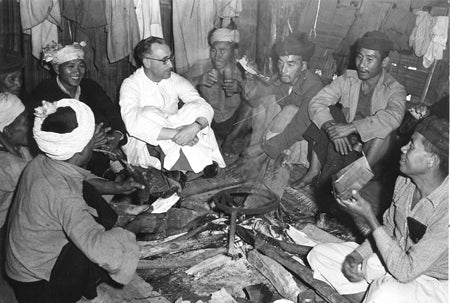
Medical services were offered by Dr. Henderson from his bamboo hospital. Dr. Henderson reported in 1894, “The medical work promises to do nicely and become a most useful auxiliary in the spread of the gospel. There is some prejudice against English medicine, which it will take time to break down, but I think we will win our way fairly easily. Already, there have been one or two rather important cases where we have succeeded after the native doctors had failed, which has had quite a good influence. As the native’s attribute many of their ailments to the influence of the Phe (evil spirits), medical work will, I hope, bear directly against this superstition.”
Dr. Henderson reported in 1895, “The medical work is very encouraging, although the government grant is refused and the SaoPha’s promise is a promise still. I am determined to try and bring this department to a self-supporting footing as far as medicines are concerned. Why should we use mission money to distribute medicines to wealthy persons here or to those who are ready enough to call in and pay a quack to those who know nothing at all? I shall ask for no grant this year from the board, and what I run short, I will try and save from transport allowance, so supplying myself with medicines.”
Dr. Henderson reported in 1900, “In our medical work, full records have not been kept, but I find for eight months an attendance of 1,582 and about 200 out cases a month. For the hospital, we usually have from four to ten in at a time, probably an average of five new cases a month. Five or six of the patients, when convalescent, have learned to read. The receipts for medicine show a gain every year, and we expect to cover our drug bill soon. The people now far more readily come to the hospital and submit to surgical operations. Three or four opium eaters have been cured, and this fact has also been noised abroad.”
In 1903, Mrs. Henderson fell victim to the dreaded black-water fever and barely survived. During her serious sickness, a Hindu postmaster came and gave her fresh cow milk in a shining brass urn and said, “This is to help give mem-sahib strength. It is from my best cow, which I milked myself. It is pure. Tell mem-sahib we are praying for her.” Another Buddhist woman came and gave a live hen with its feet tied together, saying, “Please take this to Mama Loonge (Big Sister). I think the great Buddha would approve of killing this chicken for Mama Loonge. I have been flattening it for days. I go to the temple to beseech the Buddha to make Mama Loonge well.” Every day, messengers from Mahadiwee (SaoPha’s wife) came to take the news about Mrs. Henderson’s health and offered papaya and apple from SaoPha’s garden. SaoPha sent a note saying, “I ordered all the priests in our Buddhist temples to say continuous special prayers for Mama Loonge’s recovery.” How much the people of other faiths love the missionaries!
A Mission Hospital was built in 1910 by Dr. Robert Harper. (17 years after Dr. A.H. Henderson)
Dr. Howard Clinton Gibbens came to work in MuongNai in 1910. When missionary doctors were no longer available for resident medical work in MuongNai, national doctors, including Dr. Lao Htin, Dr. Ah Pon, and Dr. Ohn Shwe, served in medical missions.
School
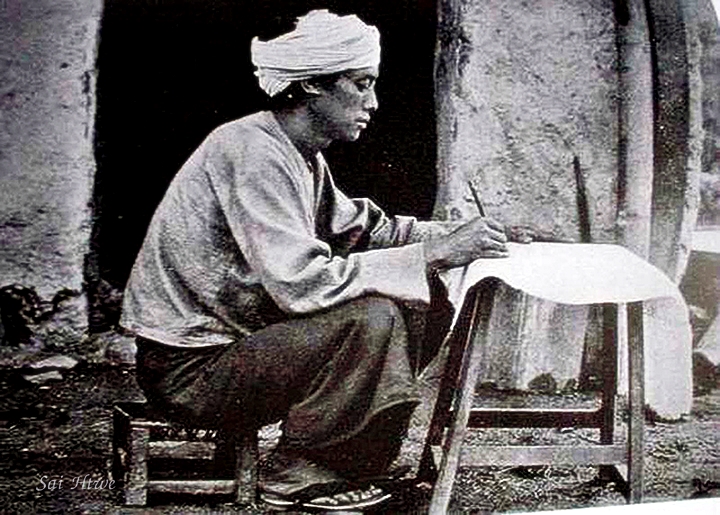
It was reported by Rev. Young in 1894, “The work has been temporarily retarded by the unchristian walk of one of the teachers that I discharged in November and later a teacher in the school falling into sin that necessitated her exclusion from the Church. The effect, however, seems less damaging than we had feared.”
A Mission School was built in MuongNai in May 1906 by Dr. Henderson and helped by Mrs. Mix.
Mrs. Alexander worked at MuongNai school for eight years (1917-1925)
Maung Maung opened the Burmese School in 1923.
Daw Mi Lone opened the Anglo-Burmese Girls’ School in 1924.
When the mission finances were so depleted by the great depression in 1929, both the school and the medical work were turned over to the local government.
After World War II, Saya Dwe Myat, Saya Judson Aung, Saya Than Pe, Saya Sein Pe, Saya John Thet Gyi, Saya Aung Thwin, Ms. Christopher Sin, Saya Maung Maung, and Saya Kyaw Hla continued the school ministry.
Today, there are no more mission hospitals or mission schools in MuongNai.
Letter of Dr. Henderson Regarding Question on Shan-work Work in MuongNai
August 13, 1936. (Dr. and Mrs. A.H. Henderson arrived Mong Nai in 1893)
One suggestion is that perhaps they ought to abandon the whole of the Shan work. Except for the sadness of it, that does not affect us here in MuongNai, for we are already abandoned. We are carrying on with what we can put in the contributions from local Christians and others who see the need and believe in the work. Things are growing and there is a great need to encourage of which I hope to have time to speak.
The argument is that the Shan have come in so slowly that it may be the wisest thing to turn to other, more responsive races. One wonders if such an argument is fair. They have indeed come in, for the most part, slowly. But I am going to ask you to put yourselves in their place and try to see how you would feel. Supposing you had been continually in the same place, shut away from the world currents with all their suggestion of improvements and progress for 2000 years, with no other place for your thoughts to rest except in the past, would it be fair to blame you for being conservative? Would it be just to expect all such influences to be changed in 40 years?
This place in MuongNai has been in existence since before Christ. Do you wonder that at first we were constantly met, when we urged new things, by the reaction, “That is not our custom.” We are here only in the second generation, but we rarely hear it now. Again, supposing that your forefathers, to untold generations, had been born under a government under which they never felt that their souls were their own but where any such thought of individual rights and judgment would have seemed out of the question, the stars in their courses ordained that you should always submit and never think for yourself, would it be fair to expect that in 40 years the basic nature of a race would change and that you would be one of the many who would leap up and decide that you would break with old traditions and public sentiment? Those are the conditions under which the Shan have been born and grown for hundreds of years. In forty years, we have seen such changes that we are amazed. I’d rather think that when we get to heaven, I will meet many who will come forward to thank us for bringing them the message. They do not show on the Church books, but this is the sort of thing I mean.
I met a man going on the road one day and accosting him I asked if he were going to the bazaar. “Yes” he said and I asked again, “Are you going to the meeting?” Again he answered, “Yes” and then looking at me he added, “I always go. You see I can’t read but I go to listen to what the men say and then I go home and try to do it.”
I met another man in his village, and after getting into conversation, I asked if he worshipped God. He said, “Yes,” and I asked, “Which God?” He answered, “The God you preach about in the bazaar. I asked, “Jesus?” and he said, “Yes.” Then I asked if he worshipped the idols, and he said, “Yes.” “Oh,” I said, “you should not do that,” and he looked up in surprise and asked, “Shouldn’t I?” “I thought that was the way, but if it is not, I will not worship them anymore.” It never occurred to these men that they should make a break, and if they had, they would almost certainly have been driven from their village. Perhaps I was wrong in suggesting that they should, but I think I will find many such people who have died as unknown believers in Jesus and his beautiful message.
The younger people, who were children, perhaps unborn, when we came, are now in charge of the work. One said about a month ago, after I had told them that people in America were discouraged because the Shan came in so slowly, “If they could have seen what I have seen, I do not think they would be discouraged.” And he went on to tell of the eagerness to hear which they had found in some villages where the people followed them around from place to place even till late at night to hear what they said. Or another man born in the mission here who is now the pastor. He went to another town about 25 miles away and preached in the bazaar.
Why is it so difficult to evangelize Shan in MuongNai? What are the obstacles for them to believe in Christ and become Christians? We have seen 10 people baptized in 1893 just one year after mission field started. If this rate has been continuing, the membership might have been 1,113 in the year 2000. When I visited MuongNai Church in June 2000, the old pastor was seriously ill and hospitalized in Yangon hospital. A Karen young man was temporarily taking care of the Church. About 30 people came to our revival meeting. At the beginning of our teaching program, a man came to me, greeted me, seated next to me and wept acrimoniously. I did not know who he was and why he wept. He said, “I am very happy to see you coming to us and teaching us. I am very happy to see you serving Him tirelessly. I am also feeling very sorry for myself and my failure.” I later discovered that he was one of the first graduates who graduated from Saya Ai Pan Bible School in NamKham in 1956. But he did not serve the Lord in ministry ever since graduating from training.
The first Shan Church in Southern Shan State is now becoming a Burmese Church. Shan language is no longer used in worship service.