The Fourth Mission Field, KengTung (1901)
(31 years to establish a mission field)
KengTung was the capital city of Eastern Shan State, and the KengTung Royal Government (a monarchy) was strong and open-minded enough to allow other religions to be established within the territory. The chief of Shan territory was SaoPha. He has all the power and authority over the people and territory. An official census made in 1900 revealed that the population of the city was 10,257, with a total of 40,000 for the city and adjoining villages. The entire district numbered about 190,000 people. The native people, the Hkun, are like the Shan and the people of Siam, a branch of the great Tai people. Their language is freely allied with the Shan of Burma, which indeed is giving promise of freely supplanting it. All Shan SaoPha were Buddhists. Without their permission or approval, it was not easy, if not impossible, for a foreign missionary to do missionary work in their territories. The SaoPha of KengTung was very exceptionally open-minded enough to allow foreign missionaries to do the work in KengTung.
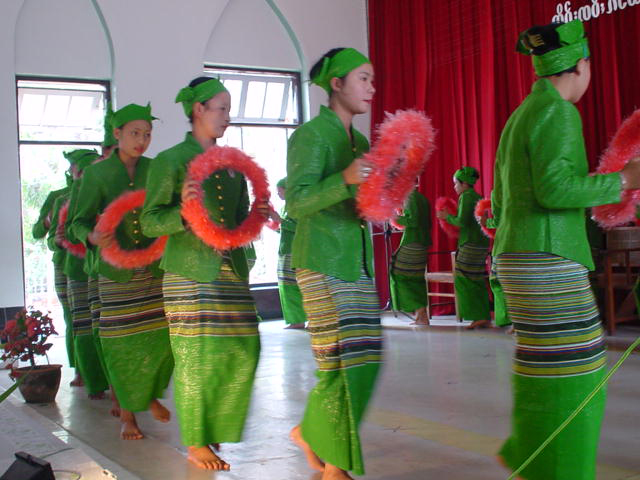
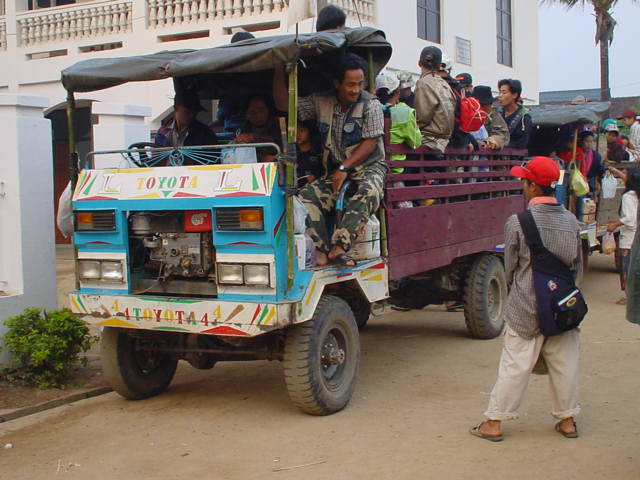
Rev. & Mrs. Cushing first visited Kengtung in January 1870. They were warmly welcomed by KengTung SaoPha. Rev. & Mrs. Cushing traveled 52 days, not by car but by horse, elephant, ox-cart, and on foot, from MuongNai to KengTung. A comfortable house was furnished for their residence during their stay in KengTung, and every evening, except Sunday evening, an entertainment (Shan Peacock dance) was given to Rev. & Mrs. Cushing. In some of those entertainments, the manners and customs of the Kah-Kwees (Lahu Shi), Kah-kaus, Moo-seur, Le-Wa, and other tribes occupying the mountains were sent forth by representatives of the races summoned by SaoPha for the purpose. Rev. & Mrs. Cushing were the first foreign missionaries to be in Kengtung, the Eastern Shan territory. They preached good news in the bazaar, sang Christian songs, and distributed gospel tracts to the people. Interestingly enough, to ask what kind of song they sang? We don’t know whether they sang a song in Shan or English. If they sang in English no nobody would understand. Most likely, they might have sung songs in Shan that they had translated. They also distributed gospel tracts written in Shan, which Cushing had translated. Cushing had learned the Shan language and literature and managed to speak, read, and write well within four years. Rev. and Mrs. Cushing spent eleven days in Kengtung.
19 years after the first visit by Rev. & Mrs. Cushing, another American missionary, Rev. W.W. Cochrane, left the HsiPaw mission field to visit KengTung via MuongNai in 1889. The KengTung mission field was not yet opened at that time. It was an exploratory visit. We do not know why it took 19 years to have another missionary’s visit to KengTung. 10 years after W.W. Cochrane’s visit, a third missionary, Dr. Henderson, visited KengTung again in 1899 on an exploratory and evangelistic trip. Two years later, in 1901, Rev. & Mrs. William Marcus Young and some Karen missionaries arrived in KengTung to start a new mission field after serving in Muong Nai since 1892. By the permission of KengTung’s SaoPha, they were allowed to preach the gospel in the bazaar on market day. The gathering places for the people in those days were only at market marketplace, the zayat, and the Buddhist monastery. KengTung mission field eventually opened in 1901, thirty-one years after Dr. Cushing’s first visit.
Rev. Young reported in 1900

“I have been in Burma too short a time to make a report. We arrived on December 3 in Rangoon (returning from furlough). The month since my arrival was spent in purchasing an outfit and the preliminary work for the long journey to KengTung, three hundred and sixty-one miles beyond the railway’s end. Thirty-seven days by regular stages will be required for making the trip. When I left Boston, I expected to go to KengTung alone, but later decided that it was not good for a man to be alone. So Mrs. Young is going with me. She has had several years’ experience as a teacher and is a decided help to the work. The journey, thus far, has been a very pleasant one. We are now at MuongNai, where we remain for about one week, arranging for transport and visiting the field of my first labors in Burma. There has been a wonderful change here since we arrived in the jungle from the compounds eight years ago. I do hope to see as strong a plant in KengTung before I have to take another furlough. So far as I can gather information, the outlook for KengTung is very hopeful. The chief political officer for the Southern Shan State has promised whatever aid the government can render in opening the work. The chief military officer at KengTung is a very active Christian and a warm friend of missions, so the prospect is good. The improvement in the roads in Shan State has been very rapid in the last six years. KengTung will be much more accessible in two or three years than it is now. All things considered, it seems an opportune time for opening the work. The cost of transporting goods from the railroad to KengTung is heavy, but this will improve each year. I will write a descriptive letter after I reach the field and get work started. I am greatly pleased with the outlook of the work at MuongNai, also the general growth and development of the Southern Shan State.”
Rev. and Mrs. William M. Young, who had served in HsiPaw and MuongNai in the past, established a mission field in KengTung in 1901. Rev. Young reported in 1903, “There is one Church with 4 members and one baptism. The past year has been one of the seed sowing seeds and foundation work. I am sorry that we cannot report greater results. The year opened with bright anticipations that Dr. Robert Harper would arrive early in the year as an associate worker to open the hospital work at once and that he would also bring reinforcements of native workers. We soon learned, however, that he was to go to NamKham till after the rains. Our working force has been small all year, and in March, part of the workers of the previous year returned to lower Burma, and one preacher went to MuongNai for his family; thus, we were entirely without helpers for one month. In April and May, we secured some helpers, but not sufficient to properly equip the work. I had hoped to open work among the hill people, but a lack of helpers has prevented this. We have been able to preach to large numbers of the hill people at the bazaar meetings, but so far have not been able to visit their villages. At the bazaar meetings, the attendance and attention have been almost invariably good, and a fair interest has been developed in the house-to-house work. We have had frequent services in two of the bazaars in the valley outside the city, and a goodly number of villages have been visited. The work, however, has centered on and in the city. In June, I received by baptism the first fruit of the field. This first convert had to endure severe persecution, but he has proved a steadfast and earnest man. For several months, opposition was very strong. The priests who at first seemed very friendly became openly hostile as soon as active work was begun. The opposition now seems to be dying out. There has been a decided turn for the better during the last two months, and at present, the outlook is decidedly hopeful. We have a somewhat better working force, but not sufficient to meet the urgent needs. There has been little teaching but no regular schoolwork for the past year. I hope we can fully open this work very soon. We expected that Dr. Robert Harper would reach us by January 1903, but circumstances made it necessary for him to remain permanently at NamKham. We are still in hopes that before the rains, an associate may reach us for opening the medical work. At the latest, a family should not fail to be sent out in the early autumn. The hospital work will be of vital importance to all departments of work. The field gives a magnificent opening for medical effort. While the results, thus far, have been small, thousands have heard the word. We have bazaar meetings in the city three days out of five, besides the meetings in outside bazaars and house-to-house work. The work in the bazaars has been hampered somewhat as we have no preaching zayat, and so far I have been unable to secure a good site for building a zayat. The hill people are very friendly, and I do not doubt that a large ingathering of souls would soon follow the opening of active work in the villages in the hills. I still hope to get some men in training for the work early in the year. A marked interest has been shown in one of the villages of northern Shan. Several have professed to believe that Christ is the true God, but the opposition has kept them from taking a firm stand. Some of them were told they would die in three days if they became Christians.” “The attendance and attention were good during the time of strongest opposition, and now, as the opposition is giving way, the interest seems to be deepening. Satan is powerfully entrenched here, and the early converts will have to face bitter opposition. The Khun are very conceited, bigoted, and superstitious. The northern Shan are slaves to custom, but purer in morals, and more accessible to the gospel. It is a joy to preach the gospel amid so dense spiritual darkness.”
The survey report in 1906, “Shan found in all valleys wherever paddy land is found, in other words, in all the valleys of the State, there will be found Shan. Tribal must trade in Shan bazaars. 70,000 tribal, 120,000 Shan, Kaw 29,652 most depraved.” “Tai Lu attaches an interest, out of proportion, to their numbers from the fact that our Presbyterian brethren claim that they can all read. They are found chiefly around the country of MuongLem in China. Some of them have been baptized and one of the evangelists now employed by Rev. Young is a Tai Lu man.” “Regarding the best language to use for work among hill peoples the expense that reducing the languages to writing is not justified by the numbers at present known. In the meantime converts from all the tribes so far as possible may well study the Shan language and literature in the school already opened and in others that may be opened for them. We find that the children from the hill tribes now in school learn to read Shan literature easily and well. It will undoubtedly be found best to make use of the Shan as the common literary language for all the tribes. (comparing Karen Christians who learn Burmese) In the same way by adopting the Shan as a literary language the converts from the hill tribes might become an equally efficient agency in the evangelizing of the Shan.” “A bad fire raged in KengTung burning out the every heart of the city. The bazaar, all the shops in the place and about four hundred houses were destroyed including the mission preaching zayat. The Presbyterian mission lost more heavily than ours. The fire caused by the lamp of the opium smoker who went to sleep without extinguishing the light. Three people lost their lives.”
There is no Shan Presbyterian Church till today.
Early Mission Work
Rev. & Mrs. W.M. Young and their team had started mission works among the Shan, Lahu, Wa, MuhSo, and Lolo hill tribe people as soon as they began the mission field in 1901. Shan were strong Buddhists. Rev. Young spoke Shan and did most of his work in that language. The great ingathering into Christianity had not been from the Shan, who were Buddhists, but from the border tribes who were Animists. It was reported in 1915 that Rev. Young had been doing the work among the tribes alone, where three men were needed. In the interests of mission comity, an attempt was made at a joint conference of representatives of the Baptist and Presbyterian designing a definite portion to each body. With the assistance of the Presbyterians, it was hoped that the whole field might be developed as a task, which the Baptists alone had not had the men or the resources to accomplish. Rev. Young, though speaking Shan, had his time occupied in work for the Muhso, Lahu, Wa, and Lolo tribes of the KengTung field who were coming en masse towards Christianity. Referring to the shortage of missionaries, Dr. Henderson wrote, “We think and write of intensive development but grow weaker and weaker every year.” The mission works included evangelism, hospital, and education. In 1927, the Lahu and Shan works were separated.
Ai Noi was the son of a Buddhist village headman. He was trained to be a Buddhist priest, spending 8 years in a Buddhist monastery. As a priest, he wore saffron-colored robes. One day, he felt ill, so he went to the hospital and was treated by Dr. Henderson. Before giving medicine, Dr. Henderson said, “Would you like me to pray to the God of this pill?” Ai Noi answered, “Certainly, for it costs no more for the prayer.” Dr. Henderson folded his hands together in an attitude of prayer and prayed for the recovery of Ai Noi. A few days later, Ai Noi saw another Buddhist priest walking through the village, and he asked, “Where are you going?” The priest answered, “I am going to the hospital for medicine.” Ai Noi said, “You do not need to go to the hospital. I know what to do.” Ai Noi asked the priest to sit down, and he folded his hands together as he had seen Dr. Henderson do, and he prayed word-for-word the prayer he had heard from Dr. Henderson. This fellow priest also recovered from illness. Because of this experience, Ai Noi began to believe in the Christian God. He was the first Hkun convert.
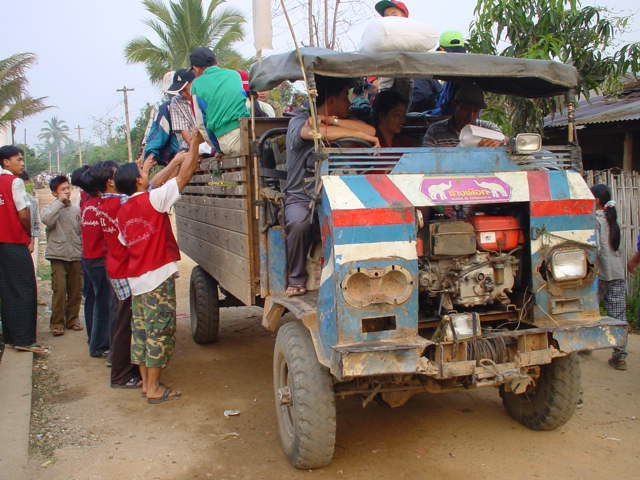
Rev. Raymond Bates Buker and his wife went to KengTung in 1934 for evangelistic and educational work. In May, he reported having made a twenty-two-day tour of 225 miles by motor and 200 miles on foot, visiting over a dozen villages. In June, he reported another trip of 130 miles all on foot. Shan baptism on the KengTung field averaged more than one hundred per year. On a Sunday in April 1939, forty-two Shan were baptized at one time, a record for Baptist work among the Shan. In 1941, there were 130 baptisms, and more than twenty were waiting for baptism. Literacy among new workers was increased by holding one-week Bible classes in which adults were taught to read. In March 1939, Rev. Buker reported that about 800 persons had enrolled in such classes, held in eleven places. One of his reports contains this sentence: “Why do we say that they are slow to accept when so many have never been told?” (Burma News, June 1934, p. 83) Unfortunately, the coming of World War II to Burma brought an abrupt halt when missionaries were evacuated to India, and all help from abroad was cut off. Under the Japanese occupation, KengTung was attached to Thailand and was occupied by Thai troops. By the end of the war, extensive damage had been done to buildings on the mission compound in Kengtung.
Ray Buker worked mainly among Tai Hkun. He learned Hkun and translated the Gospel of John and Mark into the Hkun language in 1935 with the help of Ai Noi, who was a native Hkun. When Ray and Ai Noi arrived in a strange village, they were welcomed into the house of the headman of the village. Ray would erect his mosquito net and eat whatever food was offered to them by the hospitable Tai chief. After eating, the elders would gather around the fire with the young people on the fringes and the women on the outer ring. Ai Noi knew no English or any of the dialects that Ray was familiar with. After eating, Ai Noi would say, “The big teacher will now teach you.” Then, Ray would give a brief message using the little vocabulary he had learned. After Ray finished, Ai Noi would speak, enlarging Ray’s simple message. He would discuss with the elders for hours. The people loved it, and he would preach for three or four hours, deep into the night, night after night. Ray learned oral language from Ai Noi.
Ai Noi used to say, “People do not come to see a doctor until they are sick. When these people are in trouble, they will turn to us then they will be more responsive to the message we have to give them about Jesus Christ.” He would say, “I told you last time how you could avoid trouble following Jesus.” “Now listen to me carefully and do not forget the lessons that I teach you, and Jesus will keep you out of trouble and difficulties.” Ray spent 200 nights of the year away from home working in the villages of KengTung State. Ray had translated several hymns into various languages, and some had been set to native tune. In ’50 and ’60, the only hymns that many local Christians learned to sing were set to Western-style music that was utterly alien to the local population. Rev. and Mrs. Vincent Young were compelled to leave Bana (SipSongPanNa), China, in 1949 and came to live in the mission compound in KengTung, where they supervised the reconstruction of the church and hospital buildings. John Po, a Karen missionary, arrived in KengTung as a Burma Baptist Convention’s representative in 1957 and acted as school principal until 1959. Under the leadership of John Po, primary schools were opened in MuongYawng and MuongYang. The medical and education ministries were very successful, helpful, and effective in reaching the people with the gospel. He worked with Saw Khin, Ai Chein, Ya Kup, Philip, Ai Chit, and Seng Tip in mission work.
Shwe Wah, a young novitiate in a Buddhist monastery in Kengtung when Cushing visited there in 1870, later became Cushing’s chief helper in translating the Bible into Shan. Cushing paid high tribute to him for his ability and sacrificial spirit. Even though the primary objective of having a mission field in KengTung was reaching the Shan people, the result was getting many other hill tribes coming to the Lord.
Evangelistic work
Missionary started preaching gospel in bazaar meeting and house-to-house meeting. For several months after the mission field started the opposition was very strong. The priests who at first seemed very friendly became openly hostile as soon as active work was begun. Several had professed to believe that Christ was the true God but the opposition had kept them from taking a firm stand. Some of them were told they would die in three days if they became Christians.
It was reported in 1907 that Rev. W.M. Young had cut the cords from the wrists of hundreds of people and had baptized 110, and hundreds more had professed faith. The cords worn on the wrist, ankle, or neck were the symbols of a spirit charm. It was reported in 1916 that 13,654 converts had been baptized from the MuhSo, Lahu, Wa, and Lolo tribes, some of whom dwelled across the Chinese border. They were animist. Shan were Buddhist. Rev. Young reported in 1911 the baptism of almost an entire small Ahka village and of forty Wa who came from the extreme northern part of the field in China. The total number of baptisms for the year was 936, and the membership of the KengTung mission field was 9,800 in 1911.
It was a great achievement to get 13,654 converts in 16 years. However, they were not Shan. Most of them were hill tribes. There were occasions mentioned about Shan’s baptism. 9 Shan baptized in 1935 in MehHok, 14 Shan baptized in 1938 in KengTung, 42 Shan baptized in April 1939. It was reported in 1916 that the missionary efforts among the Shan, who were intensely Buddhist, had been characterized by a slow ingathering of converts. Part of this had been due to the small number of missionaries engaged in the work. It was reported on March 26, 1935, by Rev. Ray Buker that Buddhist monks and lepers were baptized. Two Buddhist priests faithfully go out on foot to evangelize as missionaries, receiving no remuneration. Buker traveled a 250-mile journey in June, visiting 20 Shan and 5 Lahu villages, spending 102 hours traveling in one month. Interest shown near the Chinese border, where no Shan believers exist. The previous year, Buker passed out a few Hkun catechisms at MuongPyat to the men literate in that dialect, resulting in Nan Hsam believing and being baptized in February 1936. Nam Hsam was an ex-Buddhist monk and an expert in Hkun literature. He believed in Christ after being healed by Dr. Buker for his skin disease. All family members believed at the same time.
It was reported on August 10, 1937, by Buker that in MuongPyat woman with two daughters awaited baptism. Some months ago, they were driven out of their village because they were accused of evil spirit. Both daughters are married to Christian men. In 1954, there was a flourishing Shan Church in KengTung with a Christian village, WanKanNa, which had approximately 100 houses just outside KengTung. There seemed small prospect of obtaining a doctor for the hospital in KengTung. An evangelistic family for the Eastern Shan State was on the urgency list, but so far, there was no immediate candidate in sight. Rev. Young went home on furlough in 1954 and could not return to Burma because the Burmese government refused him re-entry. When there was no missionary in KengTung, the responsibility for general supervision of the Christian work fell upon Thra Aung Din, a graduate of Burma Divinity School, and the representative of the Burma Baptist Convention. After he was transferred to the Northern Lahu-Wa mission field in 1957, Rev. John Po became the Field Superintendent of the KengTung Shan mission field for the Convention. He was loyally supported by his wife, Naw Thein Tin, a trained nurse. Despite the difficulties and dangers of communications, he had been able to visit some of the Shan village Churches, so long isolated. In January 1961, he baptized 28 Shan in the village of MuongYang, near the Chinese border. With the literacy rate only about 30% among the Shan Christians in the field, it was surprising that the Churches had shown so much spiritual vitality through years of isolation.
In 1978, Sai Stephen, director of the evangelism department of the Eastern Shan State Shan Baptist Association, led an evangelistic team of 13 members to many villages for 30 days. During that trip, 15 people accepted the Lord and were baptized. From April 4 to May 10, 1980, an evangelistic team led by Sai Stephen traveled to MuongYang, MuongKan, MuongPyat, MuongYawng, DaLi, and TaChiLeik. The journey was difficult. Sometimes there was no car, no food, and they had to go on foot without food. They preached and witnessed to many people in many villages. During the trip, 6 people were baptized. Some members of the evangelistic team, including Sai Stephen, got infected with Malaria and had to be treated in the hospital in Kengtung. Sai Stephen worked very hard and traveled a lot in the field. He was away from home on an evangelistic trip when his mother passed away at home. Sometimes he traveled alone by motorcycle for many days. He fell from a motorcycle many times because of the rough road. In 1991, he drove his small motorcycle from KengTung to TaChiLeik, about 100 miles, to meet with me at Maesai. He had an accident on the road and his motorcycle was badly damaged. I got his motorbike repaired before returning to Kengtung. Later in 1993, Asian Outreach bought him a motorbike to use in the 21st Century Shan Mission Project.
A joint mission with the Burma Baptist Convention was proposed by the Eastern Shan State Shan Baptist Association in 1985. However, since there was no reply from the BBC, new mission fields were started by themselves. There were 8 new believers in 1988 in the MuongPyin new mission field. Another evangelistic trip was led by Sai Stephen from March 17 to April 24 in 1987, with 13 members to many villages.
First Shan convert

A young Shan man named Phak Ka Sai had, for the first time, heard the gospel from Rev. Cushing in 1870, when he was 25 years old. After Rev. Cushing left KengTung, Phak Ka Sai never had a chance of hearing the gospel again. Phak Ka Sai would have studied at a Buddhist monastery because he knew how to read Shan. In those days, learning Shan literature was only available at Buddhist monasteries, usually taught by monks. Phak Ka Sai accepted the Lord and was baptized on June 1, 1902, in the hands of Rev. William Marcus Young. He was the first Shan convert in Eastern Shan State. After becoming Christian, he abandoned Shan traditions such as Shan New Year celebration, other Shan festivals, playing gong-mong-cymbal musical instrument, and refused to join in cultural dancing in festivals and celebrations because they were considered heathen. He was then excommunicated by his Buddhist friends and community and was driven out of his village because of his new faith. This first convert had to endure severe persecution, but he had proved a steadfast and earnest man. Phak Ka Sai could not live in the village with Buddhist neighbors and the community. He left the village and went to live with American missionaries in the mission compound.
We are still facing such problems in the 21st century. Sometimes we have to relocate our new Shan believers and find a new place for them to live. We sometimes have to establish a new village for new believers. How can we make it possible for Christians and Buddhists to live together without discrimination? Shan believers are labeled by Buddhist Shan as “American Shan” because when Shan believe in Christ and become Christians, they abandon all Shan traditions and practices and follow Christian practices, which Shan Buddhists see as “American culture.” One year later, Phak Ka Sai’s daughter Nang Seng was also baptized. Nang Seng was the first woman convert in Eastern Shan State. She later married to Thra Doo Paw, a Karen missionary, who came along with Rev. W.M. Young to KengTung. Phak Ka Sai and his daughter lived in a mission compound, helped missionaries, and learned the Bible from missionaries. Phak Ka Sai later became a preacher. He led many Shan people to Christ. He passed away in 1921 because of Malaria. During his time of service, the ministry among the Shan in Kengtung was very successful, but after his death, Shan believers were left behind as orphans, and the ministry declined. Some Churches did not even have pastors. Some lay leaders who were literate but theologically untrained had to preach, lead the service on Sunday, and take care of the Church. It was reported in 1904 that there was one Church, seven members, and one baptism.
Mission compound
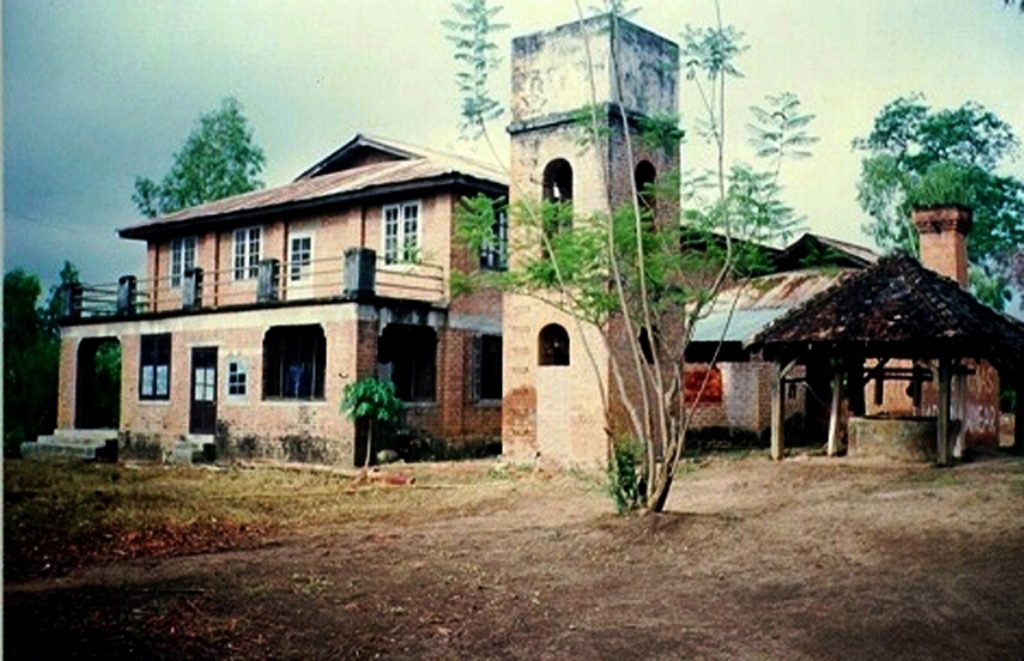
The mission compound was very large. There was a school, a church building, a hospital, and staff quarters in the compound. How could Dr. Gibbens get such a big land from SaoPha? I was told, “One day, Dr. Gibbens went to see KengTung’s SaoPha and asked for land to build a hospital and school. SaoPha said, “I’ll give you the land as big as you can measure with a cow skin.” How big is a cow skin? Dr. Gibbens was so clever. He cut out dry cow skin into small threads and fixed them together. Then it turned out to be a long cow skin. He measured it by that cow skin and got acres of land.”
The first Shan Church
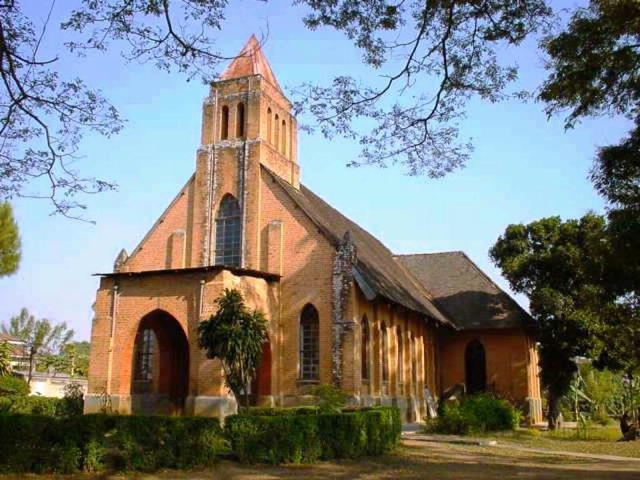
The first temporary chapel was built in Kengtung in 1902. It had four members, including the first convert Phak Ka Sai. The first church building, NaungPha Church, was built of wood in the mission compound in 1922. It was destroyed during the war. Another new NaungPha church building was built of bricks in 1936 under the leadership of Rev. Ray Buker. NaungPha Church was a multiracial Church that consisted of Burmese, Shan, Lahu, and Wa. Sometimes, three to four languages were used during Sunday worship service, and it lasted about four hours. It was reported in 1937 that there were only 25 Christians in NaungPha Church in 1927. The church building now belongs to the Wa Baptist Association, when the properties in the mission compound were divided among different racial groups.
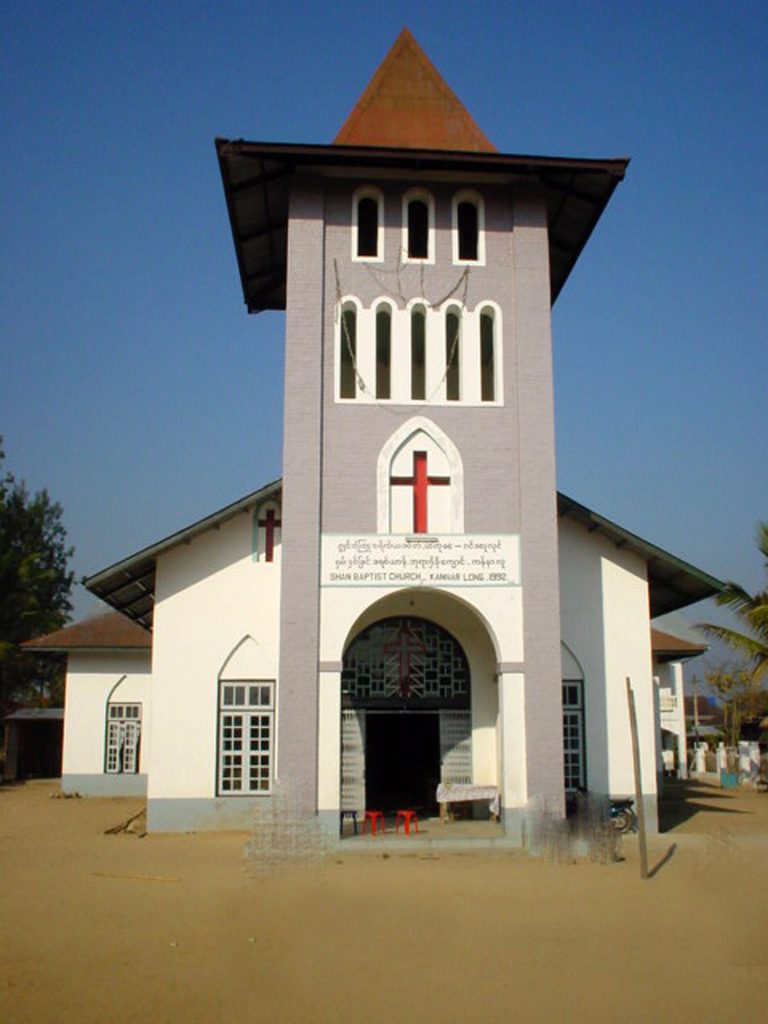
KanNaLone church building was built in 1951 under leadership of San Lu. It was Shan-speaking Church. It helped solve the problem of long worship service at NaungPha Church due to multi-languages. The first pastor of KanNaLone Church was recorded as Rev. Po Hla. As reported in 1927 by Telford, in the absence of the pastor of Shan Church, San Lu conducted the religious services. He also taught Sunday school class and he had, on different occasions, gone to KengTung market to preach the gospel to his fellow Shan. He even had conversations with SaoPha about Christianity. The SaoPha was a staunch Buddhist. San Lu had a likable personality. Two storeys Phak Ka Sai memorial hall was built in 2001 in KanNaLone Shan Baptist Church compound. It is useful for further activities of the Church. There are six rooms for Sunday school and a big assembly hall upstairs.
KengTung Hospital


Medical work began with the arrival of Dr. and Mrs. Howard Clinton Gibbens in 1904.
Dr. H.C. Gibbens arrived in 1904 to open a dispensary and hospital there. After serving for three years, he was transferred to Mongnai, and Dr. Robert Harper took over the Kengtung hospital for five years. There was no doctor to follow him during the ten years, 1913-1923. Then Dr. Henderson was sent from Mongnai to serve till a new doctor, M. D. Miles, arrived in 1925 for a five-year term. Work went on rapidly during this period because Dr. Richard Buker was added to the staff in 1926. Statistics for 1928 showed 3,864 dispensary patients treated during the year. (1945 St. John 462 ff)
Dr. Robert Harper arrived in Kengtung in 1907. Dr. Robert Harper worked in Kengtung from 1907 to 1915. He also started a mission school. There were many gaps in missionary terms, especially in medical work.
Dr. and Mrs. Max D. Miles served in Kengtung from 1925 to 1931.
Dr. Richard Buker served from 1926-1940. Dr. Richard Buker was very much involved in medical work among leprosy patients. He built hospital and started nursing training.
In the 1929 report, he had treated 20,684 patients, done 82 surgical operations, seen 370 in-patients, and trained 17 nurses. Miss. Elva O Jenkins and Miss. C.E. Henderson also worked at the hospital from 1930 to 1934.
Dr. Miles and Dr. Buker felt that they must do something to help the many people with leprosy in the Kengtung area. A survey by Dr. Buker showed that 6% of the population had the disease, or 18,000 cases in the Kengtung State. With the aid of the American Mission to Lepers, the doctors established villages in the district where life could go on in quite a normal way, each family doing its farming. Children who were free from the disease were placed in school in a village of their own.
A very effective teamwork was practiced by Dr. Dick Buker and his twin brother, Ray, who was an evangelist.
In 1930, an American nurse. Miss Elva O. Jenkins, later Mrs. C. E. Hendershot, joined the hospital staff. She was fully responsible for the medical and leprosy program during Dr. Buker’s furlough from 1932 to 1934.
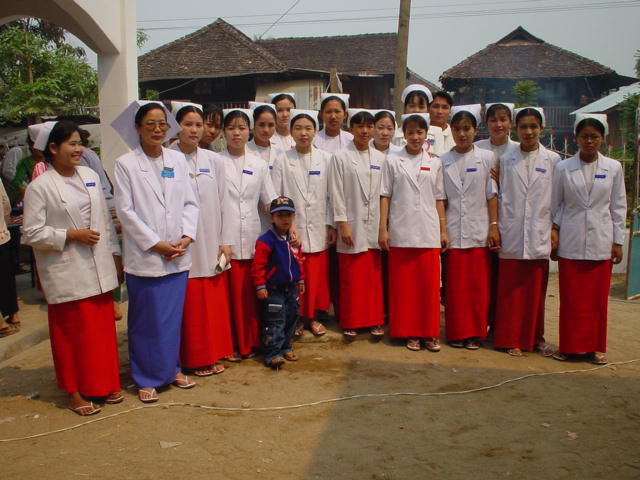
The Shan work in KengTung took on new life with the coming of the Ray Buker in 1934 after serving their first term in Bana, Pangwai and Mong Mong. In 1936, Saw Khin arrived in Kengtung to serve in a hospital. She was the first Shan nurse to serve alongside Dr. Buker. She married Ba Hein in 1937 and lived in the mission compound until World War II. After World War II, she moved to KanNaLone and started a Shan fellowship with a few Shan believers. Dr. Richard Buker treated many people with leprosy in KengTung free of charge. Dr. Richard Buker started a training course for “nurse-compounders” for men. The dispensary gave 20,000 treatments, the hospital had about 400 in-patients, and about 1,000 leprosy patients were under treatment in villages scattered over KengTung State. Dr. Buker made long trips to villages, examining hundreds of people, to find the dread disease in its early stages. The American Leprosy Missions gave financial help to this work. It was reported in 1931 by Dr. Buker that a class of seven students studying medicine in KengTung Hospital. KengTung hospital was not only treating patients, but it was also giving training and education in medicine to local people. When Dr. Buker went on furlough in 1940 and Dr. Lao Htin Po took over the medical work. All hospital and school ministries stopped during World War II. All missionaries left for India by plane from NamKham. The Louis Hastings Memorial Hospital in Kengtung was destroyed during World War II. Dr. & Mrs. Keith Dahlberg arrived in Kengtung in 1957 and reopened the hospital in 1958. Dr. Dahlberg reported on August 31, 1958, that the clinic had handled (mostly in July and August) 1,690 patients, 1,020 new patients, and 14 minor surgeries were performed. KengTung Christian Hospital had grown to an institution equipped and staffed to handle major surgical, medical, and obstetric cases. Dr. Dahlberg worked day and night, twenty-four hours on day every day. In addition to his duties at the hospital, he had to look after the leprosy work with a staff of two, one for Church work and the other for going round the 15 leper villages distributing medicines and reporting conditions prevailing in the leper villages.
Dr. Saline Aung Thaik, a Chin doctor, arrived in 1962 when Dr. Dahlberg was on furlough. It was reported in 1963 that the hospital had Christian (all Baptist but one Catholic) workers working under the guidance of the BBC. The main aim and objective were to show the love of Christ by giving help to the poor and needy, and to go and give help to neglected areas. When Dr. Keith Dahlberg left in April 1962, they felt lonely, but with daily guidance and strength from God, they were able to continue the work. Due to greater ministry to the needy and poor, they were in financial difficulty, but God answered prayer, and they found enough help to meet their need. Under the care of the hospital were 18 villages of segregated lepers, looked after by only two workers who had to travel a vast area in the hilly part of the country. With the help of American Leprosy Mission Inc., they could distribute free anti-leprosy drugs and other general medicines, support 3 to 4 leper students in primary and middle classes, and 3 primary schools with one teacher each in 3 leper villages. Another source of help was the BBC Relief Committee. They had received blankets and clothing from Churches for the lepers. Though the hospital was a separate unit in KengTung field, it was in no way independent but was in constant co-operation with Churches and Committees of the BBC and Burma Council of Churches. They received much co-operation and help from the field Secretary, Rev. John Po, as he was in touch with the people for more than 5 years. There was much to be done for the leprosy villages, promoting the co-operative work, other than helping with many gifts, so that the strength and ability of the local Churches could be used to promote the life of the Church in that area. Though there had been progress in the past, there was also much to worry about and much to pray for. As for the hospital, the financial situation was not very strong, and the daily income to the hospital hardly meets the need to pay for salaries, maintenance and miscellaneous expenses, and the purchase of medicines for hospital use. As for the staff, some had resigned, and some would probably be leaving at the end of the year after long service in this area. They needed more native people for this work. There was language difficulty as at least four different dialects were used in everyday work. Two nurse aides had been selected for further training. Above all, they needed more national doctors in this area, better still, people from this area who would like to serve this vast area.
Eastern Shan State Baptist Association (ESSBA)
Under the leadership of Saw Khin and Rev. John Po, “Eastern Shan State Baptist Association“ was formed during the 65th Eastern Shan State Baptist Mission Celebration in KanNaLone from April 4-7, 1968. On that day, 218 people were baptized. Eastern Shan State Baptist Association was a multiracial association comprising Shan, Wa, Lahu, Lisu, and Kachin Churches. ESSBA held meetings annually and sometimes biannually, and sometimes triannually from 1969 to 1994.
The First Executive Board Members (1968-1970)
Sai Win (chairman),
Saya Ai Chit (vice-chairman),
Sayama Saw Khin (secretary),
Saya Sai Seng Tip (vice-secretary).
There were 19 Churches and 1,507 baptized members in ESSBA in 1970.
Six Churches were from leprosy villages.
Board members (1970-1977)
Chairman Saya Sai Seng Tip
Vice-chairman Saya Ai Chein
Secretary Saya Sai Philip
Vice-secretary Sayama Nang Sauk
Treasurer Sayama Saw Khin
Evangelism Dept. Saya Sai Tin Maung
Evangelist Saya Ai Chit
Development
In 1972, there were 24 Churches in ESSBA. In 1979, the number of Churches reduced to 17 because two Wa Churches and one Kachin Church left the association, and 4 Churches in the MuongYa areas were out of communication because of communist insurgency. Church contribution from each Church to the ESSBA increased from Kyat 1,235 in 1968 to Kyat 15,000 in 1981, Kyat 18,000 in 1986, and Kyat 25,000 in 1988. For the development of a self-supporting program, some Churches own rice fields and fishponds. It yields some profits for the Church’s coffers. There was also a piece of land owned by the association to plant trees, mango, and other fruits for the association’s income. It also provides job opportunities to members of the Church and earns some money for their living. KanNaLone Church has one small electricity generator. It supplies electricity to some Christian homes and charges a small amount of money since the electricity supply from the government is very irregular.
ESSBA reported in 1988, “Eastern Shan State lacks good, qualified leadership. In many Churches, there are no graduates from university level. The Church can only afford to support a pastor with Kyat 600 per month. The roads are so bad that travel is not easy. During the rainy season, it is almost impossible to travel. An evangelistic trip can only be made during the dry season. Communication is bad. No postal service, no telephone, no telex available in many towns and villages. The fare for the bus is extremely expensive. Most of the pastors cannot afford to pay for bus fare to travel.” 5 Churches have been reorganized and re-communicated to ESSBA in 1989 after 20 years of separation because of communist insurgency.
Statistics – January 1963 – July 1963
80-bedded hospital; 1 National Doctor,
Out patient department; 2,628 attendance,
1 Missionary nursing superintendent,
In-patients; 321, Daily Census average; 11.6,
1 Business Manager, 4 qualified nurses (including Midwives)
Buildings; 2 quarters, 4 Trained nurses from Yedwinyegan, 1 nurses’ home
2 houses for leprosy; 2 Aid nurses, 1 Lab/Xray assistant, 1 Cook; 5 Menials, including night watchmen
Mission School
Mission school was started in 1904 by Dr. H.C. Gibbens. Mr. Antisdel had to abandon his work at KengTung and proceed to America in 1912 because of poor health. The pupils were from six different tribes, but the examinations were conducted in Shan, which was the common language for all. A rudimentary normal department for the training of teachers had been opened, and industrial training in carpentry, masonry, seed sowing, laundering, cooking, care of animals, and housework was given. San Lu was the head master of the school in 1927. He got his training in the Methodist School, Rangoon, and the Baptist School in Taunggyi. San Lu could speak and teach in languages such as Shan, Burmese, Lahu, and English. The children came from non-Christian Shan, Burmese, Chinese, and Indian families. Those boys and girls, while in school, lived in a Christian atmosphere, and they carried back to their homes Christian influences, which helped to dispel the misunderstanding their parents had about mission work. It seemed essential that, in work for the Shan, confidence and friendship had first been established as a basis of approach for the Gospel message. San Lu had won many friends among the parents of his pupils. He was quick to note the absence of a student, and he promptly found out by a personal visit to the home the reason for the student’s absence. His interest and enthusiasm for the success of each pupil inspired the parents to show more interest in the education of their children.
San Lu had gathered to the school a fine company of boys and girls who paid monthly fees for their education. There was the SaoPha’s school in town where free education was given but despite this competition many parents preferred to send their children to the mission school where both the teaching and the discipline were better. Even SaoPha sent some of his children to mission school. In the absence of the pastor of Shan Church, San Lu conducted the religious services. He also taught a Sunday school class and he had, on different occasions, gone to the KengTung market to preach the Gospel to his fellow Shan. He even had conversations with the SaoPha about the Christian religion. The SaoPha was a staunch Buddhist. San Lu had a likable personality and he was a great Christian leader among the Shan. San Lu was honored by the prime minister of Burma, U Nu, as Mahathraesethu San Lu, as minister of transportation in 1953. His memorial hall was built in KanNaLone Shan Baptist Church, KengTung.
Aung Din, Saw Maung, and Saw Ka Le Htoo also arrived in Kengtung and helped Rev. Young in the mission school until 1956. The new school building was started in 1959. Schools were teaching up to six standards in 1962. The school had become a High School and the headmaster was David Hsam. All the teachers were Christians except one. A children’s hostel was built in the mission compound in 1978 with 22 students. There were 28 students in 1988. The objective of having this hostel was to allow hill tribe children to have the opportunity of continuing learning in KengTung and to produce future Christian leadership. Twelve of them were children from leprosy villages. Now there are two children’s hostels under the Eastern Shan State Shan Baptist Convention. Hostels accept children from primary to high school. A kindergarten was started in KanNaLone Church in 1981 with 60 children and 3 teachers. It increased to 85 children and 4 teachers in 1985. In 1988, the number of kindergartens increased to 7 in 7 Churches under ESSSBA.
Mass Baptism
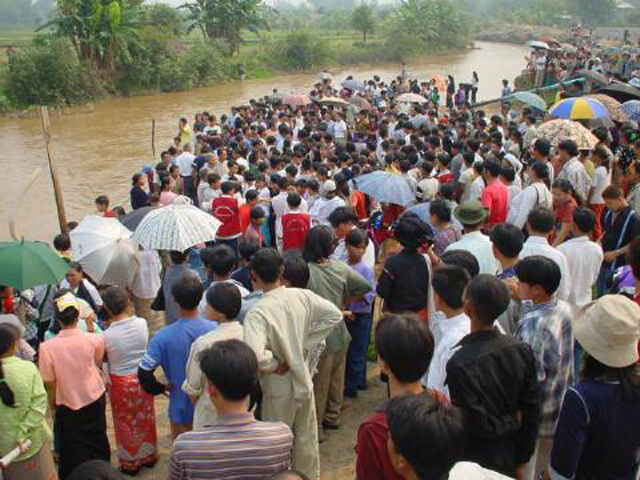
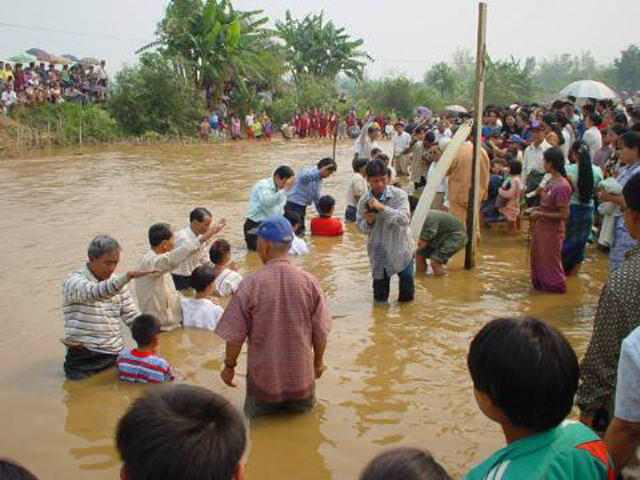
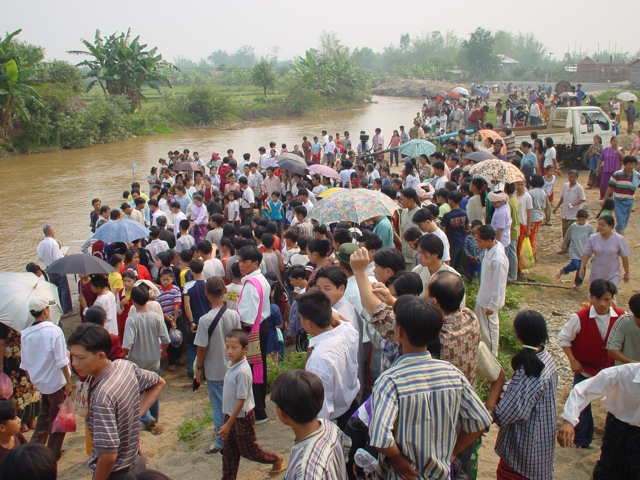
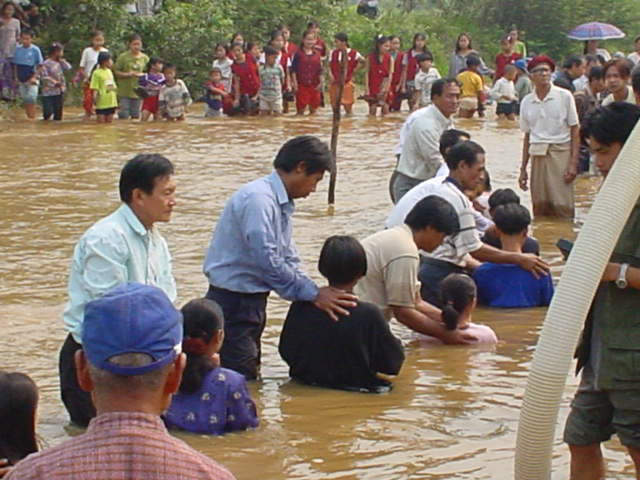
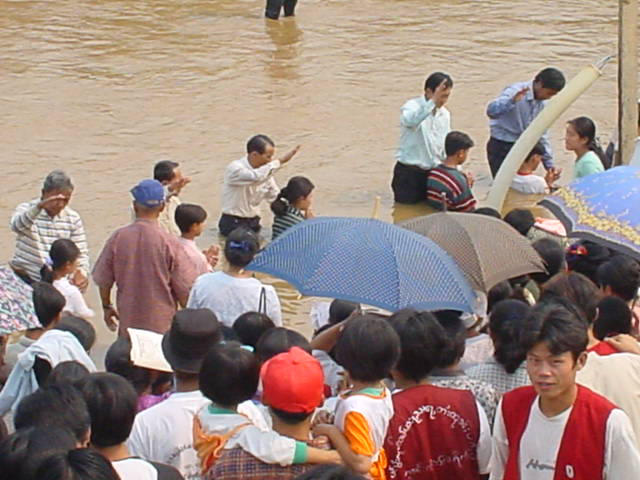
Whenever some one believed in Christ water Baptism was conducted to accept him or her as a member of the Church. According to Baptist practices baptism was conducted on Sunday. Sometimes a large group of people baptized at the same time. Noticeably mass baptism use to be taken place during big and special occasions.
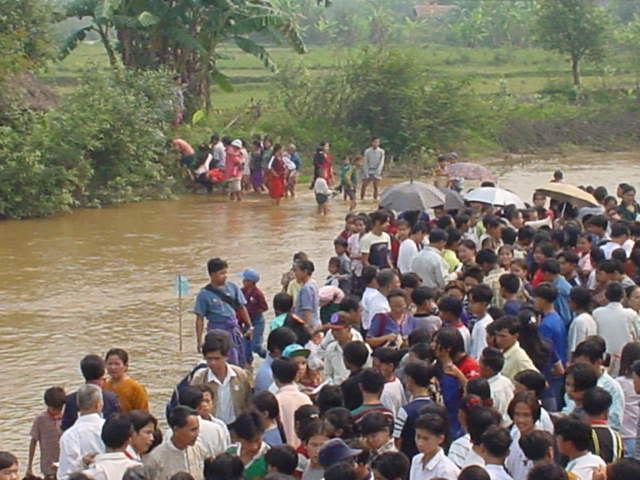
For instance, 218 people were baptized when Churches in Eastern Shan State celebrated the 65th Eastern Shan State Baptist Mission Celebration in KanNaLone from April 4 to 7, 1968.
165 baptized on April 7, 1978, during the Annual General Meeting of E.S.S Shan Baptist Association.
68 people were baptized during the Shan Bible Centenary Celebration held in MuongYang in 1985 from 11 to 14 April.
58 people were baptized in 1987 when the silver jubilee of TaChiLeik Church was held in TaChiLeik from April 2 to 5.
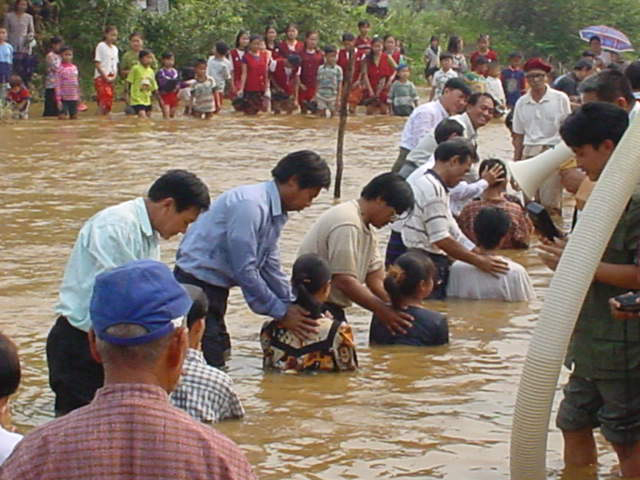
168 baptized in KengTung on March 31, 2001 when Eastern Shan Churches celebrating Eastern Shan State Baptist Mission Centenary.
Why do people want to be baptized on such a special occasion? Who are those baptized on these special occasions? Very few people are baptized in normal circumstances. Almost all the people baptized on such special occasions are second-generation Christians. One of the purposes of baptizing on such a special occasion is a happy moment to be baptized together with friends, and easy to remember the date of their baptism. Should we have special occasions more often so that more people will be baptized? Should we change the attitude of baptizing only at special occasions? Many Shan Churches do not organize water baptism regularly. A senior pastor said, “We conduct baptism only twice a year at Easter and Christmas.”
Evangelist training
As we have set up a 21st Century Shan Mission Project to produce 201 evangelists in the year 2001, a three-month evangelist training course was introduced in 1990 in KengTung to produce more evangelists in Eastern Shan State under the leadership of Rev. Sai Stephen. This is the first training course of its kind ever conducted, aiming to produce more Shan evangelists. 15 people attended the first program. Before attending the training, all trainees have to give a promise to serve in a mission for at least 2 years after graduation. Nevertheless, most of them are still serving today. Most of them are being ordained.
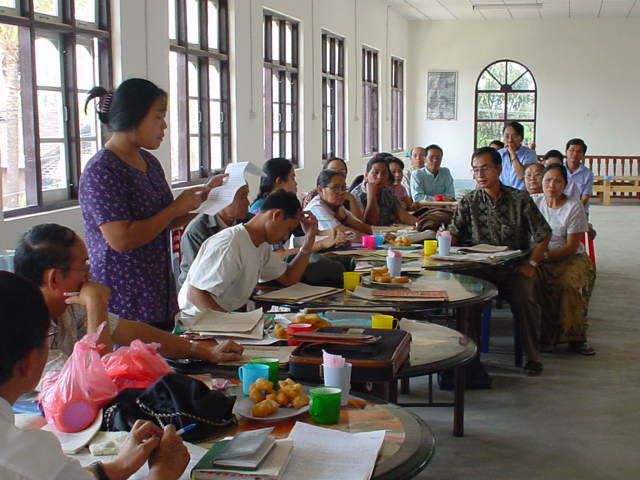
The first GCI for Eastern Shan Churches was conducted in Kengtung from December 1 to 13, 1997. Trainers came from different countries. 40 attended, including 31 Shan and 9 Wa. The expense was Kyat 520,000 paid by the GCI team. Lessons such as Power Theology, Ministry Planning, How to study the Bible, Leadership, Church Planting, Pastoral Ministry, Prayer, Christian Family, Evangelism, Praise and Worship, and Child Evangelism were taught. The second GCI was conducted in Kengtung in February 2001. 42 students from the Wa tribe, Lahu tribe, Shan tribe, and a couple more from different tribes attended.
Bible School graduates
There is no “Shan Bible School” in the Shan States. All Shan students have to go to study at a Burmese or Karen or Lisu, or English Bible School in Insein, MayMyo, or TaungGyi. The first Shan Christians to graduate from Bible School since the mission field opened in KengTung in 1901 were Sai Philip, Sai Hsam, and Sai Seng in 1961 from TaungGyi Bible School. Between 1961-1980, 6 attended TaungGyi Bible School, 6 attended Insein Myanmar Seminary, and 2 attended Myanmar Institute of Theology in Insein. Only 14 young people went to Bible school in 19 years. Under the 21st Century Shan Mission Project, 19 students were sent to Bible schools in 1984, including 5 from Eastern Shan State. It was a surprise to Bible Schools in Insein to see such a large number of Shan students attending Bible Schools in one year. Normally, the Bible Schools seldom have one Shan student in a year.
Sai Myint Lay was the first student from Eastern Shan State to graduate from the Myanmar Institute of Theology in 1969 with a B.Th degree. He served as General Secretary of the Eastern Shan State Shan Baptist Conference for one year and moved to LaShio in 1971. There, he got married to a Shan woman and had two sons. He later got addicted to heroin and completely left the ministry. He was rehabilitated and returned to serve in the Burma Baptist Convention’s drug rehabilitation department in 1980. He was then sent to Hong Kong in 1982 by the BBC to study a drug rehabilitation program at Wu Oi Drug Rehabilitation Center for two months. He spent one month staying at my home. We had an opportunity to discuss Shan missions. Sai Myint Lay went back to Burma in January 1983 and got involved with Shan mission work again. He left the BBC and went back to serve the Eastern Shan State Baptist Convention as a full-time secretary in 1986. He later married a Kachin woman on May 19, 1989. He had a severe motorcycle accident in 1992 and damaged his right shoulder. He was sent to New Haven. CT, USA, by BBC, in 1996 for a few months’ study tour. After returning from the U.S.A., he had a severe sickness and was admitted to the hospital. He passed away on September 3, 1997, in Yangon.
Sai Stephen was a second Shan student from Eastern Shan State to graduate from Myanmar Institute of Theology in 1977 with a B.Th degree. He served the Lord as pastor of Calvary Baptist Church, NaungPha, KengTung, since graduating from Bible School until he served full-time as Assistant Director of 21st Century Shan Mission Project in 1992, responsible for Eastern Shan State. He also served as General Secretary of the Eastern Shan State Shan Baptist Convention since its inception from 1997 to 1999. He was the pioneer of the formation of the Eastern Shan State Shan Baptist Convention. He was sent to New Haven, CT, USA, by the Myanmar Baptist Convention for a study tour from September 1999 to May 2000. He returned to Myanmar in June 2000. He unexpectedly had a stroke and passed away on July 12, 2000, in Kengtung. I had an opportunity to talk to him by phone from Yangon two days before he passed away, while I was conducting Shan GCI in Yangon. It was a shock to Shan Churches. I was able to go to KengTung and join his funeral service on July 17.
Bible School gradates in one century (1901-2001)
Name / Diploma / School / Remark
- Naw Mi / L.Th / MICT / (deceased)
- Philip / L.Th / TaungGyi Bible School
- Sai Hsam/ L.Th / TaungGyi BS
- Sai Seng/ L.Th / TaungGyi BS /(deceased)
- Shwe Pui/ L.Th / MICT
- Seng Tip/ L.Th / MICT
- Myint Lay/ B.Th / MIT /(deceased)
- Stephen/ B.Th / MIT (deceased)
- Kham Yung/ L.Th / MICT
- Seng Arm/ L.Th / MICT
- Stephen Ping/ L.Th / MICT
- Kya Yung/ L.Th / MICT
- Khin Htun Hein/ L.Th / MICT
- May San Oo/ B.Th / MIT
- Zan Leng/ B.Th / MIT
- Myint Myint Pyu/ B.Th / MIT
- Tha Han/ M.Div / MIT
- Saw Tip Lao/ B.R.E / MIT
- Htun Kyaw/ B.Th / Po Karen Bible School
- Seng Hom/ B.Th / Lisu Bible School
- Mu Ran/ B.Th / Lisu Bible School
21 Shan from Eastern Shan State graduated from Bible School and Theological Seminary in 100 years.
Eastern Shan State Shan Baptist Convention (ESSSBC)
We had tried to unite all Shan Churches from all over the Shan States to form the “Shan Baptist Convention” since 1978, but were unsuccessful. The main reasons for our failure were: the refusal of the Burma Baptist Convention (BBC) to permit us to form the Shan Baptist Convention, and also a lack of unity among the Shan Churches’ leaders. Rev. Sai Nyunt Tha had tried to convince the executive members of the BBC three times since 1979 but failed.
In the beginning of our endeavor, when Sai Nyunt Tha was the General Secretary of ShweLi Valley Shan Baptist Mission, ShweLi Valley Shan Baptist Mission supported the effort in forming SBC. However when Rev. Shwe Htun became General Secretary of ShweLi Valley Shan Baptist Mission they withdrew their support. Formation of SBC is not successful till today.
In Eastern Shan State, there are Baptist Church Associations such as Lahu Baptist Association, Ahka Baptist Association, Wa Baptist Association, and Shan Baptist Association, together forming Eastern Shan State Baptist Convention (ESSBC) as a Multiracial-Regional-Convention. When Lahu withdrew from ESSBC in 1987 and formed its own “Eastern Shan State Lahu Baptist Convention.” Sai Stephen and other leaders of Shan Churches in the Eastern Shan State began to try to form their own “Eastern Shan State Shan Baptist Convention” (ESSSBC), which is a racial convention. At the meeting held on April 1, 1991, at WanMon Shan Baptist Church, all Shan Churches in Eastern Shan State unanimously agreed to form ESSSBC.
Preparation for the Formation of ESSSBC
As the leadership of the Myanmar Baptist Convention (formally known as BBC) has changed, their attitude towards Shan Churches has also changed. The meeting with Rev. Saw Marge Gyi, General Secretary of MBC, and Rev. A. Ko Lay, Treasurer of MBC, in 1993 had paved the way for the formation of ESSSBC. Leaders from Eastern Shan Churches drafted a constitution of ESSSBC in WanTaZan Baptist Church on April 8, 1994. At the same time, three Shan Baptist Conferences were formed to meet the constitutional requirement to form a convention. The three conferences were: MuongYawng Shan Baptist Conference, MoungPyat Shan Baptist Conference, and KengTung Shan Baptist Conference. A meeting was held again from March 1 to 2, 1995, at ThanLwin Shan Church for ESSSBC formation. In 1995 Wa Baptist Conference joined the Shan Conferences and increased to four Conferences. In September 1995, the formation of ESSSBC was approved at the EC meeting of MBC.
Recognition of Convention
The official announcement of the formation of “Eastern Shan State Shan Baptist Convention” was made at the 116th MBC Annual General Meeting held in Haka, Chin State, on January 18, 1997. ESSSBC is the 15th Convention in MBC. Because of Wa conference is included in this ESSSBC, the convention becomes another regional convention. It doesn’t represent Shan Churches alone. WA Churches are now trying to form their convention.
The first executive board members
Chairman Rev. Seng Tip
Vice-chairman 1 Rev. Sai Nyunt Tha
Vice-chairman 2 Rev. Sai Choik
Secretary Rev. Sai Stephen
Vice-secretary Rev. Sai Philip
Treasurer Sai La La
Auditors Saw Mu Di
Saya David Hsam
Women Min. Sayama Htwe Yu Hein
Youth Min. Saya Saw Htoo Wah (1997-1999) Sayama May San Oo (1999-2000)
Christian Education Sayama Catherine
Evangelism Dept. Rev. Sai Stephen
Pastoral Min. Rev. Sai Philip
Men Min. Rev. Marku Crane
Rural Dev. Sai La La (97-98) Saya Sai Paw Lu (98-2000)
Shan Churches in Eastern Shan State in 1988 and their pastors
(1) KanNaLone Baptist Church (Rev. Sai Seng Tip).
(2) Calvary Baptist Church (Burmese-speaking Church) (Rev. Sai Stephen)
(3) Bethany Baptist Church (Chinese-speaking Church)
(4) Emmanuel Baptist Church (Rev. Seng Daw).
(5) MuongKat Baptist Church (Nang Kham Yone).
(6) WanPa Muong Baptist Church (Rev. Ai Zein).
(7) WanKum Kham Baptist Church (Sai Stephen).
(8) WanMon Baptist Church (Sai Kyuet).
(9) WanYuet Baptist Church (Rev. Ah Yai).
(10) WanHui San Baptist Church (Ai Yee).
(11) TaJant Baptist Church (Rev. Jacob).
(12) MaeHut Baptist Church (Ah Nyi)
(13) Tachileik Baptist Church (Rev. Win Maung) (Burmese-speaking)
Report in the year 2000
A month’s evangelist training was held from August to October 1999 in Kengtung.
Special Development Training was held in September 1999 in MuongYang. 40 people from seven Churches attended.
Sent out 20 evangelists to 20 new mission fields. 94 people baptized.
Three new Shan Fellowships were formed. Total fellowship 8.
Showing the Jesus film to villages.
17 students in Bible Seminaries.
Four graduated from B. Th. Program.
The evangelists were supported by Asian Outreach in 1999.
Evangelist Village Christian Family
Nang Thu Za Mon Nong Pha
(Director of Mission)
Sai Kup Jordan 30
Sai Hsam MoutLow 15
Ai Wan NamYang 15
Nang Easter Hmoon WanLoo 5
Nang San Yin HayKaMoan 20
Rev. Ai Kyi WanSaw 56
Sai Htay Myint WanPai 60
Sai Kong MuongHow 12
Sai Seng Kham WanYwet 8
Sai Saw WanYan 12
Sai Yaw Ba WanKyaw 13
Dan Ye Hla WanHwe 29
Sai Phut WanMai 16
Sai Lee WanTom 18
Sai Yaw Han KarMonMai 20
Daw Nang Doi Bethel 8
U Hla Rang WanKuat 30
Daw Tin Seng MaiYang 5
Rev. Nyi Thai NamLin Mai 20
Rev. Yohan Khun NamLinMai 8
Sera Ai Shie PanPhex 7
Sara Sam Khim Mai Naw Phatex 15
Sara Lok Rony MengHan 13
There were 193 new believers in the year 1999.
Five new mission fields are;
KengPhone, 15 families
WanKung, 30 families
WanNamMoi, 50 families
MingWat, 25 families
MingPart, 30 families
Future Planning
- To have three-years-program Shan Bible School in KengTung.
- To plant Churches, open nurseries, orphanage homes, and old age homes, and do more evangelism.
KanNaLone Shan Baptist Church

Many believers in Eastern Shan were formerly accused of being evil spirits and had been driven out of their homes, communities, and villages. They got healed after receiving Jesus Christ and living in a Christian village. They were poor and uneducated. People seldom turned to a pastor or Church or Christian community for a genuine interest in Christianity, but whenever they needed physical help or faced evil spirit problems.
The first church building in NaungPha was built in the mission compound in 1922. It was destroyed during World War II. Another new NaungPha church building was built in 1936 under the leadership of Rev. Ray Buker. It was a multiracial Church. Sometimes four languages had to be used during the Sunday worship service, which lasted for about four hours. Shan believers moved out from NongPha Church to KanNa (meaning the middle of the rice field) and started a new Shan Church in 1951, which is now called “KanNaLone Shan Baptist Church.” The Shan language is used in their worship service. San Lu was the first leader and pioneer of the church building. He also led worship services when there was no pastor.
Church growth
The Church grew tremendously under dedicated leadership. It was reported in 1963 that KanNa Shan Baptist Church had about 800 members and a strong women’s organization, men’s group, the youth C.E., and children’s Sunday school. It was the central main Church of the Eastern Shan State Baptist Convention. Under the able leadership of Saw Khin, the Shan women’s groups were organized down to the outlying Churches. A kindergarten was started in KanNaLone Church in 1981 with 60 children and 3 teachers. It increased to 85 children and 4 teachers in 1985. It was reported in 1985 that it had 352 members, an ordained pastor, Rev. Yaw Shu (son of Rev. Po Hla), who was an ex-medical worker of Louise Hastings Memorial Hospital, had taken care of the Church. His knowledge of medicines is an asset. He was an ardent worker and worked his best. The assistant was Saya Ho Sam. He was theologically untrained but always gave his best. Kham La (younger brother of Rev. Yaw Shu), a magistrate, was a lay worker. He looked after the affairs of the Church and community and was the clerk and treasurer of the Church as well. Saw Khin (daughter of San Lu), another lay worker, was a capable woman worker and very ardent. She was a nurse and helped the community in that capacity. Naomi, a 1957 graduate of the Burmese Women’s Bible School, worked as a Kindergarten teacher in the Baptist School besides her other Church activities.
Those who served as pastors
Ai Noi (first pastor)
Po Hla
Aung Din
Yaw Shu
Ho Hsam
Seng Tip (1967-)
Sayama Nang Kham Yong (Assistant Pastor 1990-)
Sayama Nang San Leng (Assistant Pastor 1999-)
Phak Ka Sai Memorial Hall was built in 2001 in the KanNaLone Shan Baptist Church compound.
Activities
KanNaLone Shan Baptist Church is a very active Church. Since all the Christian families are living together in one village, KanNaLone village, they are more united and easily organized under the leadership of Rev. Seng Tip. It is a Christian village. Thieves, robbers, drunkards, or drug addicts are seldom seen in the village. Rev. Seng Tip told me, “One evening, I saw a young man get drunk in our village on the street. I punished him to do hard work in the village for one day. Afterwards, young people dare not get drunk in our village anymore.”
A strong group of prayer warriors who pray every morning at 8 AM. They also have a group of widows who prayed every morning. I was so encouraged when I met them and heard that they were praying for me every morning.
Health, education, and social activities among the community.
Youth ministry and music ministry by the youth in different places.
Men’s and women’s associations are active in different ministries.
Training and producing future leadership of the Churches.
Three months of evangelistic training for future evangelists.
A children’s hostel for poor village children to stay and continue their basic education. Some of the hostel students have graduated from training and Bible School and are now in full-time ministry. More and more young people are graduating from Bible Seminary.
The Evangelism Department used to organize evangelistic trips to different places in the vicinity. Usually it is organized during the summer time when Bible schools and secular schools are closed. Men’s and women’s groups are active in different ministries.
Short course training programs are organized either by themselves or in co-operation with Asian Outreach G.C.I or S.S.M.C to train and produce leadership and evangelists for Churches.
Six months on campus, six months off campus, and an evangelistic training program for three years for future evangelists. All graduates of this training program dedicate themselves full-time as evangelists. They are sent to new designated villages to begin Church planting work. Many people came to the Lord, and new Churches were planted. Late Rev. Sai Stephen said, “We send our evangelists to the villages where there is no monastery and monks. It is not easy to get converted where there are monks and well well-established monastery.” Monks have a great influence in the village.
One Sunday at KanNaLone Shan Baptist Church

Sunday morning, Church bell rang at 6 AM. Men gathered in the Church to have men’s fellowship. It lasted about one hour. About fifty men attended.
At 8 AM, the bell rang again. Children from five to fifteen years old got together for Sunday-schools. There were different classes for different ages. Once a month all classes grouped together for combine program. Altogether about 300 children.
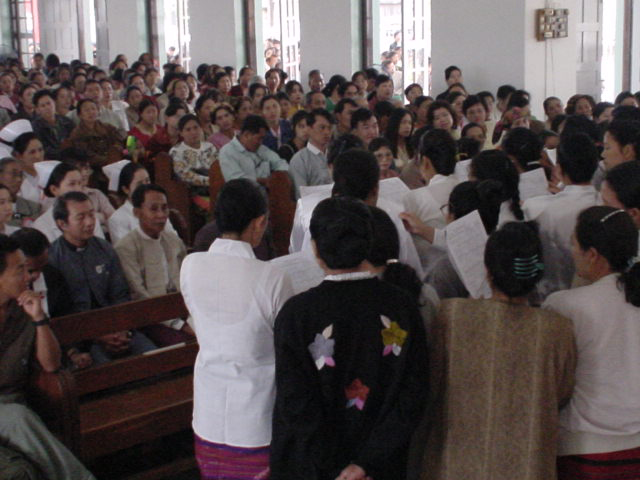
At 9 AM, the bell rang again for main Worship Service for all ages. About five hundred people attended the service. It lasted about two hours.
At 2 PM, the bell rang again for women’s worship service. About 150 women attended the service.
At 4 PM, the bell rang again for Youth Worship Service. About 150 young people attended the service. Children as young as 10 year-old were asked to lead the service. They recited scripture verses by heart, prayed and sang. They were trained at young age.
At 5 PM, after youth Service, young people gathered at one of the pastors’ homes for a special Worship Service to offer prayer and encouragement to the pastor. They believed that the servants of the Lord also needed prayer and encouragement.
At 5 PM, I was taken to a village on a motorbike and sometimes on foot. It took about 45 minutes to get there. Another Worship Service with the village people. It lasted about one hour. I got back to the pastor’s home at 7 PM. It was really “The Lord’s day.” The whole day was for the Lord. I preached four times on that Sunday. Do we feel tired in worshiping God?
All the baptized members give a “monthly offering” in front of the main door, with the names recorded by the assistant pastor of the Church every Sunday morning before the Church service begins. During worship service, other offerings called the “tithe” and normal “normal Sunday collection” are collected. If there is a communion, communion is offered once a month on the first week of the month, and a “communion special offering” is also collected. “Special offerings for church building fund” or “Church celebration or special programs” are also collected. There are many offerings collected by the Church on Sunday. The names of the donors and the amount of the money given are also read out in the Church by the Church assistant pastor as an announcement. Sometimes this announcement lasted for thirty minutes. When asked why they read out all the names of the donors and the amount of the money given, the reply was, “To let the people know that we are not putting their donation into our pocket. We are telling all the people the amount we have received from them.” However, there are some embarrassments for those who can only give a little amount of money, but there is pride for those who give more money.
Statistics in 2001
Families: 270
Baptized members: 447 (M) 544 (F) Total 991
Non-baptized members: 1,000
Report from HIV/AIDS Project
There are five full-time workers: Mayse Hein, Han Nu, Nang Seng Arm, Mary, and Able La.
Health education was given to 16 Churches, and a total of 690 people attended.
30 AIDS sufferers were visited, and 38 orphans whose parents died of AIDS are under support. 10 AIDS sufferers are also under support.
KanNaLone Shan Baptist Church in KengTung is the first Shan Church in Eastern Shan State, the largest and strongest Shan Church in all Shan States under leadership of senior pastor Rev. Seng Tip.
WanMon Shan Baptist Church, MuongYawng
WanMon Church, MuongYawng, was said to be started by Rev. W.M. Young in 1903, as reported by the WanMon Church history committee. However, we do not see in the record of Rev. Young. MuongYawng is 99 miles away from KengTung, but it might take at least a seven-day journey for a missionary to travel from KengTung to MuongYawng. The KengTung mission field was opened in 1901. It is doubtful that Rev. Young could start a new mission field in MuongYawng within two years. It was reported that a small school for Shan children was opened in MuongYawng in 1916.
Dr. Buker opened a clinic in MuongYawng in 1935. There were three pieces of paddy land at WanMon, MuongYawng. The fields were rented, and about 150 baskets of paddy were received as rent payment yearly. The mission compound was in WanMon, on the outskirts of the town of MuongYawng.
Church
On the arrival of Khin Maung Htun (Burmese Divinity School graduate), Naw Shee May and Saw Seng Daw (Burmese Theological Seminary graduate) all the three helped Ai Chit teaching in MuongYawng school.
In 1958, WanMon Church had 151 members, inclusive of the 27 new members baptized. It was reported in 1963 that in the course of six years (1957-1963), a total of 150 were baptized, with 45 new converts. There were no regular pastors in other places except for the Churches of WanMon and WanYawt. They were looked after by local leaders who could read and write and whose ancestors had taken active part in Church work. The association could in no way provide them with qualified pastors. Recruitment of workers from Burma proper was not easy. So the teachers of MuongYawng Baptist Middle School had to look after the Churches as well. Each teacher was held responsible for the spiritual and economic development of each area allotted to him. The new WanMon church building was dedicated in April 1985. There were 700 members in this Church in the year 2000.
The first pastor of WanMon Church, MuongYawng, was Mr. Mae (A Burman from Mandalay). He took a second wife, left MuongYawng Church, and went to live in NamPong village. He continued his work as a pastor in NamPong. When his second wife died in 1924, he returned to MuongYawng and reunited with his first wife, Nang Hong (Shan from HsiPaw), and again served as pastor of WanMon Church. He passed away in 1947. Later, Mr. Mae’s son, Ai Lone, a layman, took care of the Church for one year as lay pastor.
Ai Chit from PanWai became the pastor of WanMon Church on May 15, 1957. He was not only pastoring the Church but also teaching at the mission school. Saya Ai Chit left her teaching job in 1967 and concentrated more on Church work. The new WanMon church building was built on January 2, 1969. 15 families, led by Ai De, established a new village, Siliwon village, in 1969. Sai Choik graduated from Insein MICT and became the pastor of WanMon Church in 1971. He served for only half a year and left. Saya Ai Chit again served the Church as pastor. Sai Choik later came back and served as pastor of WanMon Church in 1975. Ai Chit then continued serving as an evangelist.
WanMon Church choir is the best choir among Shan Churches in all Shan States of Myanmar. They have produced twelve pieces of Choir to be used in my Shan radio program. By the hard work of Ai Chit in MuongYawng, many Shan came to believe in the Lord. 75% of new converts were from other faiths. There were also many new converts in the hands of Rev. Ya Kuk.
The resettlement project
In 1960, there was a project to resettle 40 landless families on the 400 acres of land granted to Rev. John Po by the former SaoPha of KengTung, Sao Sai Long. Saya Tin Myint, a Mon convert who had agricultural training at Pyinmana, gave advice and did general supervision of the agricultural work of the area. The villagers had vegetable gardening sales of vegetables.
Middle School
In 1960, there was a Primary School with about 30 children under a teacher capable of teaching up to the 2nd grade. There were about 40 to 50 children of the school-going-age. Saw Din Gyi, a graduate of the Burma Divinity School, had served from 1960 to 1963. Saw Tin Gyi was acting as the Headmaster of the Post Primary School and also as the advisor to the Churches in the sector. Khin Maung Htun supervised Baptist Middle School.
It was reported that the school, which started as a kindergarten school for children, had become a full-fledged middle school in 1963. It was staffed by Shan and Karen teachers and a Mon convert. Great emphasis was laid on self-effort and support. The proper school building, estimated to cost about Kyat 20,000, had been completed by the end of 1964. Trees were felled and sawn for timber required for the school building and furniture by the villagers themselves. Men, women, and children of the village provided manual labor, semiskilled or unskilled, without charge. It was a touching sight to see children from the age of 8 upwards carrying whatever bricks they could up the hill where the school was built. They called it their school. All local contributions received were expended on building materials and work charges, which were beyond the means and skill of the villagers. Rev. Katanni, an Italian priest of the Roman Catholic Mission, who had nearly 40 years of service in KengTung, provided for the construction work with a skilled bricklayer with a batch of 6 laborers from the village. As for the woodwork of the school building, the village had a leader, Kham La, an ex-MyoOk and a magistrate who was teaching in the school. He had some knowledge of buildings and structural work. He, with the semi-skilled carpenters of the village, contributed labor, skill, and effort to get the woodwork of the school building done.
Notable Achievement
One electricity generator was bought in 1976.
One kindergarten was opened in 1984.
Twenty coconut trees were planted.
A bell tower was erected at the church building.
Teaching Shan literature.
Established the Shan-Lahu new Church.
Report from MuongYawng Shan Baptist Conference 2001
Creation of Eden Garden Project at WanYuet.
Building New Children’s Hostel.
New mission fields in WanHor (Shan & Palong), KyawLa (Lahu & Ahka), MuongWa (Ahka), ChiangYan (Chinese), MuongKan (Shan).
To celebrate the MuongYawng Centenary in 2006.
Forming committees to encourage Churches and fellowships in Spiritual, Educational, Health, and Social works. Three students from MuongYawng are now studying at the Bible Seminary. Members of MuongYawng Shan Baptist Conference are: 15 Churches, 525 families, 1,571 Baptized members, 4 ordained ministers, 11 non-ordained ministers.
Member Churches in MuongYawng Conference
Church; Baptized M / Baptized F / Non-Baptized / Total / Pastor
- WanMon 150 M / 458 F / 193 / 801 / 5
- WanYuet 64 / 197 / 76 / 315 / 4
- HuiTam 61 / 167 / 84 / 312 / 1
- Union 20 / 42 / 23 / 85 / 0
- PaRaTiSu 10 / 26 / 10 / 46 / 0
- MineHor 10 / 22 / 17 / 49 / 0
- WanPai 59 / 120 / 178 / 357 / 1
- WanSor 19 / 38 / 45 / 102 / 0
- NongPawk 21 / 48 / 52 / 121 / 0
- WanSiLa 18 / 34 / 33 / 85 / 0
Total 432 / 1152 / 783 / 2273 / 11
Out of ten Churches six Churches do not have pastor.
MuongYang Shan Baptist Church
MuongYang is about 16 miles from China border, 100 miles from KengTung. It was recorded that there was already a Church in MuongYang in 1911. In 1958 Rev. John Po baptized 36 people. The Church had about 40 Christian families with 120 members. There had been an influx of refugees from China into Burma in the year 1958. The refugees were mostly Lahu from the SipSongPanNa. The total figure came about four or five thousands and most of them were Christians. They were uncared for and neglected and quite a number of them were going back to their old form of worship Animism.
School
Two new primary schools had been started at MuongYang in 1959 taken care of by Saya Chein and at WanYawt it was taken care of by Saya Baw Lu on self-supporting basis.
Church
In January 1961 Rev. John Po baptized 28 Shan in the village of MuongYang. At MuongYang there use to be a dispensary or a health center. The mission compound on which the dispensary building stands has now become Christian village. Financially the Church was not very strong but able to support itself. Between 1957 and 1963 total baptism was 110.
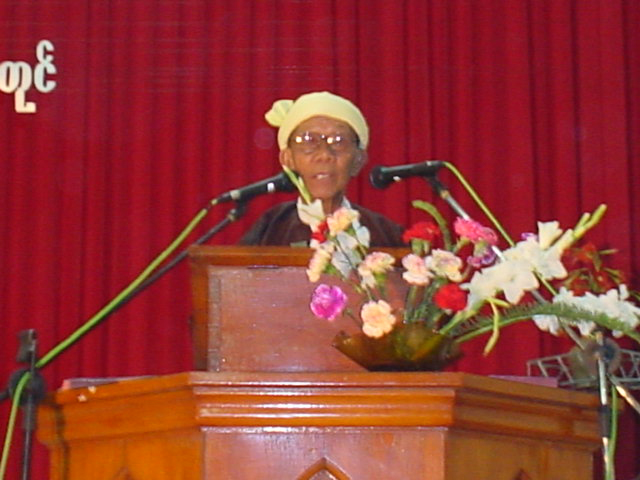
The 80-year-old pastor Ai Chein was still very strong, healthy, and faithfully serving the Lord in 2001. He is the longest-serving and oldest minister in Eastern Shan State. He has served in ministry since 1961 to the present. I first met him and heard him preach at the funeral service of the late Rev. Sai Stephen. He has a very strong and clear voice. He knows the Bible well and interprets the words. I can say that he is the “best preacher” in Eastern Shan State at the age of 80. I have the opportunity to interview him on July 15, 2000. He said, “I have no chance of going to Bible school. I only finished two standard levels of education (primary two). I only know how to read and write. When I was young, I was very poor. At one point, I had to beg on the street to feed my stomach. I came to know the Lord 50 years ago. I am self-studying and self-learning. I only got the opportunity to attend a short-course training program. I serve the Lord by faith and rely on the Holy Spirit only.” (He attended our first Shan GCI training in Maesai in 1994) Rev. Ai Chein planted many Churches. At the time of the interview, three new Churches were awaiting full-time pastors under his missions.
Seven services on Sunday
6 AM Combine Service
7 AM Children’s Service
9 AM Combine Service
Noon Women’s Service
2 PM Youth Service
3 PM Combine Service
6 PM Men’s Service
There are one senior pastor and one assistant pastor serving at MuongYang Church with 900 baptized believers in 144 families. Baptism is only conducted once a year at Christmas season. Usually about 20-30 people baptized. Special prayer meeting is held on every Monday at 7 AM.
The Church Committee prayer meeting is held every month.
A Two-days Bible training is held every year. About 60 people attended.
Seven fellowship teams are going to have fellowship with other Churches.
There is an evangelistic program every year.
The Church owns two fish bonds and two rice fields.
The Church can support 3 seminary students and 6 evangelists.
Rev. & Mrs. J.N. Cushing first visited Kengtung, Eastern Shan State, on January 21, 1870. They preached the gospel and distributed gospel tracts to the Shan people. Rev. W.M. Young arrived in Kengtung in 1901 and started a new mission field. Phak Ka Sai was the first Shan convert in KengTung and was baptized by Rev. Young on June 1, 1902.
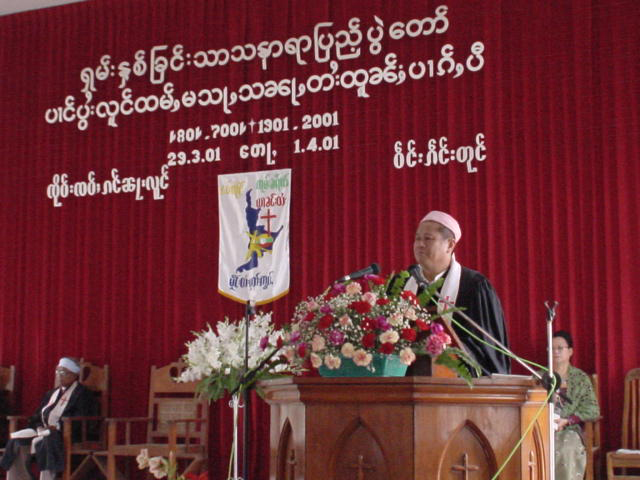
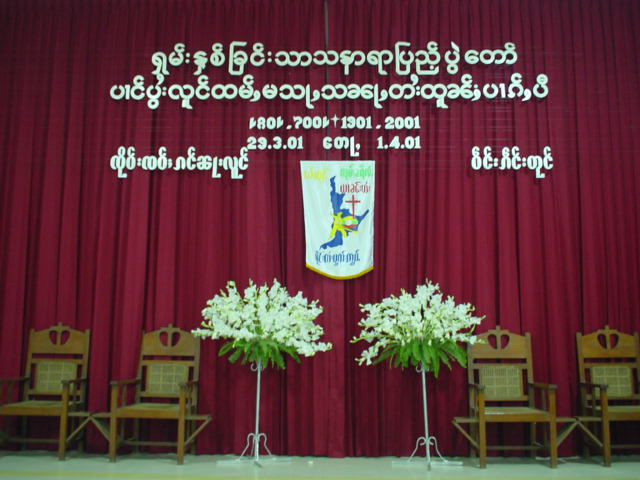
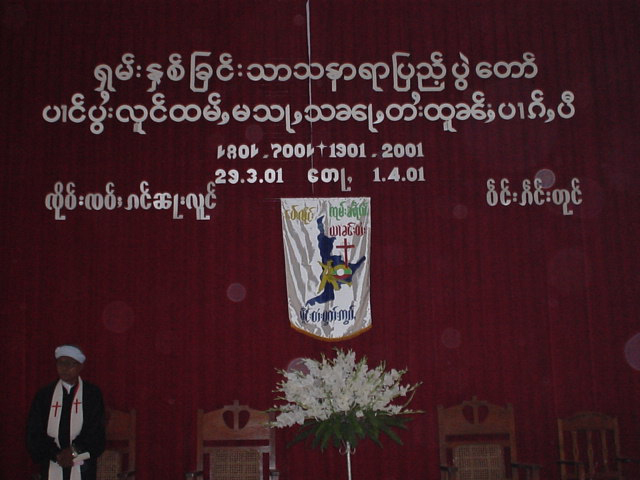
Based on the beginning of KengTung mission field opened in 1901, Eastern Shan Baptist Mission Centenary Celebration was held in 2001.
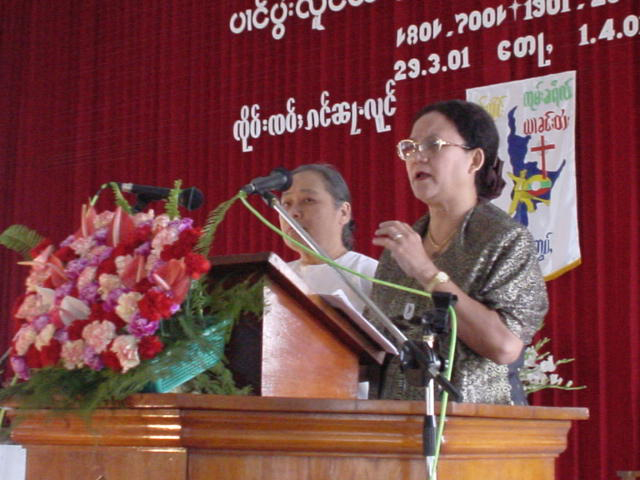
Eastern Shan State Baptist Mission Centenary Celebration

March 29-April 1, 2001
KanNaLone Shan Baptist Church, KengTung
Theme:
Psalm 126:3 “The Lord has done great things for us, and we are filled with joy.”
Psalm 116:12 “How can I repay the Lord for all His goodness to me?”
Preparation and Celebration
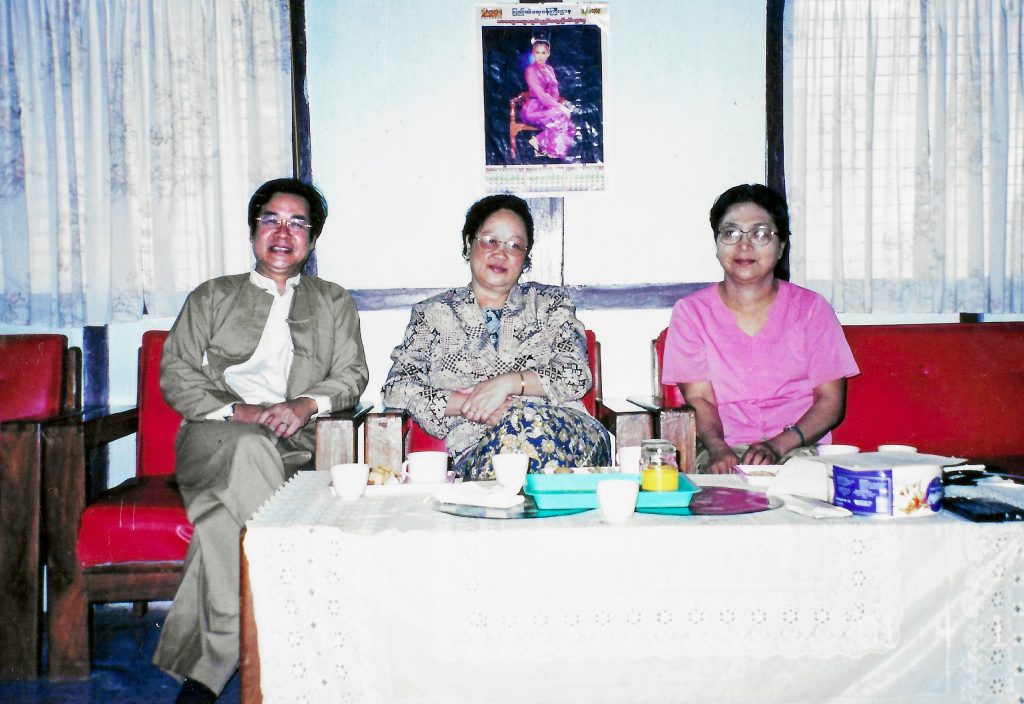
Under the leadership of Rev. Sai Stephen, the first meeting for the Celebration of Eastern Shan State Baptist Mission Centenary was held on June 12, 2000, at the home of the General Secretary at 7 PM. In attendance were Rev. Sai Seng Tip, Rev. Sai Philip, Rev. Sai Stephen, Sai La La, Aung Kyaw Oo, Sai John Thein, Nang Saw, and Htwe Yu Hein. The meeting lasted 4 hours. Various committees, such as welcoming and accommodation, food and meal, transportation, communication, program, record, registration, decoration, finance, report, health, security, and display room, were formed.
Key leader Rev. Sai Stephen unexpectedly passed away on July 12, 2000. The reformation of the new working committee was done on July 26. Rev. Sai Philip was selected to take over the place of the late Rev. Sai Stephen. Other meetings were held on September 27, October 27, December 27, 2000, February 1, 2001, March 12, and March 25. It was decided that;
Every family must pray for the occasion,
Men and women groups would pray every morning at 8 AM,
KanNaLone Church would raise funds of Kyat 5,035,400 within 8 months,
KanNaLone Church would donate 1,652 baskets of rice, 6 pigs, and 2 cows, and will buy 500 more baskets of rice.
Meeting with township officers would be done,
Prayer warriors were recruited.
Conveners of the committees were selected, such as;
Saw Joseph (transportation)
Daw Nang Saw (recording)
May San Oo (registration)
Daw Nang So Hlain (health)
May San Oo (culture and entertainment)
Sai Htun (electricity)
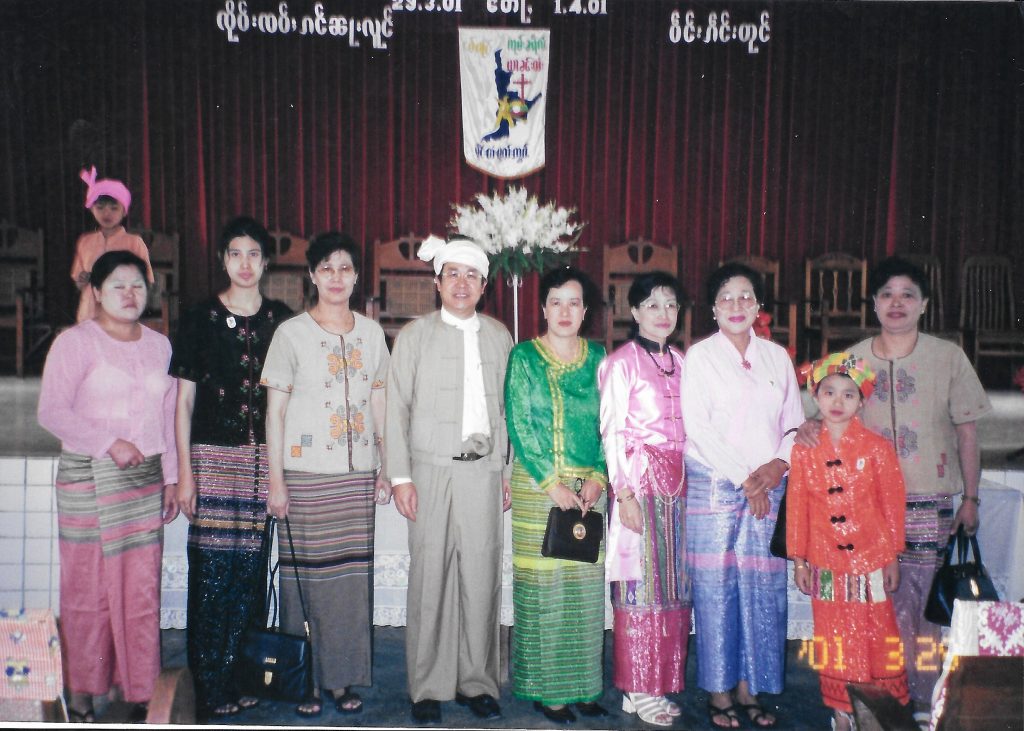
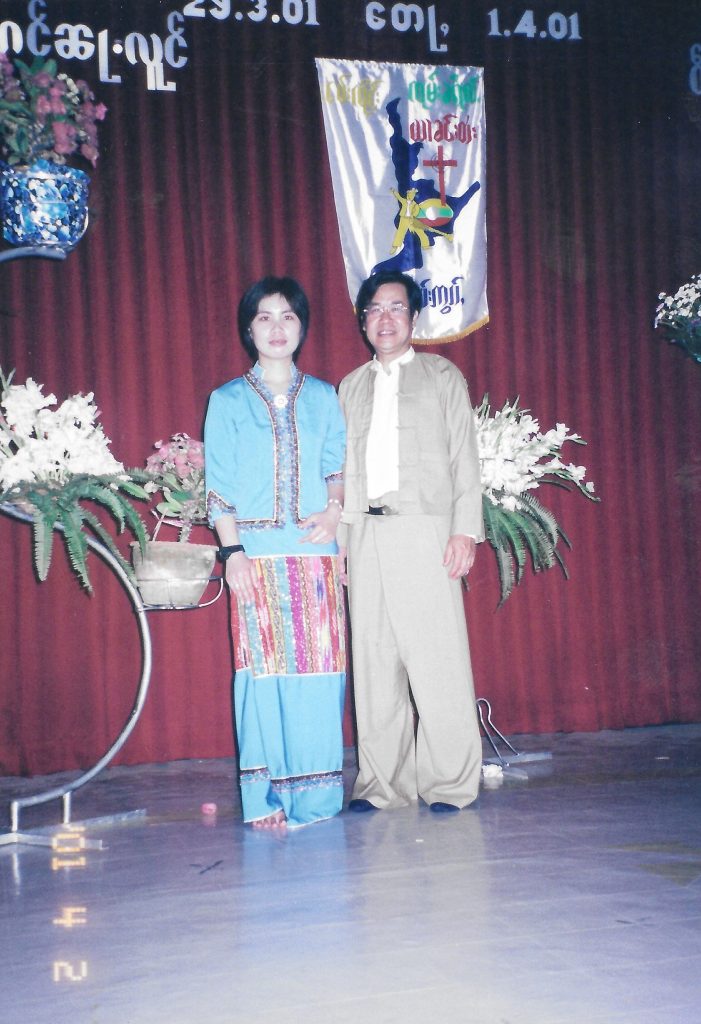
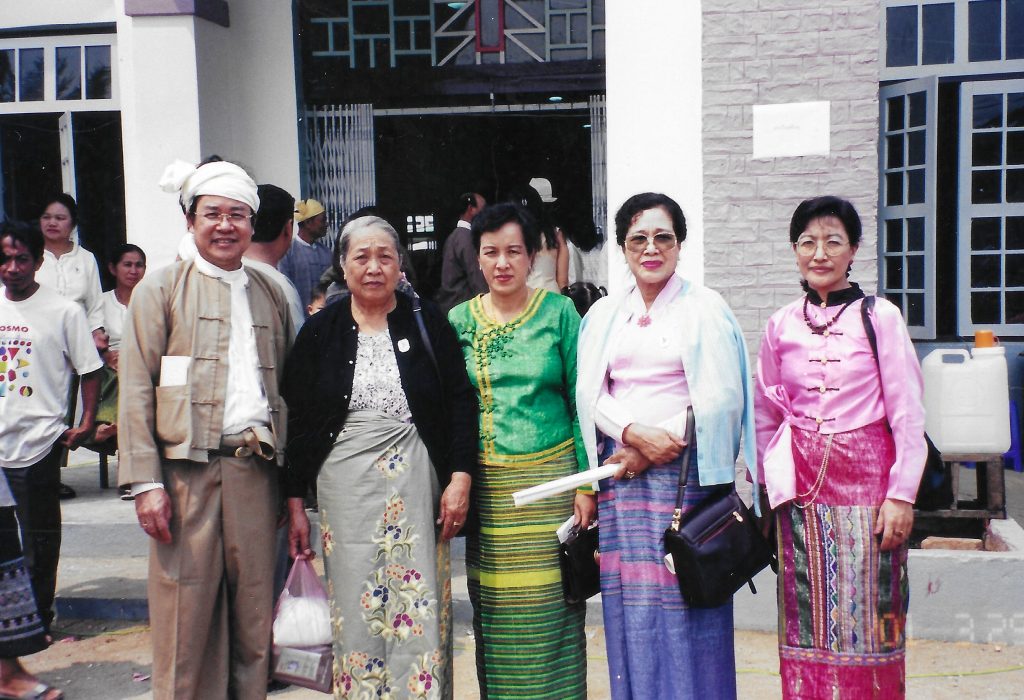
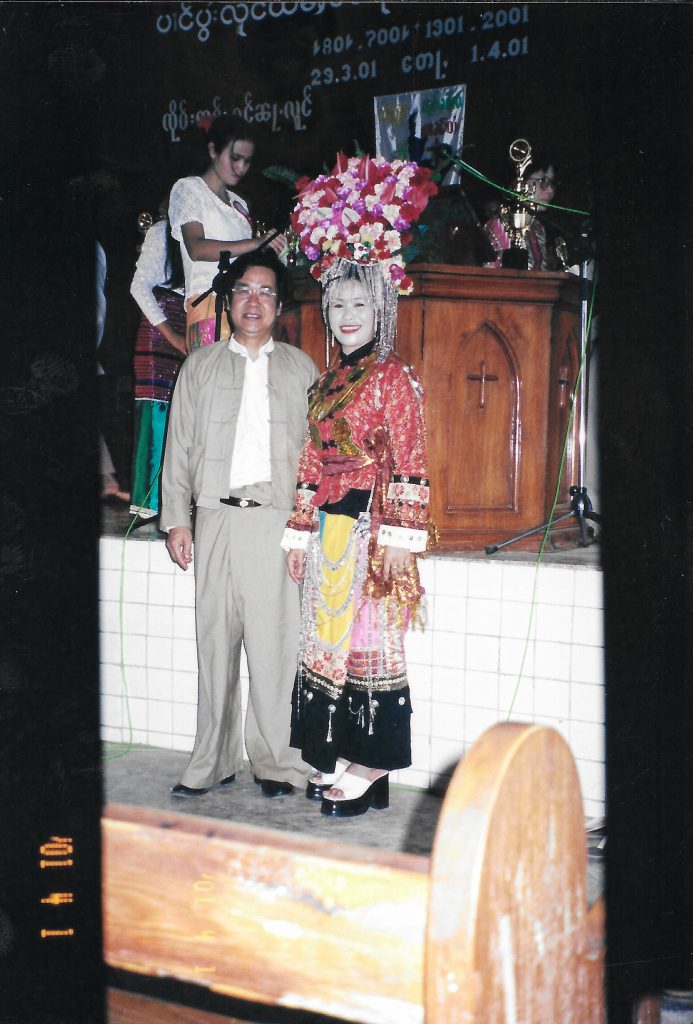
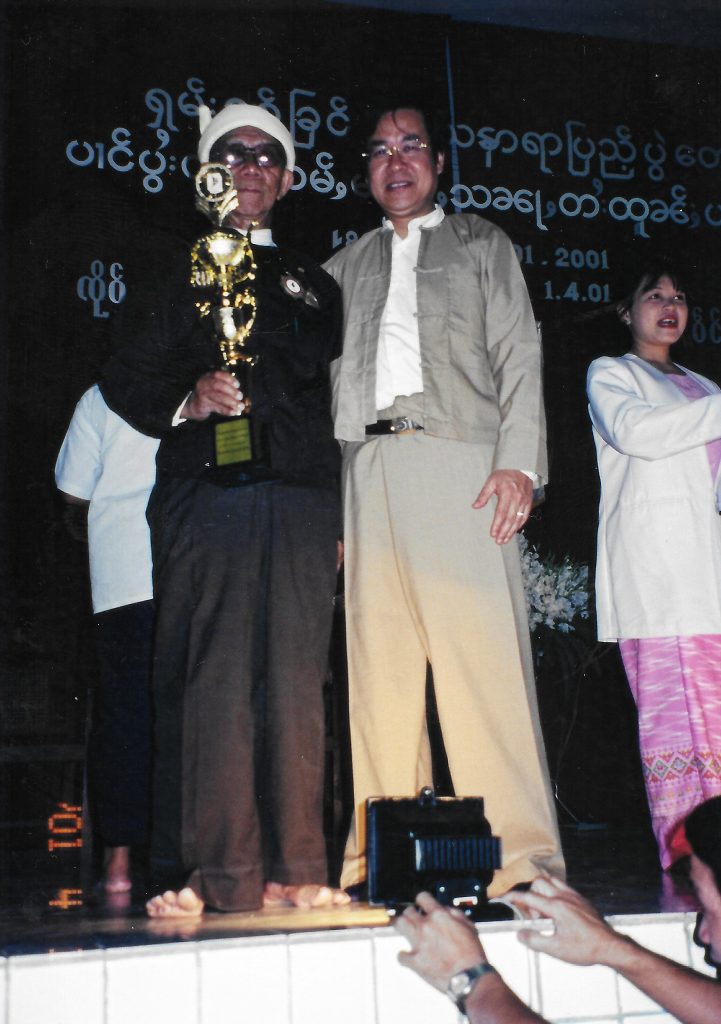
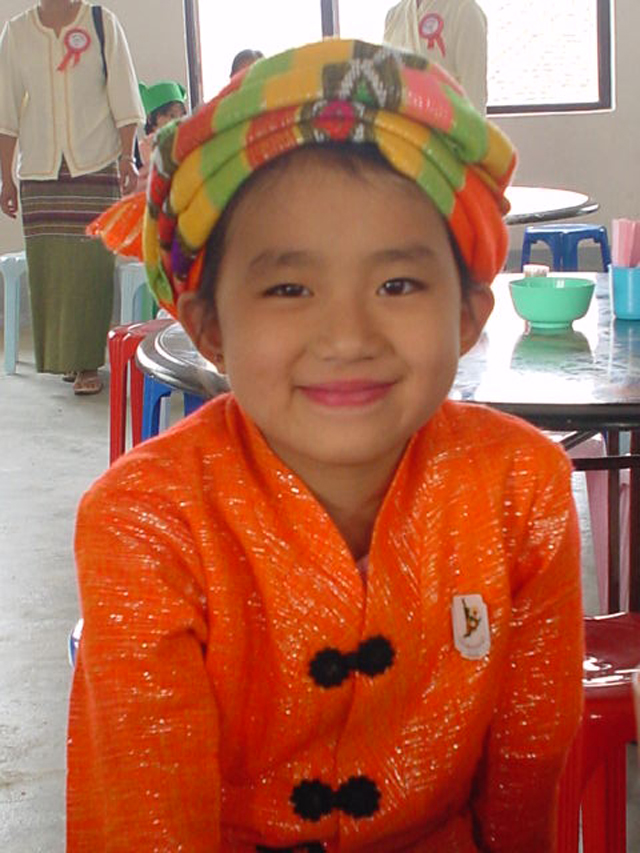
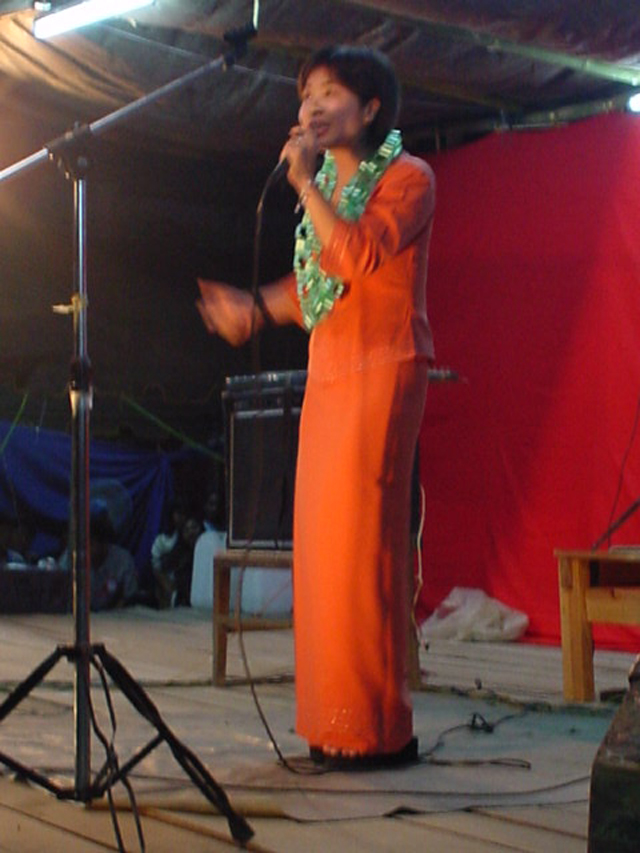
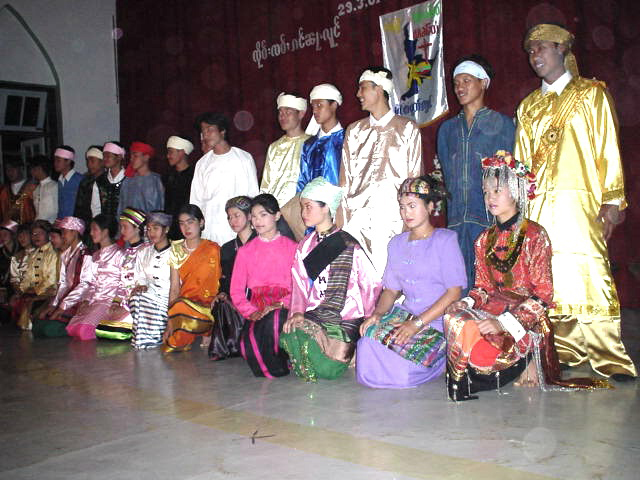
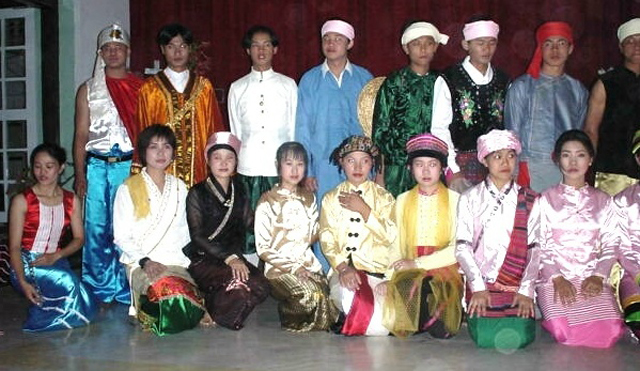
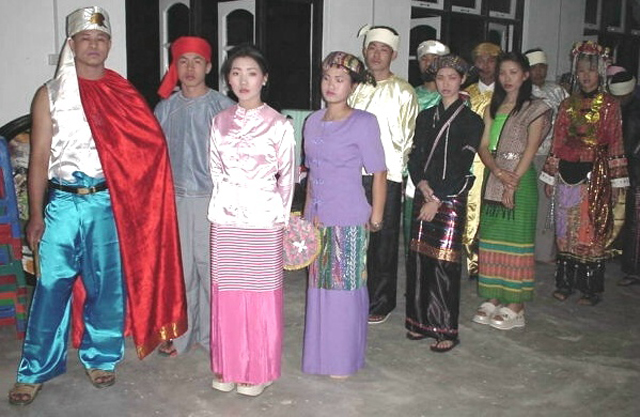
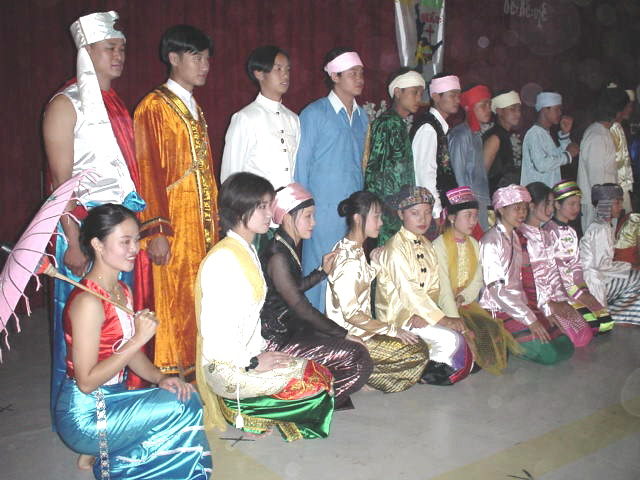
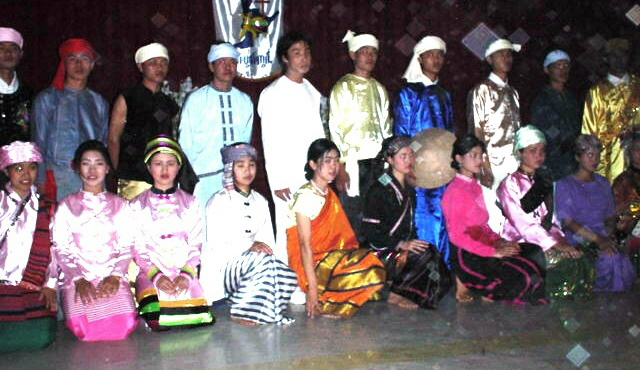
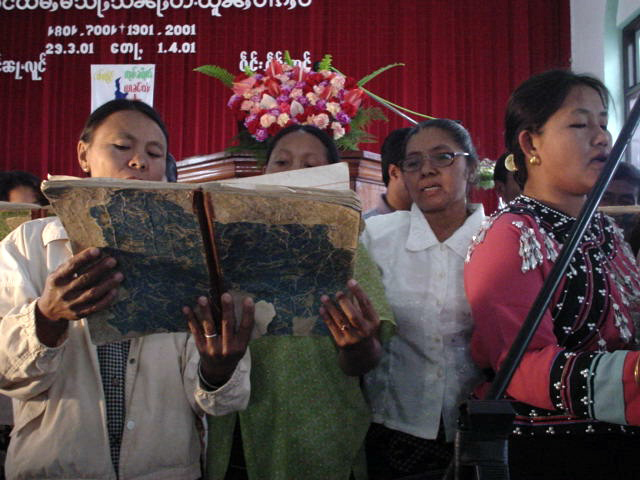
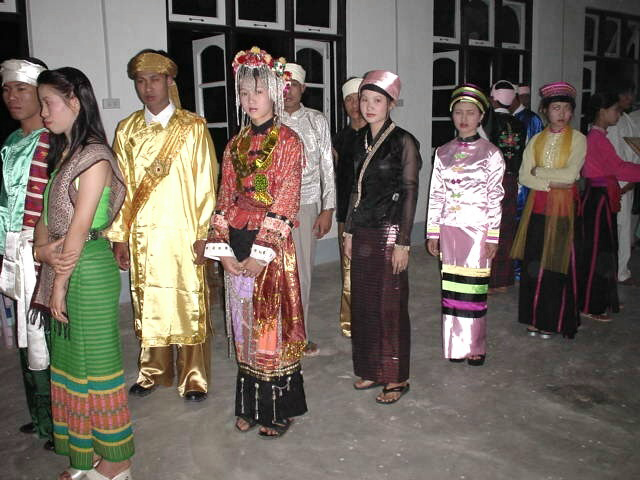
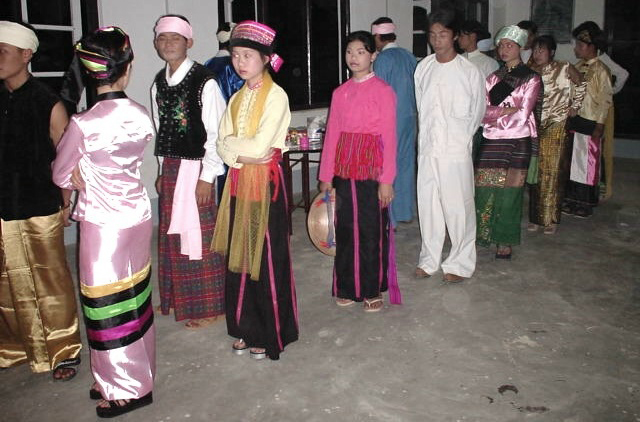
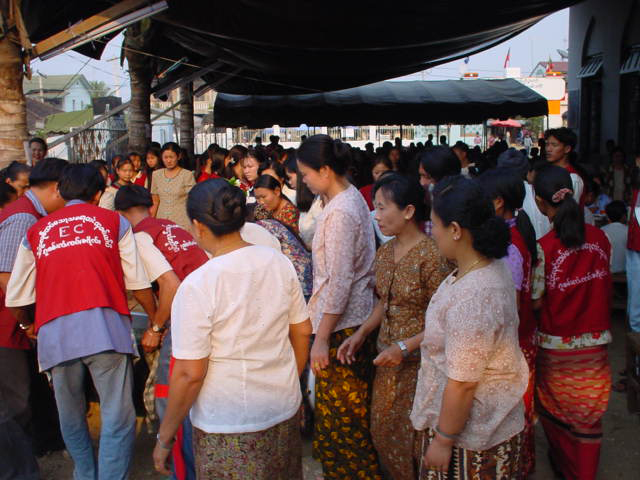
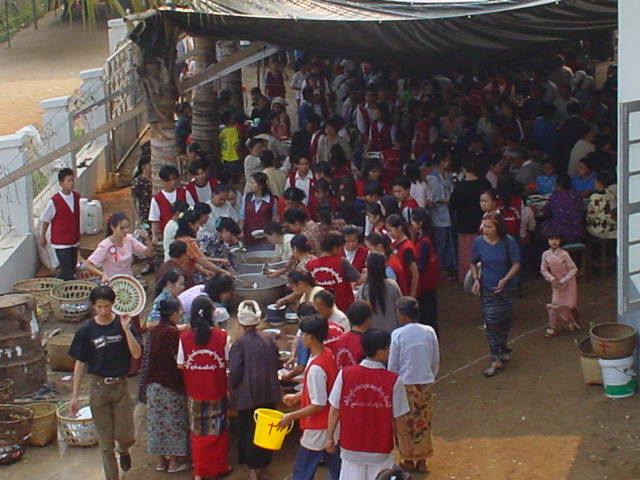
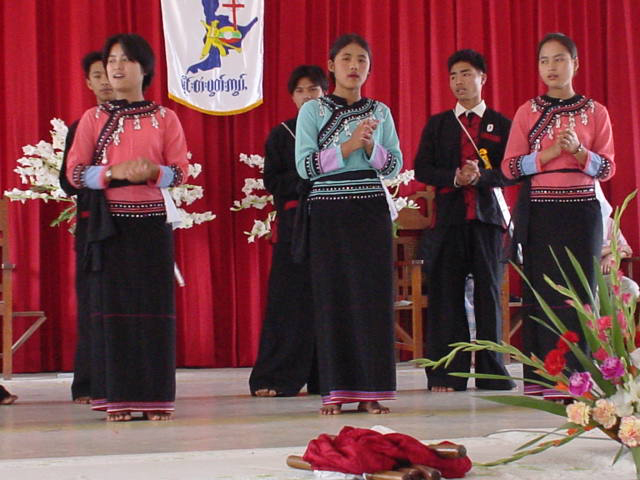
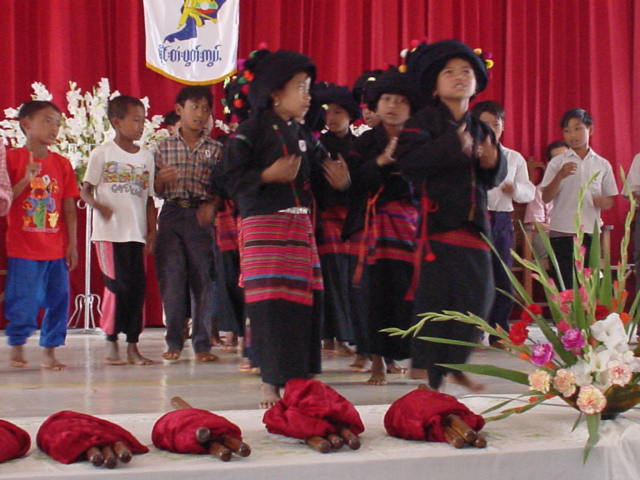
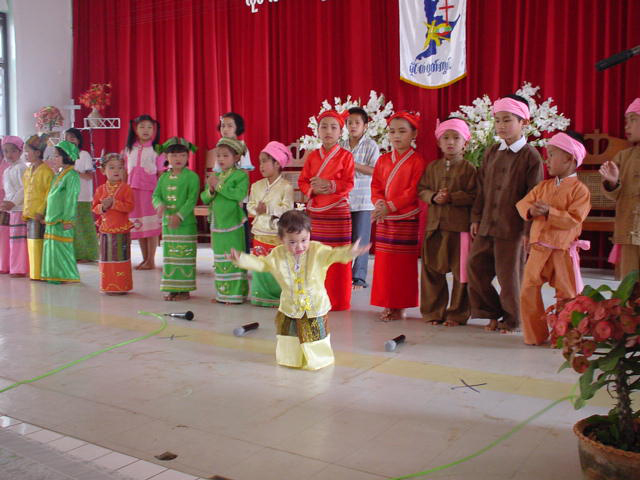
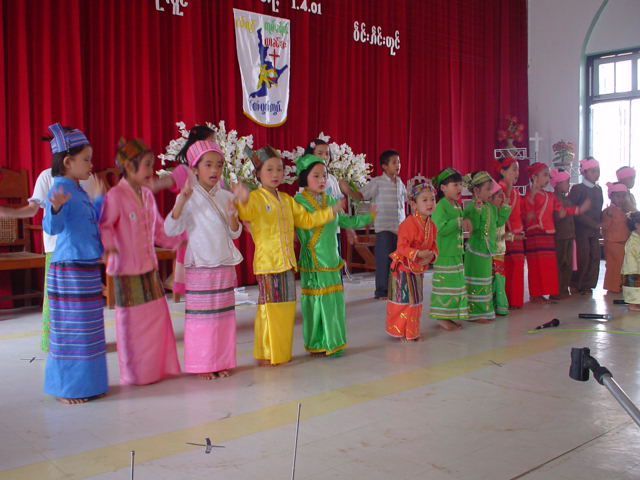
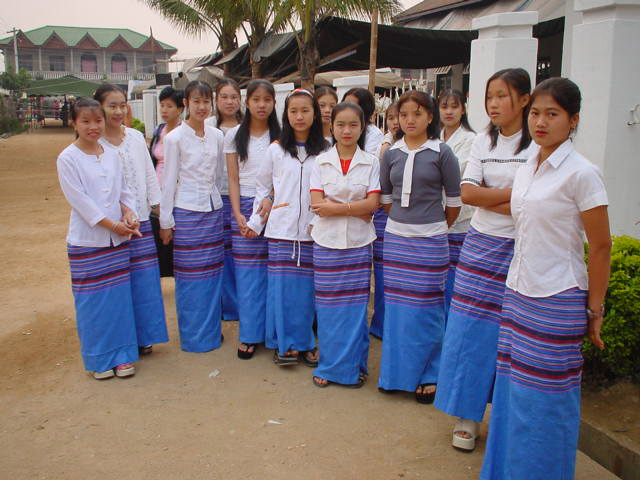
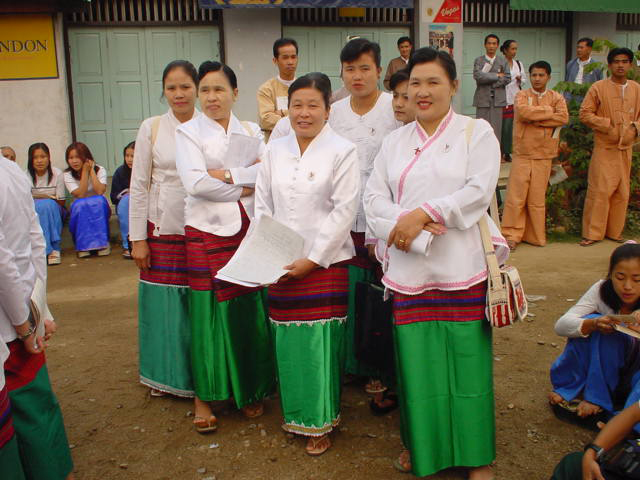
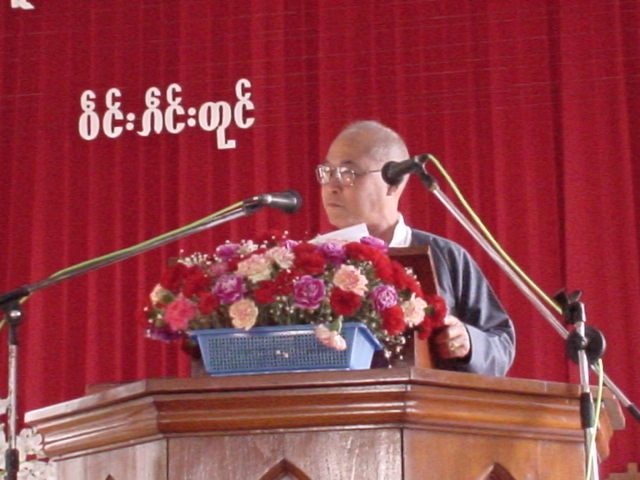
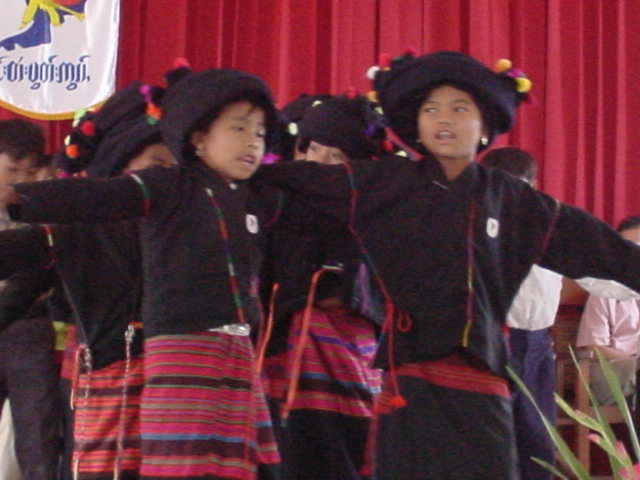
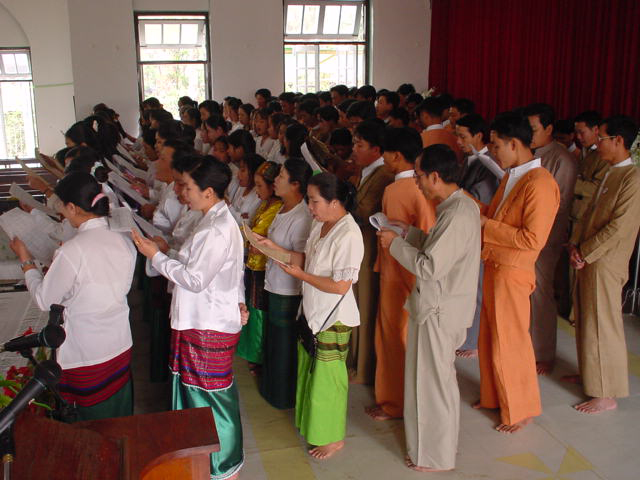
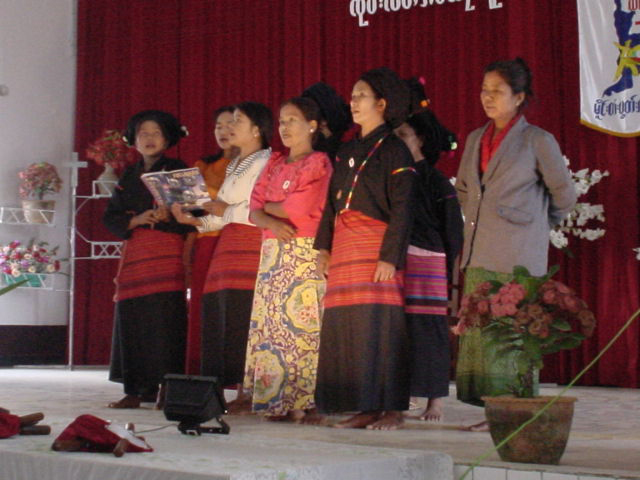
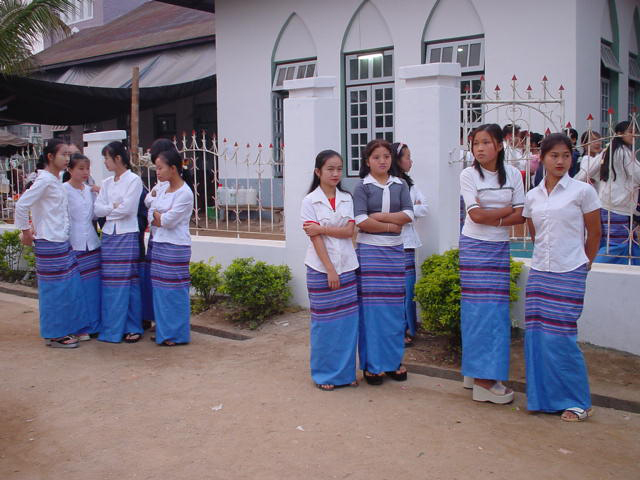
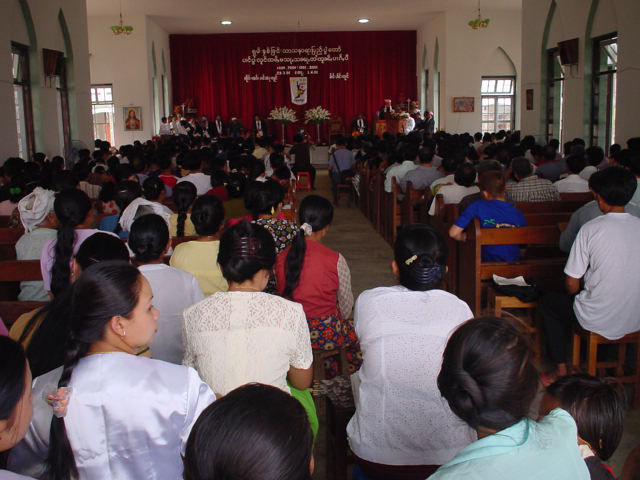
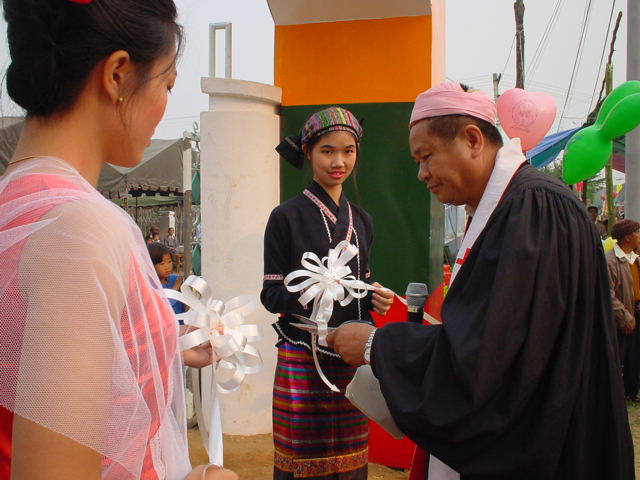
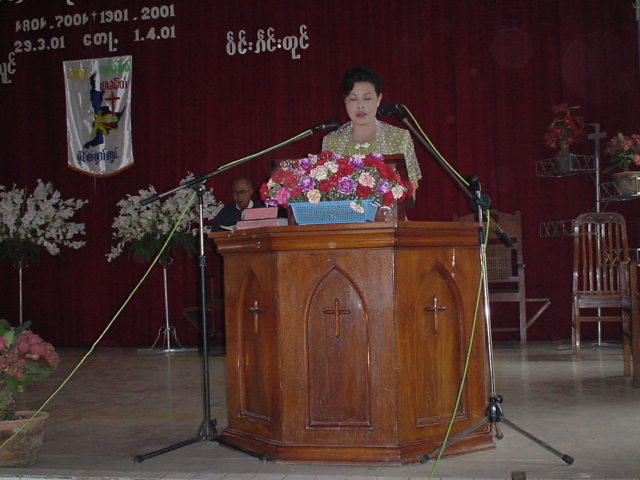
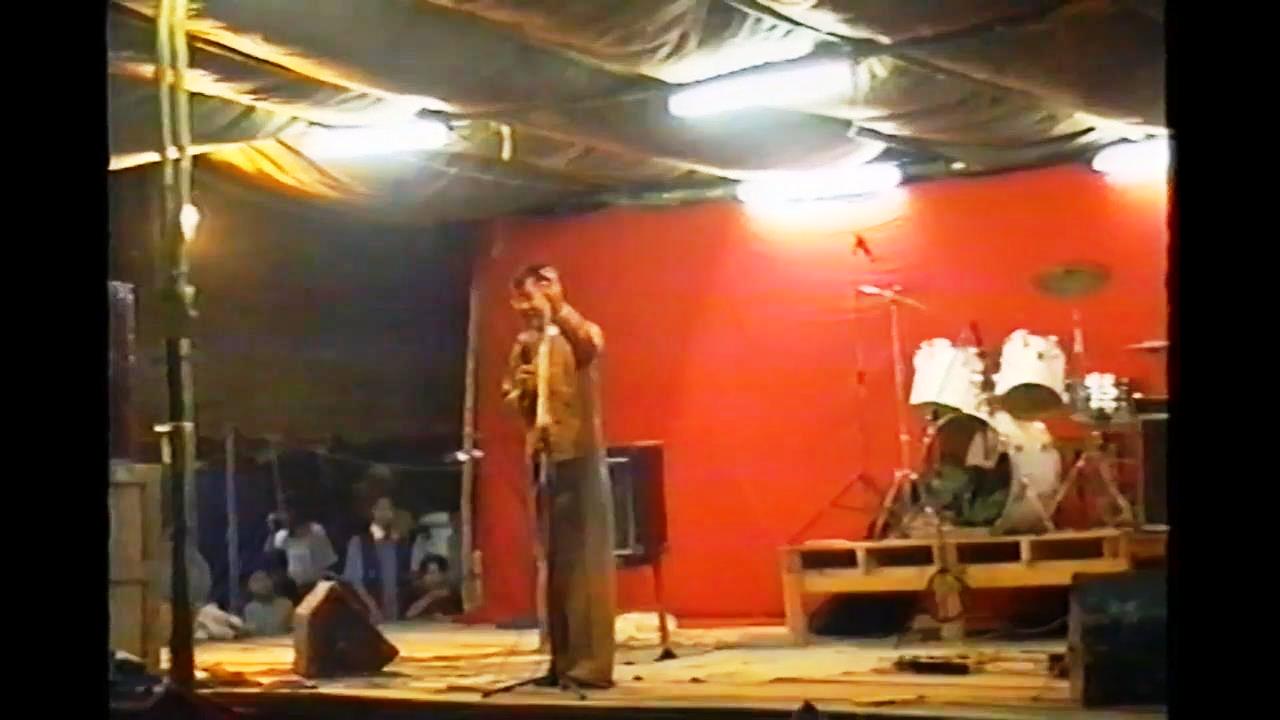
Eastern Shan State Baptist Mission Centenary Celebration was held from March 29 to April 2, 2001, at KanNaLone Shan Baptist Church, KengTung, Eastern Shan State, Myanmar. The ceremony began with about five hundred people from different Churches together marching towards the church building at 7 AM accompanied by traditional music, gong, mong, noke and doe dances. In the past, for more than one hundred years, Shan traditional music and noke-doe dances were prohibited by Shan Churches, considering it a Buddhist tradition. With the help of the cultural committee of block 5 (Buddhist block), this tradition became part of the celebration. The effigies of the first believer, Phak Ka Sai, and his wife, also accompanied the march.
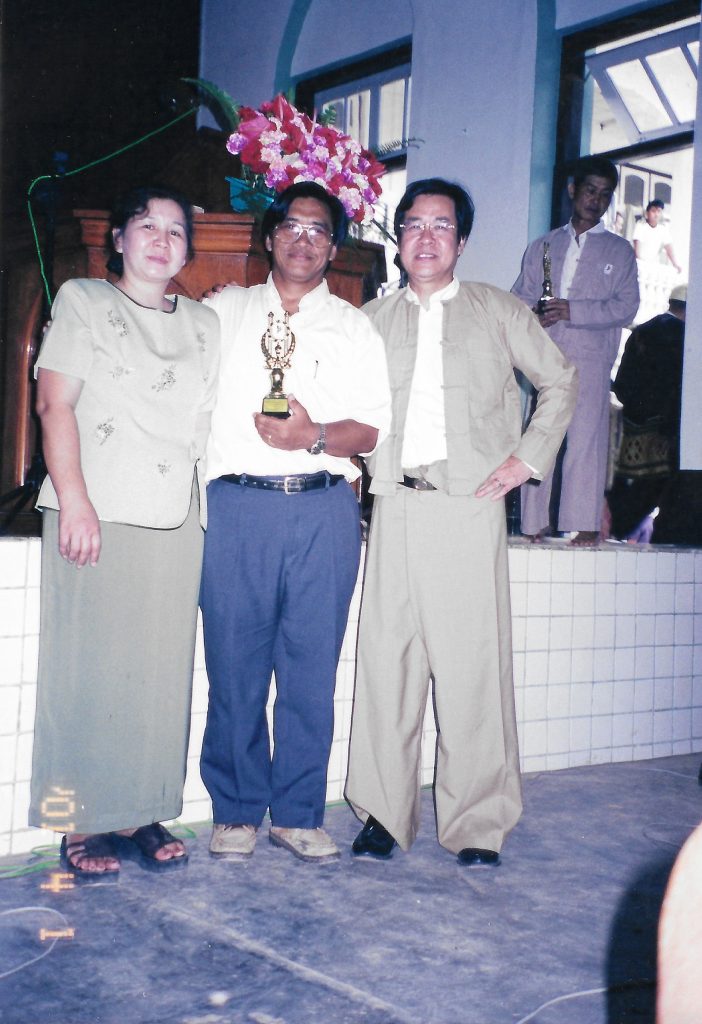
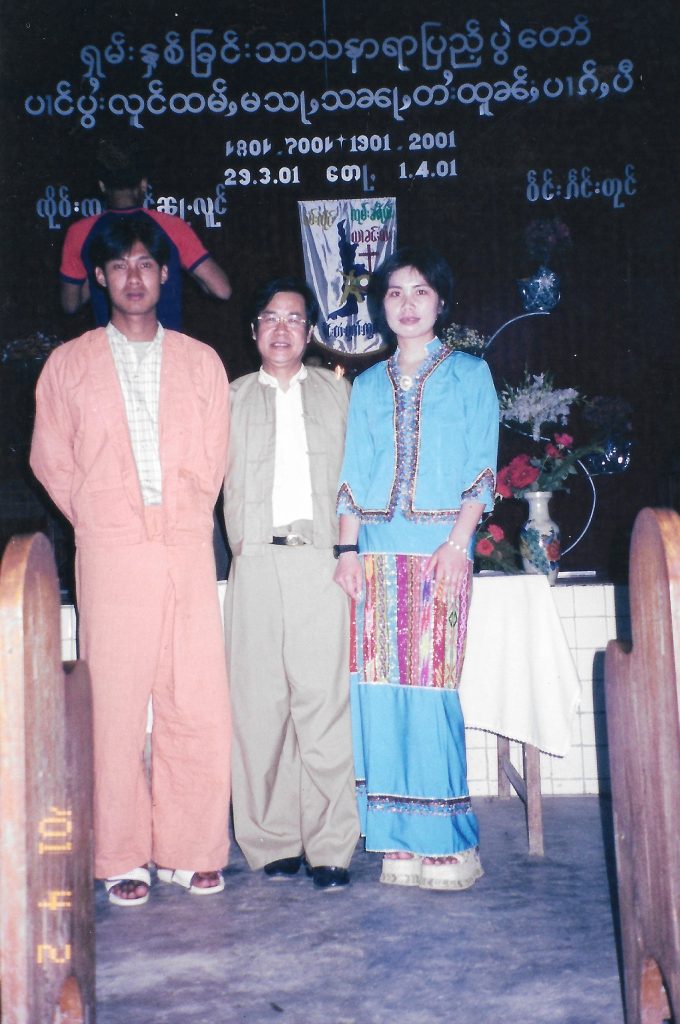
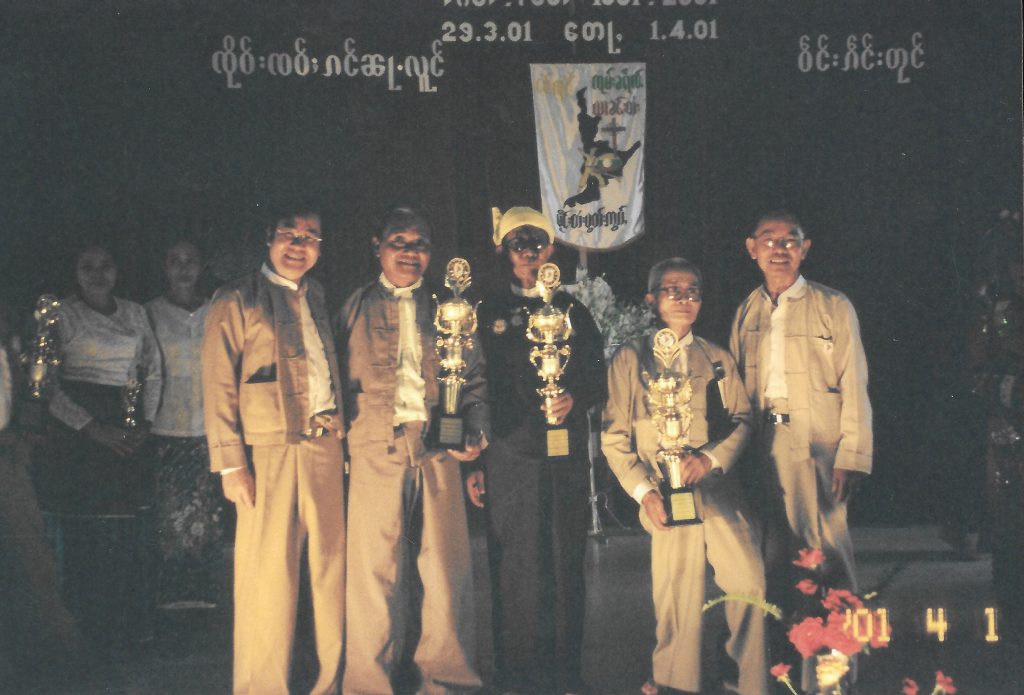
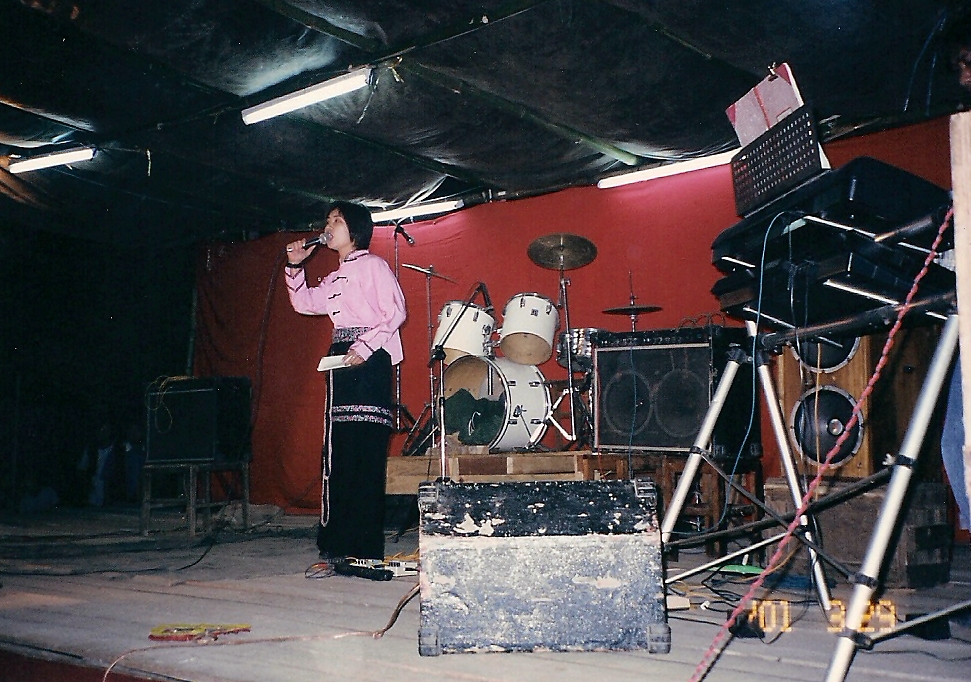
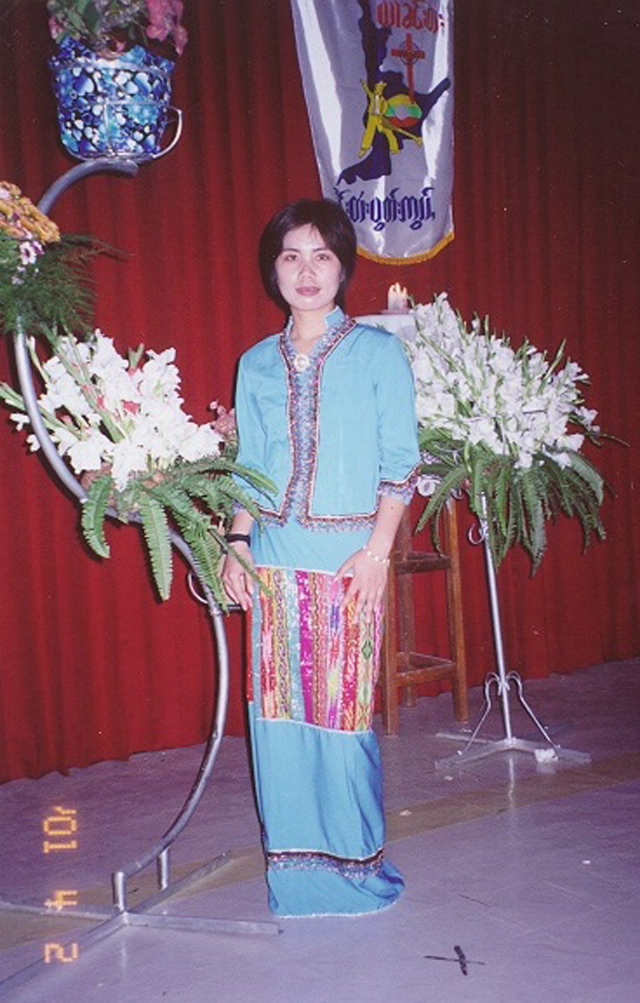
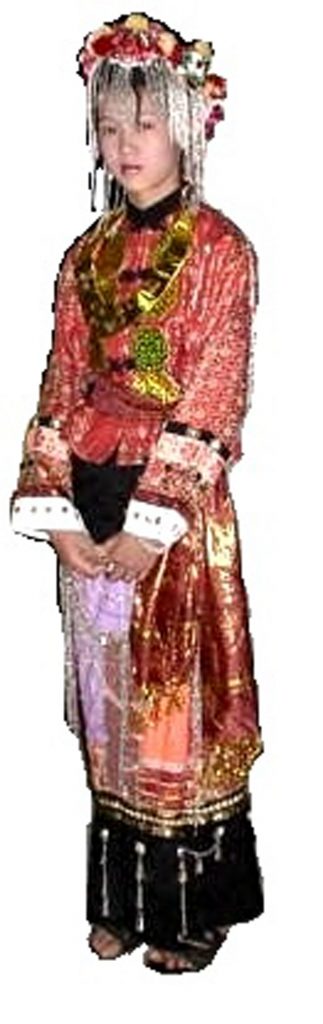
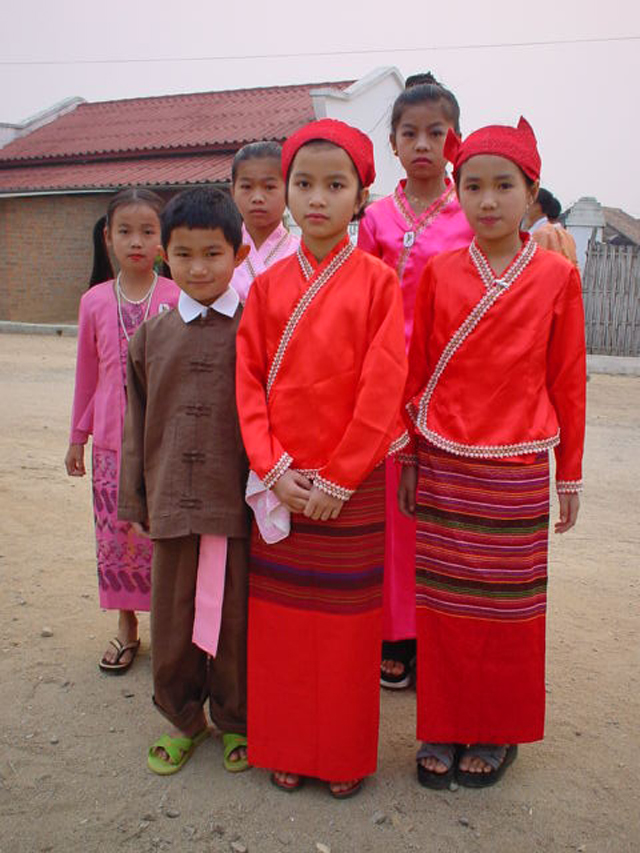
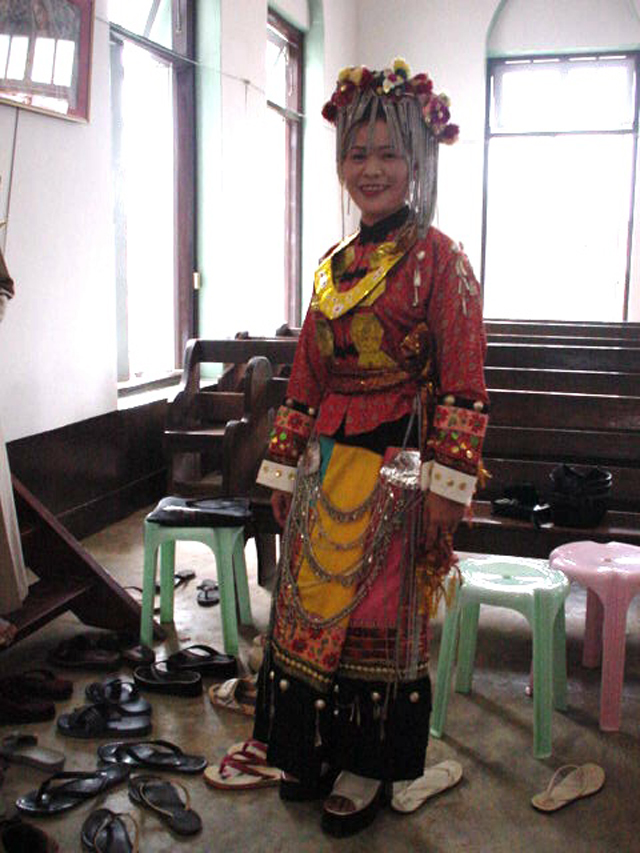
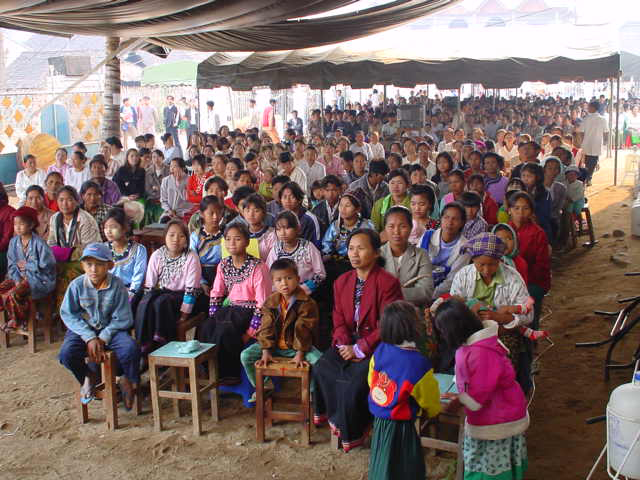
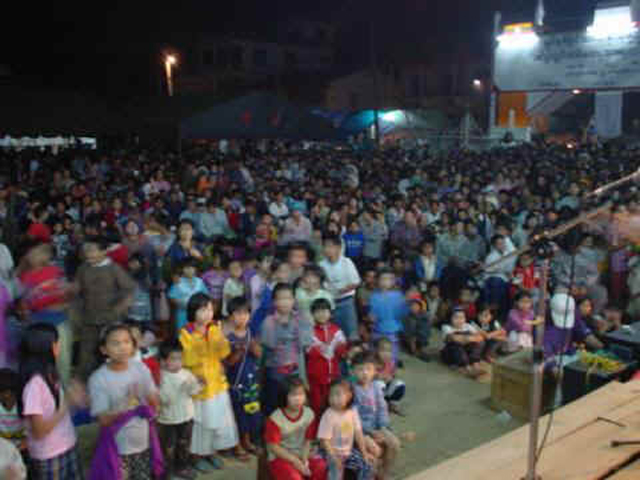
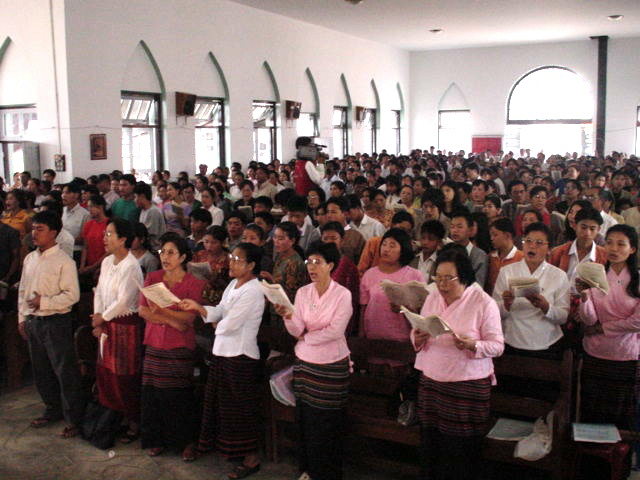
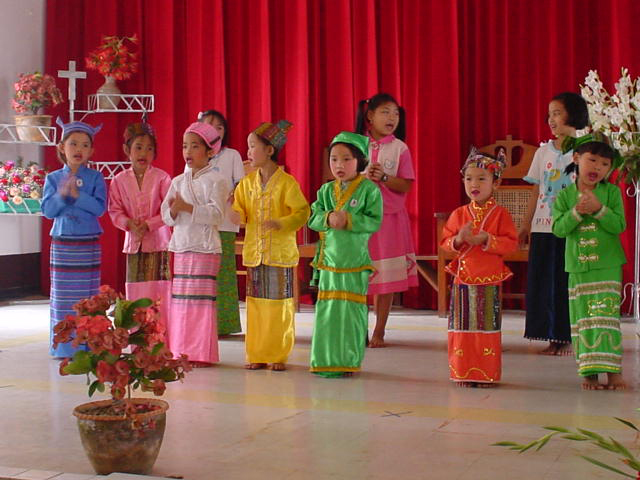
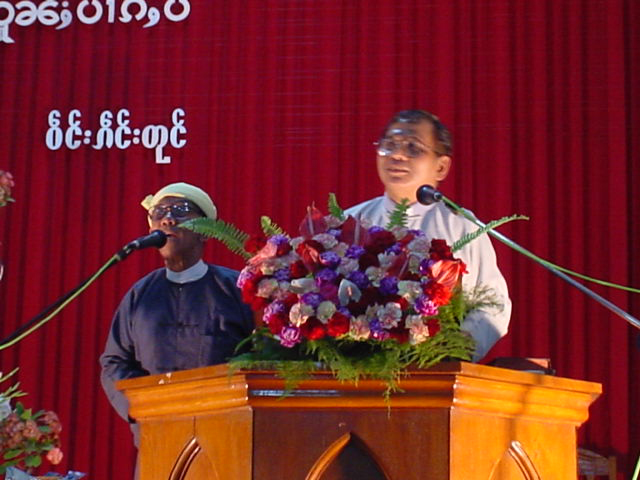
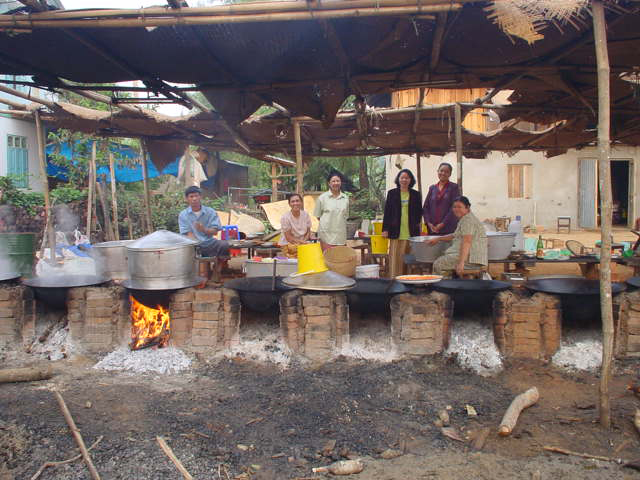
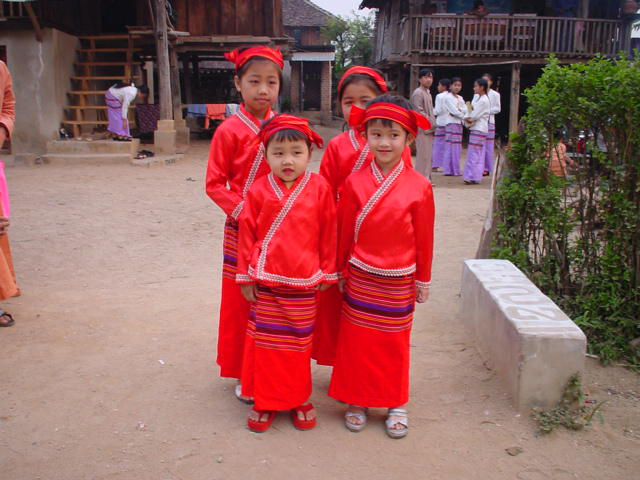
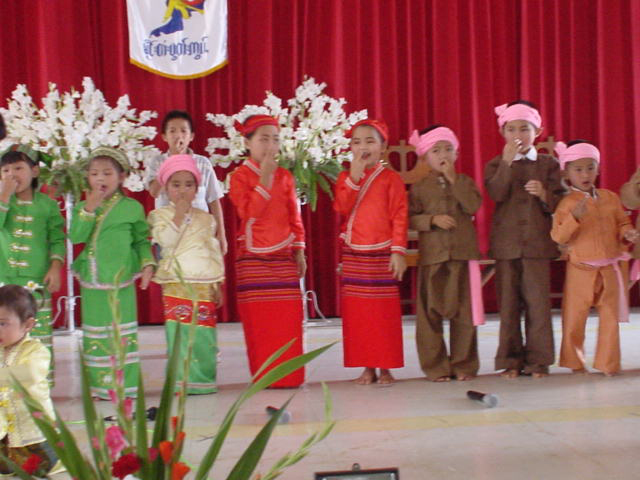
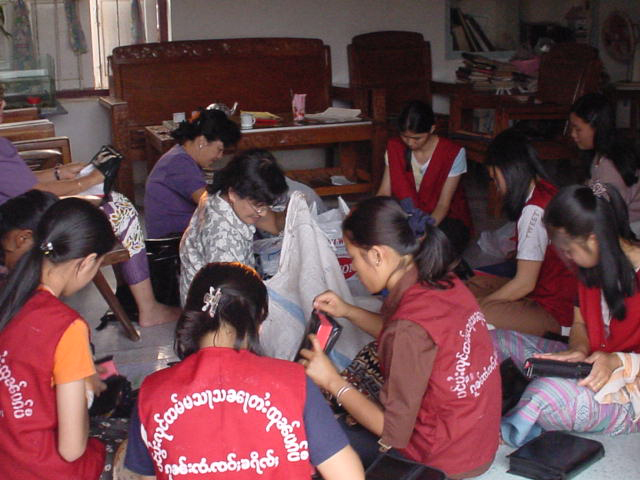
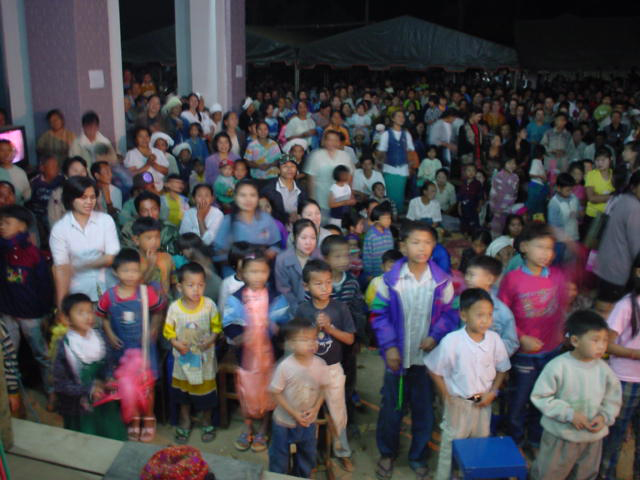
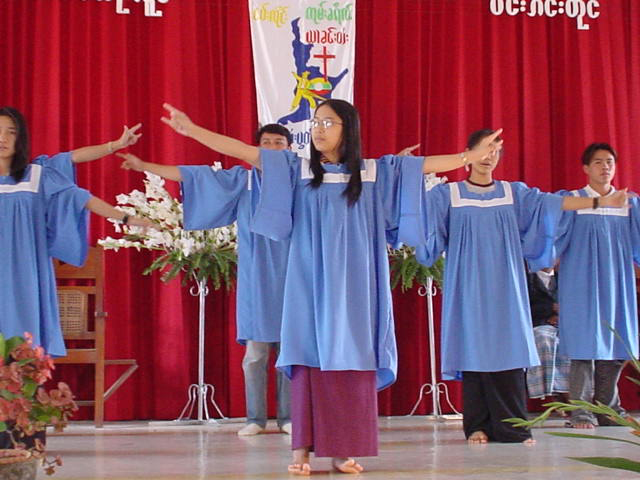
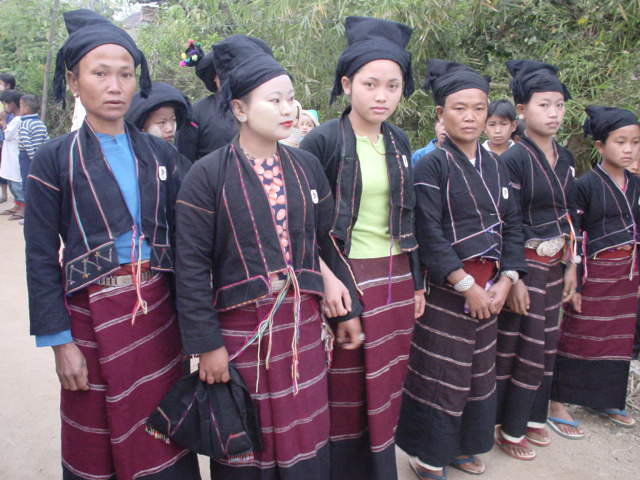
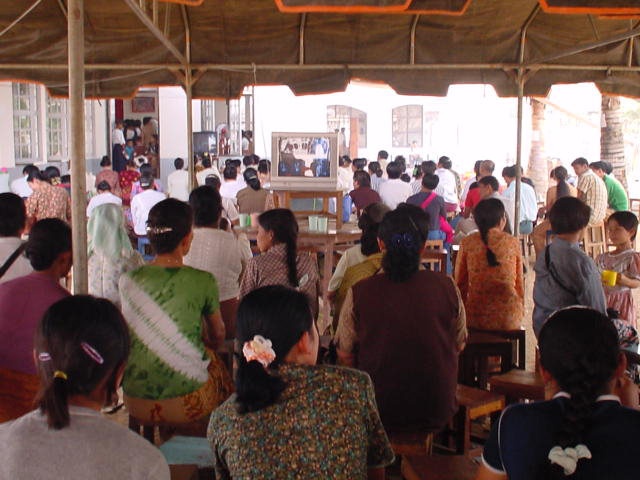
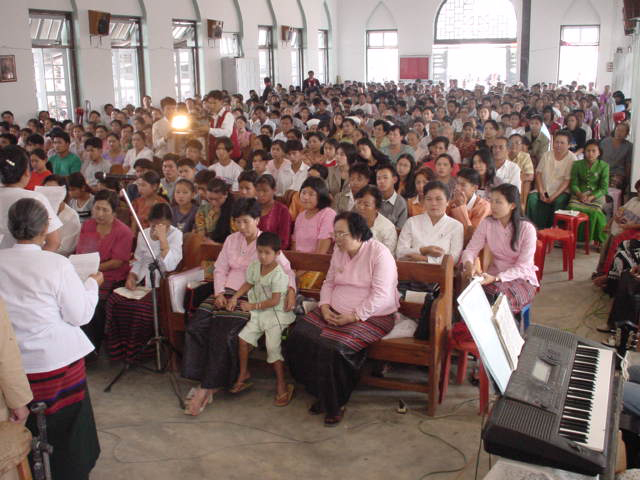
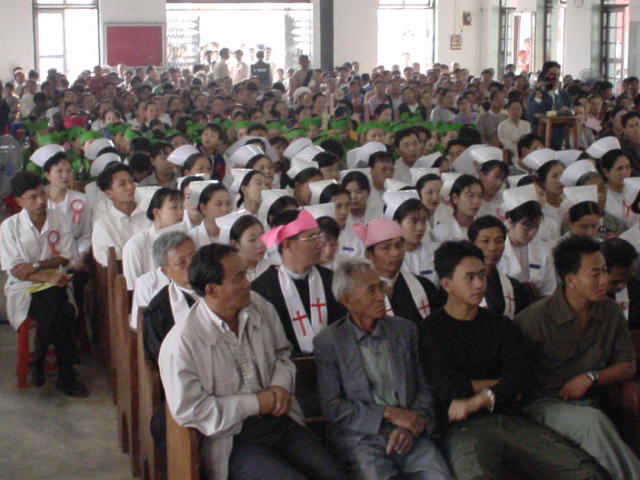
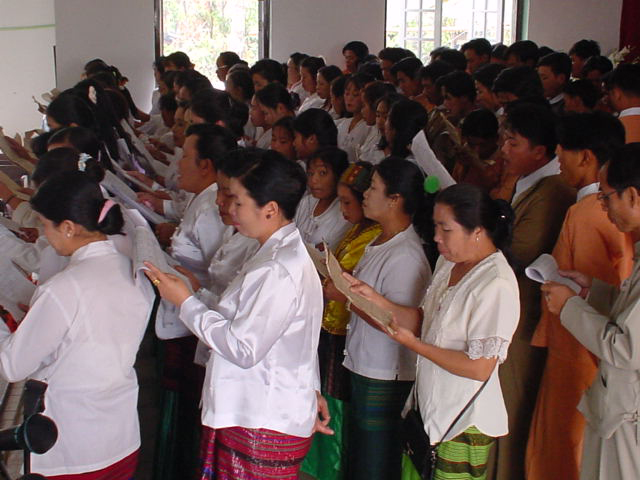
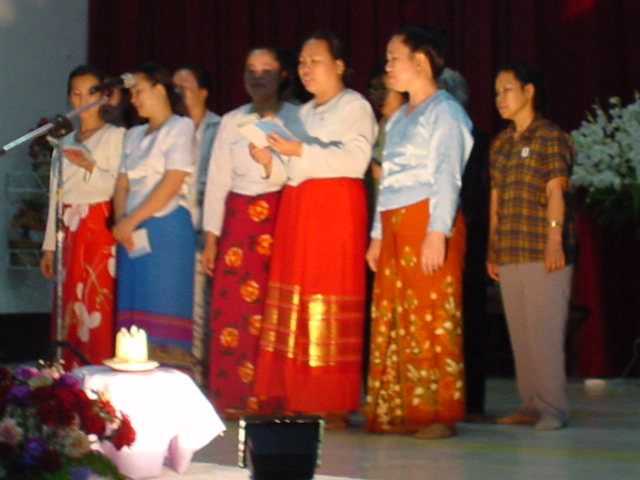
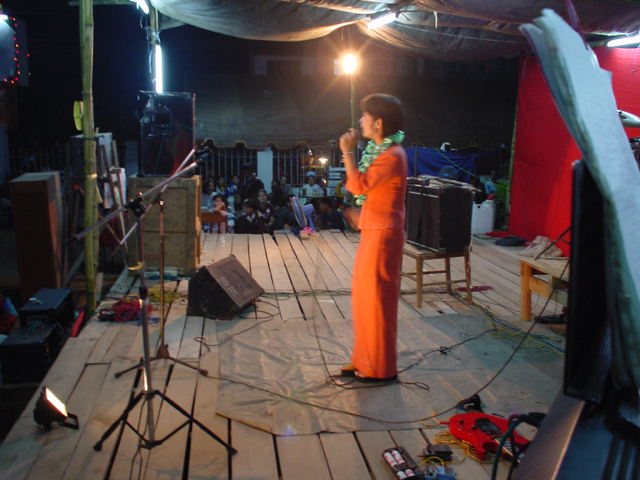
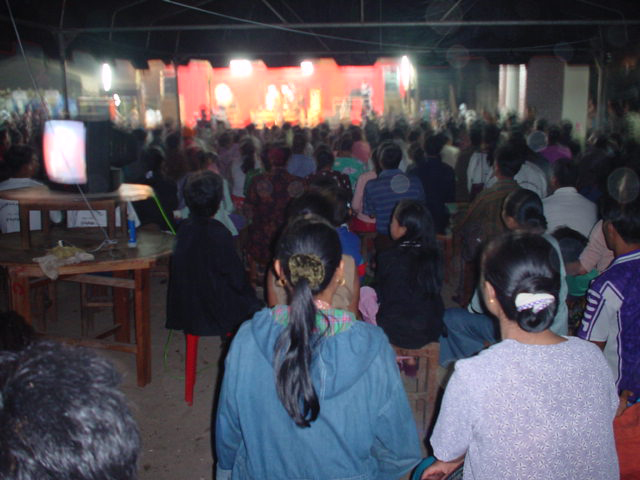
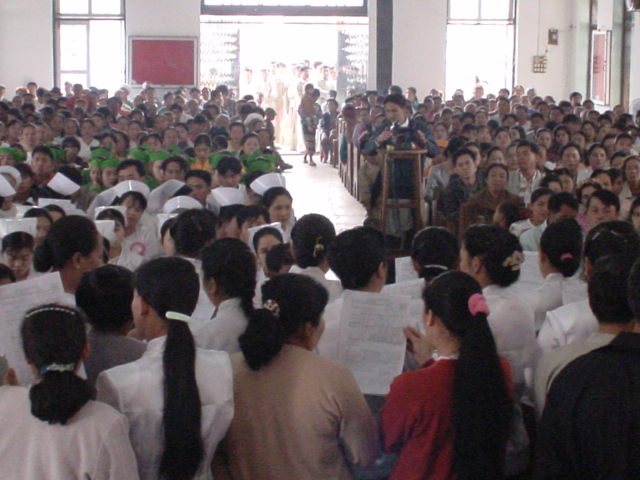
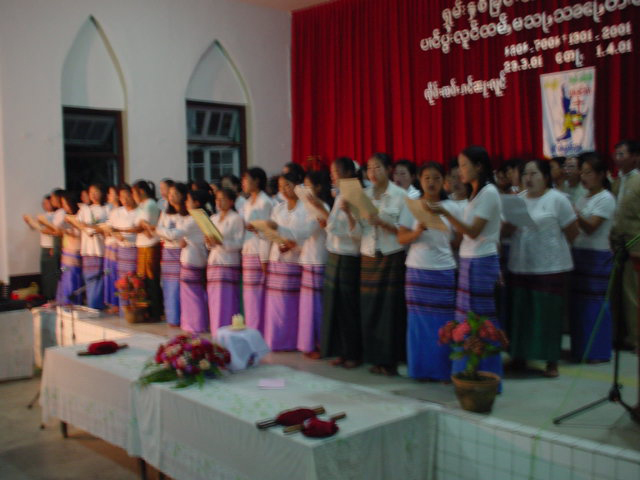
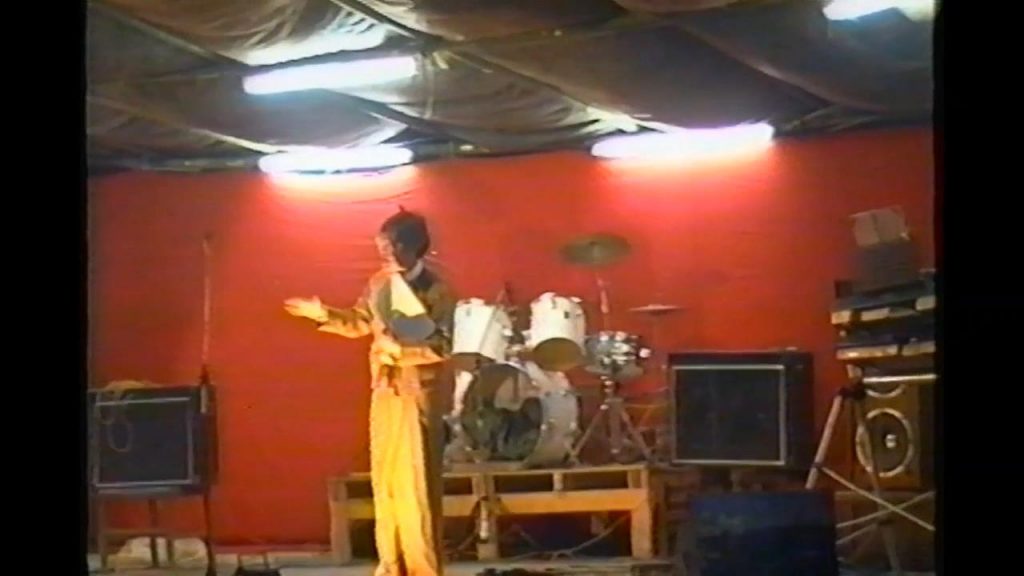
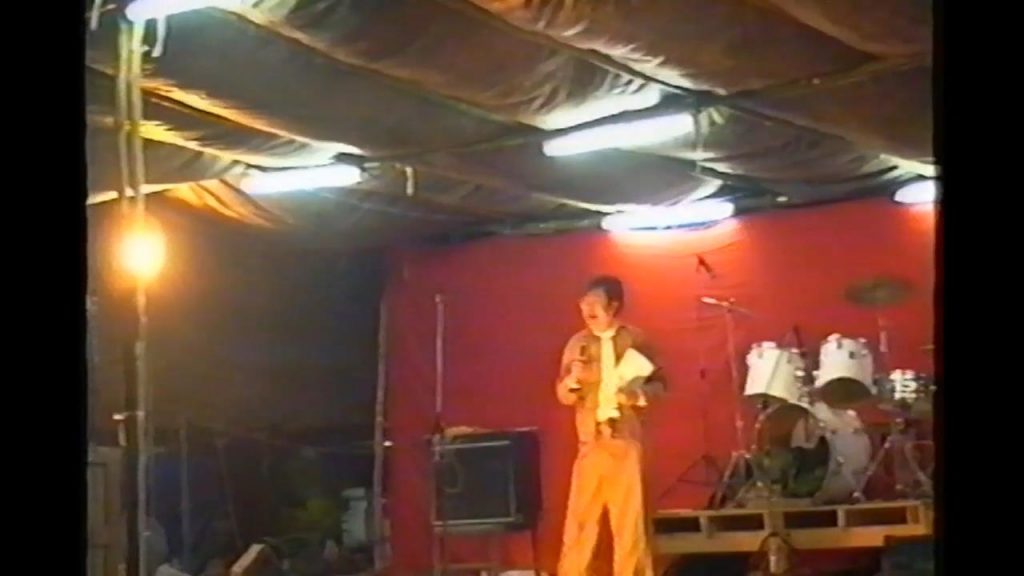
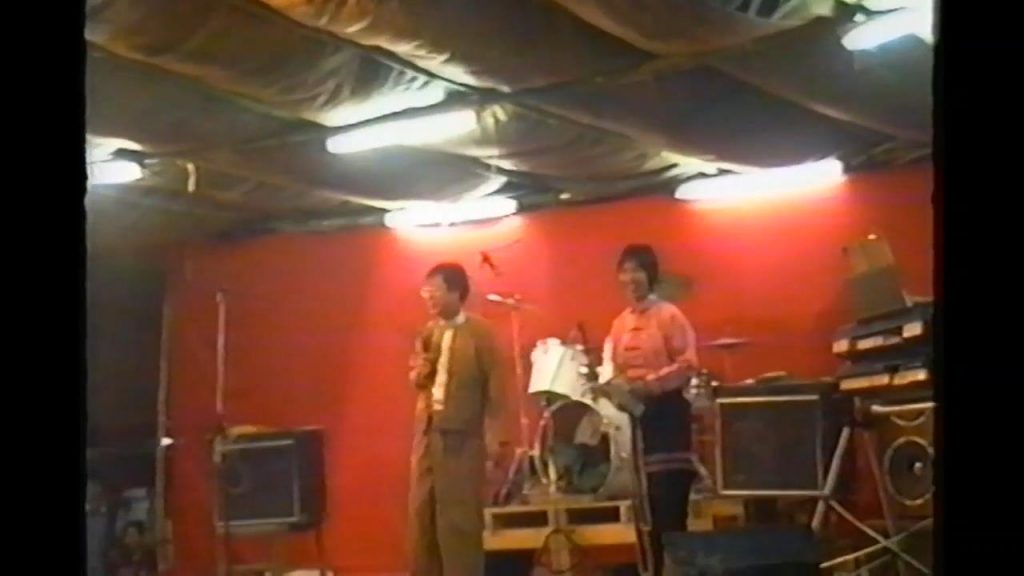
Praise and worship, presentation of cultural dances, national costumes show, drama of the first arrival of American missionary and the first believer Phak Ka Sai, gospel music, children and youths’ presentations, seminary students’ presentation, Bible study, ordination program, honoring the serving ministers, baptismal services and evening open-air gospel preaching were the major events of celebration. The church building was overflowing with about three thousand people every day. Two tents were erected on both sides of the church, and TV sets were put on the tables outside the church for people to watch the program and listen to the message. Three 24-hour prayer rooms were set up at San Lu’s memorial hall. Young and old people prayed in the room continuously during the festival period. Showrooms were set up to show historical pictures of the past Shan mission activities. 136 young people from various Churches dedicated their service twenty-four hours a day during the festival.
Detailed program
29th March:
7 AM: Marching to the church hall opening gate. Rev. Ai Chein led the prayer, and Rev. Seng Tip cut the ribbon and opened the occasion at the gate. Sayama Thu Za Mon read scripture from Psalm 126:3, and Rev. Seng Tip gave a welcoming speech. After getting into the church hall Thanksgiving service began. A congratulatory message from Myanmar Baptist Churches Council was read by Rev. Saw Marge Gyi, from Myanmar Baptist Convention by Sayama May Maung Maung, from ShweLi Valley Shan Baptist Mission by Rev. Sai Thein Aung Kham, and Asian Outreach International by Dr. Sai Htwe Maung. Then, Sai La La gave a brief history of the Baptist Mission in Eastern Shan State. One hundred people sang Centenary Choir during the offering. Benediction given by Rev. Ai Chit, and the morning session ended.
1 PM: Opening of the showroom by Rev. Ya Kuk after reading Psalm 126:3 by Sayama Daw Aye Kyi.
7-9 PM: Saya Sai Baw Lu chaired the worship service by reading Psalm 116:12 and Rev. U Sai Hsin offered special prayer. Choir from BaMine was sung during offering. Centenary drama on the history of mission presented by youth fellowship led by Sai Tha Han. Session closed by benediction given by Rev. Ya Kuk.
9-10 PM: Dr. Sai Htwe Maung preached the gospel on an open-air stage with vocalist Nang Sara from NamKham and musician Sai Moe Naung from KengTung.
10-11 PM. Young people from the Myanmar Fellowship of the Blind presented special music programs.
30th March:
7-7:30 AM: Praise songs led by Saya Sai Kyaw Tint.
7:30-8:30 AM: Rev. Saw Marge Gyi gave a Bible study lesson.
10-12 AM: Htwe Yu Hein led men and women in praise and worship.
1-3 PM: Ordination service message given by Rev. Ai Chein. Four ministers were ordained.
3-4 PM: Praise and worship from different conferences led by Sayama Nang Myint Myint Pyu.
6-6:30 PM: Praise songs led by Saya Sai Kyaw Tint.
6:30-8 PM: Rev. Ai Chein gave the message. One hundred members Choir presented.
8-9 PM: Dr. Sai Htwe Maung preached the gospel at the open-air stage.
9-12 PM: The School for the blind presented special music.
31st March:
7-7:30 AM: Praise songs led by Saya Sai Kyaw Tint.
7:30-8:30 AM: Bible study led by Rev. Thein Aung Kham.
8:30-11 AM: Mass water baptism in NamKin River. 17 ordained ministers baptized 168 people.
11-12:30 AM: Praise and Worship led by Children and Youth group from KengTung, MuongYawng, TaChiLeik, Wa Youth, TaungGyi Youth, MICT students.
2-4 PM: Presentation from various Churches with songs and dances.
6-7:30 PM: Praise and worship led by Sayama Myint Myint Pyu and various Churches.
7:30-9:30 PM: Students from various Bible Seminaries presented music, songs, and dances. There was also a show of different costumes from different Shan races.
9:30-10:30 PM: Dr. Sai Htwe Maung preached the gospel on an open-air stage.
10:30-12 PM: Music presented by the school for the blind.
1st April:
7-7:30 AM: Praise songs led by Saya Sai Kyaw Tint.
7:30-8:30 AM: Bible study given by Sayama May Maung Maung.
9:30-12:30 AM: Worship and communion led by Rev. Sai Seng Tip. Message given by Rev. K.T. Du Lum.
1-4 PM: Honoring the ministers of the Eastern Shan State Baptist Convention.
4 Senior Ministers, 15 Ministers who served 25-40 years, 70 minister who served 1-25 years were honored. Message given by Dr. Sai Htwe Maung.
7-10 PM: Praise & worship. Rev. Sai Philip presented 21st Century mission planning. Rev. Saw Marge Gyi gave the message.
10-10:30 PM: Gospel preached by Dr. Sai Htwe Maung on open-air stage.
10:30-1 AM: Music presented by the school for the blind.
2nd April:
People are departing for their hometowns. About three thousand people attended the celebration every day. The celebration ended meaningfully, peacefully, and joyfully. We give thanks to God for His protection, provision and successful ceremony, Block 5, KanNaLone Shan Baptist Church, Pastor, Assistant Pastors, and Church leaders and Government officials, Rev. K.T. Du Lum, Associate Secretary of MBC, Rev. Marge Gyi, President of MCC and Secretary of Myanmar Bible Society, Sayama May Maung Maung, Director of leadership development, Rev. Sai Thein Aung Kham, Secretary of ShweLi Shan Baptist Association and Rev. Sai Htun Kyaw in their prayer, Bible study and encouragement, all Churches from Yangon, TaungGyi, MineKain, MuSe for their generous donation, letters of congratulation from Sayama Daw May Maung Maung as representative of MBC, Rev. Saw Marge Gyi as representative of MCC, Rev. Thein Aung Kham as representative of ShweLi Shan Baptist Association, Dr. Sai Htwe Maung as representative of Asian Outreach International and Rev. Seng Tip representative of Eastern Shan Baptist Convention, all the owners of the cars who allow us to use their cars without charge, U Sai Hsai, Pastor of Wan Yuet Church, and Sai Ye from BaMine Church for their contribution in writing Centenary Choir and leading in singing, Dr. U Hla Shwe, Dr. U She Kham, Dr. Daw Thein Thein Oo, Dr. U Kyi No, Dr. Khun Yae Aung, Dr. U So Naing and all the nurses from KanNaLone Shan Baptist and Calvary Baptist Churches who offered their services at the clinic, Sayama Daw Catherine Bu, the pianist from TaChiLeik Church, Saya Sai Kyaw Tint from Yangon who leads us in singing choruses.
Testimony from the celebration
There was fierce fighting between the Shan State Army and the Burmese Military on the border between Thailand and Myanmar two months before the celebration began. The border situation was very tense. KengTung is a border town. It was a military order that the Church must obtain permission from the authority to hold any gathering outside the church building. The committee of the celebration had applied for permission half a year before the event took place, but nothing was heard from the authority. Rev. Seng Tip was very determined to go ahead to hold the ceremony, whatever the consequences. The permission was given only one day before the celebration began on condition that the event must not go beyond 9 PM. By His wonderful grace, there was no interference.
The mass baptism of 168 people took place in a muddy, shallow river on March 31 and was an unforgettable moment. We had to walk for half an hour from the church through the rice fields to the river. About 15 pastors line up in the water to receive believers and baptize them, group by group. After coming back from mass water baptism, we met a girl on the street who was in tears because she could not get to the river in time for baptism, even though she had already registered for baptism half a year ago. She missed the chance because she had to take care of the children at home while her mother was away to the market. She was so sad for missing the opportunity to be baptized with friends. I asked her, “Do you want to be baptized today?” She said, “Yes. I registered my name a long time ago and have been waiting for this opportunity for months. I want it.” Then I talked to pastor Rev. Seng Tip. He was so willing to conduct a baptismal service for her at the same place at 2 PM on the same day. She was overwhelmed with joy when she was baptized alone in the river. So were we.
Eastern Shan Baptist Churches need a lot of money to hold this centenary celebration. They have to feed two meals a day to at least three thousand people every day for three days. When the occasion began they still in need of Kyat 4,000,000. By faith and prayer they went ahead. At the closing ceremony the treasurer announced that the total income for the celebration was Kyat 5,996,352 and total expenses was Kyat 3,965,055. They had surplus of Kyat 2,031,297 plus Kyat 1,000,000 extra donation from other Churches. What a miracle!