The Third Mission Field, NamKham (1893)


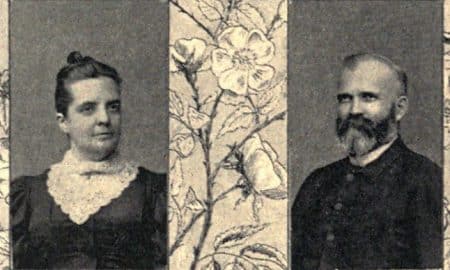
Rev. and Mrs. J.A. Freiday were the first missionaries to visit and preach the gospel to Shan in NamKham in 1880, after traveling three days from Bhamo.
13 years after the first visit to NamKham by Rev. Freiday, NamKham mission field was finally opened in 1893 by Rev. Wilber. W. Cochrane who moved from Bhamo mission field to NamKham. Most of the Shan missionaries in NamKham were doctors. Among them were Dr. M. B. Kirkpatrick, his son Dr. C. A. Kirkpatrick, Dr. Robin Hrasu, Dr. Walter Rittenhouse, Dr. Robert Harper, Dr. Gordon Seagrave and Dr. Grace Seagrave.
Rev. W.W. Cochrane reported in March 1894
“At the beginning of 1894, NamKham began to call itself a station. It is too young to have a history. I can only record its birth. We are living at present – my two Shan preachers with their wives and I – in our own hired house. One of these men is capable, earnest, and always at it. The other is a young man (Ing Tha) of some promise from ThaTon. It is quite a stretch of the imagination to dignify him thus early as a preacher. I speak rather of what he is striving for and bids fair to be. Their wives are helpful in evangelistic work. There are already two
applicants for baptism, good, hopeful cases, both of them are now receiving daily instruction in the word.”
W.W. Cochrane reported on December 29, 1894
“The three converts are doing well. The young man, our first fruit, was married last night to a good-looking, highly respectable Shan girl. She was perfectly willing to have the ceremony performed according to Christian custom and seemed to enjoy the change of style. I read to them in Shan appropriate passages of scripture, and Ing Tha explained clearly the privileges and duties of Christian marriage. As I have written elsewhere, three others are interested and will become disciples, I think, during the present year. It is well to hold them as catechumens for a while, though I do not require them to know too much before they are received for baptism. There is no better location or a brighter outlook in the Shan States. The borderline between English and Chinese territory, the NamMow, usually called here the NamKham River, splits the valley lengthwise; it is settled with a treaty right to build a direct road to Bhamo across Chinese soil.”
Cochrane reported in 1895
“The attitude of the people toward the mission is doubtless the same as that of the other stations in Shanland. We are welcomed anywhere and everywhere and receive a respectful hearing. I cannot say that the people are eager for the gospel here, but I am very thankful that they listen at all. During the year past, such large numbers have come to see us as to give ample opportunity for evangelistic work without jungle traveling. Of the three baptized during the year, two are doing well. The other has lately shown some traits that are not the outcropping of absolute perfection. I think the root of the matter is in him, but it will require, before the green leaves appear, a great deal of patient tending. There are two or three others who look favorably upon the Christian religion but are not converts. Our location is admirable, central, high, dry, and healthful. I am improving the compound (ten acres) as fast as limited means allow. I am repairing an old watercourse by which a mountain stream will be made to wend its gentle course through the compound. The expense is trifling. I hope and expect that it will settle forever the question of a well and furnish water besides for gardening, an occupation that boarding pupils can be put at for amusement and recreation. As there is no special haste about fencing the compound, I shall set out bamboo quite close together and grow my ‘garden wall.’ Such a fence cannot rot, and the surplus growth will work handily in homes for native helpers. The great needs at this station are:
(1) A medical missionary
(2) Unpretentious but permanent buildings
(3) More native helpers
“As to plenitude of people the third factor mentioned in location NamKham is an ideal or if not an ideal certainly a unique station not less than seventy-five villages within an easy day’s tramp, averaging according to official statement fifty-two houses to the village with as many more villages but a trifle smaller within as easy a tramp of a second day. Within a march of four or five days, this number can be multiplied by three. I have not seen the other desirable locations of Shanland. I am satisfied in pitching my tent and journeying no farther.”
“An absence of nearly six months, not due either in Mrs. Cochrane’s case or my own to the climate of NamKham, brought everything to a standstill. We began anew on our return, middle of December, where we began a year before, health improved, courage good and prospect pleasing. Our expectations were faithful friends, new and better helpers have been secured through kindness of Dr. Bunker and Rev. Young. The people welcome us kindly and listen respectfully. Boarding pupils are coming in slowly three yesterday our largest haul for any one-day. I hope this year to get ahead of where we left off last, we are even now. A recent change in MyoTsas, (local rulers) will be a help to us. The present incumbrance is accommodating and friendly though not materially assisting he does not openly oppose our work. He kindly gave me permission yesterday to build a preaching zayat close by our large bazaar, a work that has been sadly neglected hitherto from lack of suitable helpers. I aim to close the present financial year with twenty boarding pupils in school and much returns from faithful evangelistic work as the Master may see fit to give.”
Dr. Kirkpatrick reported from HsiPaw in 1895
“NamKham is one of the many large towns in the ShweLi valley, Northern Shan State, on the border between Burma and China. It was under the control of HsenWi SaoPha. The people in the valley are mostly Shan. The people on the hills are mostly Palong and Kachin. Both tribes know Shan so that most of them can be reached by a Shan mission.”
W.W. Cochrane reported on September 14, 1896,
“We expect to organize a native Church here soon, with probably not far from twenty members. We shall aim to raise the pastor’s salary at least from the start. In truth, I told Dr. Kirkpatrick that I did not favor the organization of a local Church until it pledged itself to support its pastor. It is better to wait and start right. This station was never in so prosperous a condition as it is now, bazaar meetings thronged, little school growing, helpers increasing, and permanent buildings in view.”
Dr. Kirkpatrick reported in May 1898
At the December 1898 communion service, thirty-five people were sitting around the Lord’s table. From October, the Church pays the pastor’s salary twenty rupees per month. The past year has been one of seed sowing and quiet, but we believe in healthy growth. We have been able to keep up all departments of the work, but not to make as much advance as we hoped, first for lack of appropriations; secondly, for lack of helpers. Only with the help of some generous specific donations were we able to keep our present staff of native helpers. The appropriations for the coming year are sufficient, and we have the prospect of more native helpers soon.” “I submit that it is not in the best interest of the work, nor the economy, for the society, nor for the good of the missionary on the field to have but one missionary family for a station in these far frontier fields. Here, where we are more isolated than any other station in Burma, for we are four days from the nearest post office or telegraph office, we are entirely alone. Before coming here, I was promised an associate within a year, if possible. Now, nearly four years have passed, and I have neither seen nor heard anything of anyone on the way.
During the year ten have been baptized and one member of the Church has died leaving the present membership thirty-nine. There are six other Christians here who have not yet brought their letters so that all we have forty-five. Some have asked for baptism and doubtless will be received at the next Church meeting. Our work has mostly been in the vicinity of NamKham and our two outstations but we have made some jungle trips.
Our chapel is well filled at the Sunday services. I had forty-six in the adult Bible class last Sunday. The prayer meeting for workers at half past six every morning has been a great help and blessing.
The meetings held each bazaar day in a large zayat in the bazaar are well attended. Estimate the average attendance is nearly one thousand many being traders and people from a distance which we reach in no other way.
The attendance at the gospel meetings at the hospital both morning and afternoon is good while more than five thousand patients have received treatment and about six thousand prescriptions have been dispensed.
The hospital assistant is a Karen man and a very earnest Christian. He makes many visits among the people.
Our Bible-women have been faithful, and as a result, more than half of the adults baptized are women.
The school is growing slowly, for we are careful to admit only such as give promise of making useful helpers. All those above twelve years of age are Christians. The oldest boy, a Kachin, is beginning to be very helpful by preaching in Kachin at the bazaar meetings.
We have two young men in the Theological Seminary at Insein. As usual, we had a daily training class for all of the native workers and any other Christians who would come during the rainy season. We spent about two hours a day in Bible study and prayer. Our hope for the evangelization of the Shan is in training on the field, Shan converts for the work.”
Dr. Kirkpatrick reported in 1899
“The past year has been the most trying in all my experience as a missionary.
The three senior native preachers have been dismissed and excluded from the Church.
One Bible woman died, and another has gone to work in her old home at Bassein. Three Christian women have died.
Two students from the theological seminary have left their studies and gone into secular work, and one of them has taken a heathen wife.
The anti-foreign feeling and persecution of Christians are worse than ever before. On account of the hostility of the native officials all of the children have left the school at SeLan, our most promising outstation, and twice within the year in connection with a Chinese and Kachin from over the Chinese boundary have the Shan officials in NamKham planned to ‘wipe out’ the mission and all foreigners. The raids were not made, and we were not disturbed. The English officials have recently had a consultation with the Chinese officials, and the Chinese are to pay Rupees 26,300 for recent depredations. Doubtless, this will have a salutary effect. We saw one European in NamKham in over eleven months.
During the year, two girls from the school were baptized, and some other pupils, we think, are Christians. Seven were baptized at SeLan. A prominent businessman and leader among the Buddhists was baptized at NamKham, and others are asking for baptism. We have been alone in distant frontier stations for eleven years. Promised an associate many times, especially since coming to NamKham, but no one has come yet. Our hearts were made glad on New Year’s Day by the announcement of the appointment of Dr. Harper for NamKham, also for the promise of some good native helpers to come to us in January. The prospect was never so bright for NamKham.”
Dr. Kirkpatrick reported for the year 1902
“The year 1902 has been one of growth and encouragement.
In January, we secured the services of a Karen hospital assistant who came to us at two-thirds the salary he was receiving from the government because he wanted to work for Jesus. He has proved to be skillful, faithful, and an earnest Christian.
In February two Bible-women from Mrs. Rose’s Bible school came to help us. They have been faithful in the study of the language and are already doing good work.
In May, two Karen preachers from Insein Theological Seminary were added to our band of workers. They have made wonderful progress in the language and, in six months, were able to help in bazaar meetings and the work in the district.
On May 22, 1902, Dr. Robert Harper arrived in NamKham and from the first of June took over the medical work. I was very ill in July and September and his presence was a great help to me personally as well as to the work in general.
October 1, I made over to Dr. Robert Harper all the appropriations and the general care of the work. From that time, as a rule, one of us has been out in the district. During the year, our staff of workers has been increased, the school has made progress, a day school has been opened in NamKham, buildings have been added to our plant, much work has been done in the district, and twelve persons have been baptized.”
(Dr. M.B. Kirkpatrick returned to America because of failing health, and Dr. Robert Harper arrived at NamKham to take over medical work.)
Dr. Harper gave his first report in 1903
“The past year has been one of satisfaction and regret; of satisfaction because I believe I am where the Lord called me and because of His continued blessing and presence; of regret because MuongNai and I have parted and because I have been in ill health and unable to do much work for a part of the year. The feeling of gratitude for the privilege of service in this distant, needy station is great. The people here need the gospel, and they give better attention to the preaching than the southern Shan. Since I arrived in NamKham last May, I have given most of my time to the medical work, and although that department of our work is by no means as satisfactory as the medical work in MuongNai, there is encouragement. I hope to see a marked improvement during the present year. I was also able to devote a good share of my time to the study of the language and to make a few short trips among the Shan, Palong and Kachin to the northeast and was fortunate enough to find, on my first tour, a fairly well timbered piece of country within two days’ march of NamKham. I made arrangements with the headman of this district to cut and square enough posts for a new school building and place them beside the river so they could be floated down to NamKham. I now have all the timber needed on the ground and hope to have this building completed before the end of March. The posts and material for a new hospital are also in sight, but how far I can push that work before the rains is not certain. I am hoping to get a hospital building completed this year and will do so if there is sufficient money after completing the school. Since Dr. and Mrs. Kirkpatrick’s departure, my work has greatly increased, but good health and plenty of work are a rich blessing when one is alone and far from social life.”
In 1903, there was one Church, 52 members, and 12 baptized.
Dr. Harper reported in 1904
“The year under review calls for praise and thankfulness for the way God has made his ways known and for the work which he has permitted us to do. Shortly after Dr. Kirkpatrick left, an uprising between the Shan and Kachin of MongMow, China, took place, and I was called to treat the wounded Shan, but fearing the Kachin might think I was taking side with the Shan against them I refused to go and invited them to bring their wounded to NamKham. This action met with the hearty approval of the superintendent when he was here last month. The medical work has given much encouragement. Seven lithotomy cases from distant villages came for treatment before the new hospital was built, and all saved one recovered. One successful case of cataract, one Colles’ fracture, and one fracture of the upper third of the femur were treated, besides several cases of fever, dysentery, conjunctivitis, etc. Some advance was made towards self-support, and $59 was received for drugs. The evangelistic work has been that of sowing. Many of the distant states have been visited, and the large villages in the plain have had several visits from the teachers, and the bazaar meetings have been fairly well attended. A teacher’s Bible class was carried on through the rains and proved a rich blessing to both the teachers and me. A new school and a hospital have been completed, and I feel greatly encouraged as I look upon what was considered almost impossible a little over a year ago. I also have a new school and church well on towards completion at our outstation, SeLan. This church building and school are the gift of the Baptist Church of Bethlehem, Pa., and are to be called the “Bethlehem Mission Church.” Five have asked for baptism, but it seems best that they should wait till they know more intelligently what it means to be a Christian. One of our best workers went to KengTung to help Rev. Young. Four died, six were excluded, and one was restored.”
At first the Shan missionaries at NamKham were responsible for the Kachin work. But in 1906 a separate missionary was appointed for the Kachin work. However, occasionally one missionary family had to serve both language groups. The hospital served Shan, Kachin, Chinese, and other races on an equal basis.
In 1914 separate Shan and Kachin Churches were organized, and in 1919, the schools for Shan and Kachin became separate too.
It was reported in 1916 that the Christians had increased from sixty-seven to seventy-six.
From 1922, Dr. and Mrs. Gordon Seagrave served in NamKham until World War II forced their evacuation from Burma. They gave the longest continuous service to the NamKham mission. New buildings were constructed, using the cobblestones from the NamZaLe and NamYaKau and better equipments were added. The Nurses’ Training Class trained young women from wide areas of Upper Burma for good service to the country and people.
In 1942, there were about five hundred Shan Christian in the ShweLi Valley, and a firm foundation had been built. The war brought trials and testing to the Shan Christians. When the Japanese occupied the ShweLi Valley, they mistook the Shan pastor in SeLan, Saya Paw Kham, for Chinese and murdered him and his son. Immediately the rumor spread that the Japanese would persecute and kill Shan Christians, and many of them evacuated to the jungle with only what they could carry with them. They built bamboo chapels for their worship services. In spite of the dangers, Christmas 1942 was celebrated by the ShweLi Valley Christians with Shan Buddhist and Japanese guests. Their experience led to the formation of the ShweLi Valley Baptist Association on December 24, 1945, with Saya Ai Pan, pastor of the Church at NamKham, as President, and Saya Kham Yee as Secretary.
Dr. Seagrave had resigned from mission service in 1942 (after 20 years service) to join the medical Corps of the United States Army. His American friends organized an independent, non-denominational agency to operate the hospital in NamKham along with an Advisory Committee of local leaders. The American Baptist Foreign Mission Society leased the NamKham Hospital compound and buildings to this agency at a very nominal rate. The ShweLi Valley did not escape the general insecurity of the post-war and post-independence periods. NamKham was occupied for a time in 1950 by insurgent forces, and they took personnel and medical supplies with them when driven out by Government troops.
NamKham Hospital


NamKham Hospital began in 1896 with Dr. M.B. Kirkpatrick.
Dr. Robert Harper, Dr. C.A. Kirkpatrick Jr, Dr. Rittenhouse, Dr. Robin Hrasu, Dr. Gordon Stifler Seagrave, Dr. Grace Seagrave, Dr. Ah Pon, and Dr. Ai Lun had served as missionary doctors.
The hospital was not only treating patients it also held the gospel meeting six days a week. The record for the first six months showed 3,396 patients had attended the meetings and 3,785 patients had been treated, about 200 at their homes, and 4,389 prescriptions had been furnished.
The first missionary doctor to serve at NamKham hospital was Dr. M.B. Kirkpatrick in 1896.
Dr. Robert Harper arrived at NamKham and took over medical work from Kirkpatrick on June 1, 1902.
The new hospital was completed in 1904. The nursing training program in NamKham hospital was very famous in the country. The hospital services were so successful that many patients from Burma proper and China came to seek treatment.
Dr. C.A. Kirkpatrick Junior arrived in ShweLi Valley in 1913.
Dr. Gordon Stifler Seagrave arrived NamKham in 1922 November 11. (age 25)
He was born on March, 18, 1897.
He graduated from the Doane Academy in Granville in 1914 and from Denison University, with a Bachelor of arts. in biology, in 1917. He then entered the Johns Hopkins University Medical School. He received the Doctor of Medicine in 1921. (age 24)


He worked very hard on medical mission, education and evangelism.
Dr. Ah Pon came to help NamKham Hospital in 1927.
It was reported in 1930 by Dr. Seagrave, “NamKham welcomed the first American nurse ever seen here. With this addition to the staff, we hope to obtain government recognition for the hospital as a training school for nurses and midwives. We have sixteen in training now. One is running a small hospital and dispensary of her own, fifty miles away, and reports indicate that she is proving a great blessing to the people of her section who have never had medical aid of any sort before. All the girls who have graduated or are under training are Christians, and the impact is quite apparent to the patients. The Christian influence of the hospital cannot be measured. We are now building a new hospital, which is being financed by Woodward Avenue Church of Detroit in memory of Dr. Robert Harper (deceased 1925). We expect this new building with large ward space, administrative room, dispensary, and private room to be worth a memorial well fitted to carry on a worthwhile task.”
The Detroit church that had sponsored Dr. Robert Harper’s work offered $20,000 to build a new hospital at Namkham as a Harper Memorial Hospital.
Dr. Robert Harper Memorial Hospital was built in NamKham in 1930. (26 years after the first hospital)
It was built of smooth stones collected from NamZaLe and NamYaKau. Kham Ye was appointed the head of the laborers during building process. A worker was paid Kyat 2 for one day work. Pu Pao and Ai Kham were the drivers of the truck. Ye Hton, one of the workers who laid the stones and helped built the hospital, is the only man still alive at the time of interview on March 13, 2003.
Dr. Robin Hrasu arrived NamKham in 1935.
Dr. Gordon Stifler Seagrave arrived NamKham in 1922 November 11.
Starting from 1937 Dr. Seagrave did not involve in Church work and education any more but he put more effort on hospital work. During World War II in 1942, Dr. Gordon Seagrave, a chain-smoking missionary and humanitarian surgeon known to the Burmese who often had trouble with Anglo names pronounced “Dr. Cigarette” left NamKham to India with his nineteen nurses.
After World War II, Dr. Gordon S. Seagrave returned from India as Lt. Col. and served in hospital work. He walked back in to work in 1944. He served as chief medical officer for the Shan States of Burma with the British military government from 1945-46.
Karen rebels captured Taunggyi, Lashio, and Namkhan on August 13-31, 1949. Government troops recaptured Namkhan on September 8, 1949.
He was arrested and charged with treason by the newly independent Burmese government on August 15, 1950 . He chose to stand trial rather than be perceived as fleeing. He was sentenced in January 1951 to six years at hard labor, on charges that he wrote a letter that helped Karen rebels arrest a government commissioner, and that he gave medical help to the Karen rebels. The High Court of Burma released him on November 14, 1951.
He suffered dysentery and malaria in part from his time in jail.
Seagrave wrote six books:
Waste Basket Surgery, 1930;
Tales of a Waste Basket Surgeon, 1939/1942;
Burma Surgeon, 1943;
Adventure in Burma told in pictures, 1944;
Burma Surgeon Returns, 1946; and
My Hospital in the Hills, 1955;
and he co-authored The life of a Burma Surgeon with Chester Bowles, 1961.
During his absence his sister Dr. S. Grace Seagrave came to serve in NamKham hospital. She worked until her untimely death in 1951.
Dr. Ai Lun, the first Shan Christian medical doctor trained from Lucknow, India, resigned from government service from LaShio and came to help NamKham hospital in 1951. He was sent to study in U.S.A for one year in 1956 under Dr. Radvin at Upenn. Then he came back from U.S.A to work at NamKham Hospital in 1957. He resigned from NamKham hospital in 1960 and went for private practice.
Dr. Gordon Seagrave, after being released from jail in 1951 returned to serve in NamKham hospital until he passed away on March 28, 1965. (age 68)
He had served for 43 years at NamKham hospital. He performed more than 5000 surgeries.
The hospital was nationalized by military government in 1965.
ShweLi Valley Baptist High School
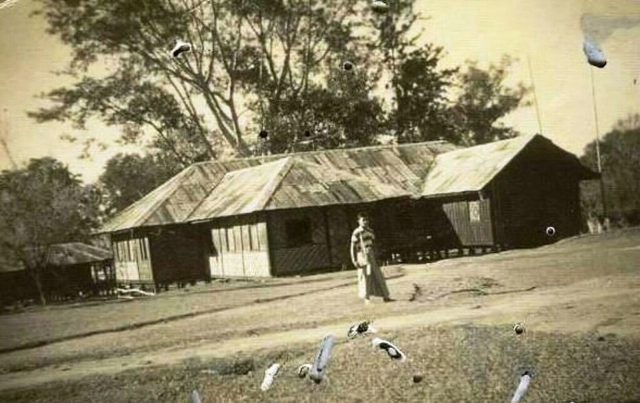
NamKham Mission School began in February 1893 with a teacher and twelve pupils. In May the number of students increased to eighteen, ten day-pupils and eight boarders. They studied the Bible the first hour every morning. During the first year five of the pupils had been baptized. They were expected to become preachers, teachers and Bible-women in the future.
Dr. Hanson conducted a combined boarding school for Shan and Kachin. He also took charge of the girl boarders on the Kachin compound, and Dr. C. A. Kirkpatrick took charge of the boy boarders on the Shan compound. Dr. Kirkpatrick had also established a day school for Shan in the town of NamKham.
Saya Sam Pwa arrived in NamKham in 1911 and worked as a schoolteacher until he passed away in 1942. Saya Htun Pyu and Saya Tha Dun arrived in NamKham in 1912 to teach at school. In 1914, the number of Shan and Kachin girls in the school increased to 22 in all. There was such a dire need for a girls’ dormitory that they could not let the opportunity pass. When the board was unable to give rupees 1,500, they applied to the Government for a building grant and received rupees 1,000.
Ms. Anderson was sent to NamKham from the American Baptist Mission in 1937 to oversee education and Church work. The school was nationalized by the military government in 1963.
The First Shan convert
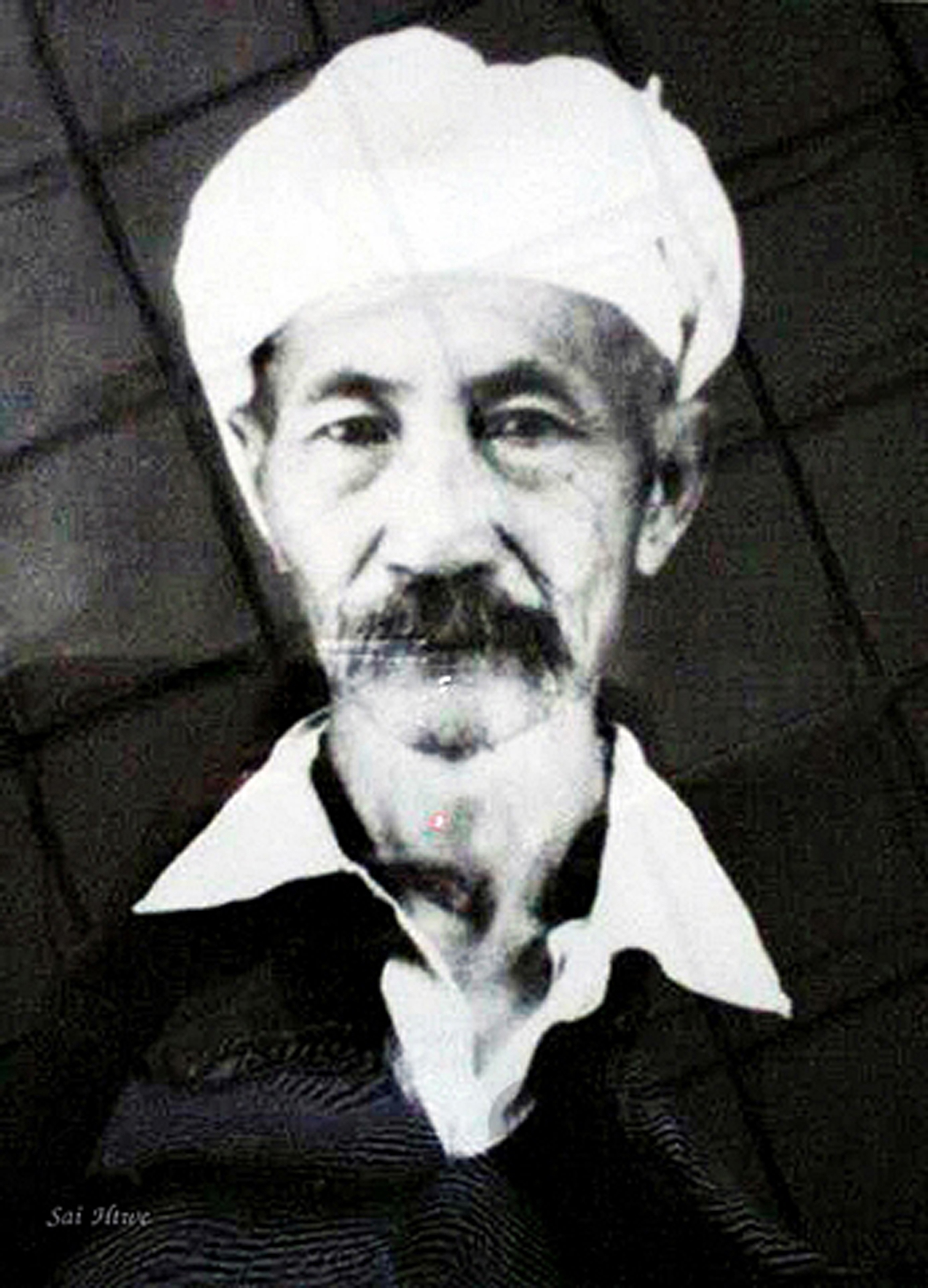
On December 28, 1894, Rev. Cochrane said, “The three converts are doing well. The young man, our first fruit, was married last night to a good-looking, highly respectable Shan girl. She was perfectly willing to have the ceremony performed according to Christian custom and seemed to enjoy the change of style.” The names of those three converts were not mentioned in the report. We don’t know who they were. By oral tradition Kham Maung was the first Shan convert in ShweLi when he was baptized at the age of 15. Kham Maung was ordained on March 5, 1924.
Prayer services and Bible study
There was a strong group of believers having various activities even in the first year of mission work. In 1893, there was a sunrise prayer meeting every day and evening worship at the missionary house, where there were twenty-five to forty people present. On Lord’s day, there was a prayer and praise service at 8 A.M, a sermon by the pastor at 11 A.M, Sunday school at noon, and a women’s meeting at 3 P.M., also home fellowship at the house of one of the recent converts. This pattern of services has been followed until today. Some Shan Churches have seven services on Sunday. Bible study was conducted at school, hospital, and Church. The school offered Bible study for one hour every day. During the rainy season, there was a one-and-a-half-hour daily Bible study class for all Christian workers from the hospital and school.
Evangelism
Dr. Kirkpatrick reported in 1893 that during the year, 10 had been baptized and had a membership of 39. There were 46 in the adult Bible class on Sunday.
3 baptized in 1894, 12 baptized in 1902, 10 baptized in 1904. It was reported in 1957 that the evangelistic campaign group usually stayed on late into the night and illustrated various aspects of religion, education, health, and agriculture by giving talks with filmstrips from Rev. L.A. Crain, Director of Christian Audiovisual at Mandalay. Rev. E.E. Sowards, with courtesy of the United States Information Service, Rangoon, procured the projector for the work. The Shan Buddhists were interested in seeing as well as hearing about the love of Lord Jesus Christ through film. The outreach mission to the Chinese and Palong also began.
Evangelistic bazaar meetings
The large zayat in the bazaar was thronged with thousands of people from the surrounding villages on the fifth day. It was a great opportunity to preach the gospel and distribute tracts to a multitude of people in the bazaar. People from different towns and villages came to the bazaar. It was just like a festival or carnival. Zayat was usually put up near the bazaar to give a temporary shelter to the people. The preachers were faithful in proclaiming the gospel message in Zayat. The meetings were also held in other bazaars as much as possible. The preachers, schoolteachers, and at times, even school students, conducting preaching services at the zayat. The fifth-day bazaar was rotating among NamKham, SeLan, and MuSe.
Churches and their pastors in 1933
The first Baptist Church in NamKham Hospital, (Stone Church) Pastor Rev. Htun Pyu,

2. NongSanKone Shan Baptist Church (Thatch Church), Pastor Rev. Ai Pan,

3. SeLan Shan Baptist Church, Pastor Saya Paw Kham,

4. MuSe Shan Baptist Church, Pastor Rev. Kham Maung.

ShweLi Valley Shan Baptist Mission (1945)
ShweLi Valley is a beautiful valley between Burma and China comprising three townships: NamKham, SeLan, and MuSe. The Churches from three towns united and formed an association named after the valley. “ShweLi Valley Shan Baptist Mission” on December 24, 1945.
It was reported in 1957 that there were three main objectives.
1. To share the glad tidings and the love of Jesus Christ with our neighbors, the Shan Buddhists who need to be saved.
2. To open schools for Buddhist children who can be taught to read the Holy Bible as well as sing gospel hymns. To teach them how to pray Lord’s Prayer.
3. To reach the hearts of our Buddhist brethren with ministry of healing. The NamKham Hospital is doing to achieve this end hope. Dispensaries in the hills with nurse-evangelists in order to minister to Chinese and Palong population.
Member Churches in 1945
1. NongSanKone Shan Baptist Church (Thatch Church)
2. SeLan Shan Baptist Church
3. MuSe Shan Baptist Church
4. First NamKham Church (Stone Church)
The first Executive Board Members in 1945
Chairman & Treasurer; Rev. Ai Pan
Secretary; Saya Kham Yee
Members; Rev. Kham Maung
Saya Ai Hmoon
Saya Hsaw
Saya Hsai
It was reported in 1954
“The Baptists have a strong and varied work in the Northern Shan State. The ShweLi Valley Shan Baptist Mission is one of the strongest Shan Baptist fields in Burma, with Churches at NamKham, SeLan, and MuSe. This work has shown vigorous growth, doubling in numbers in the last ten years. In addition to work among the Shan, full-time evangelists are employed for work among the Chinese and Palong. A Bible Training School at NamKham was started in January 1953 with seven students. The Shan Bible Training School at NamKham is designed to meet a local need and is not well situated for work for the whole Shan State. Vigorous evangelistic work is carried out in villages near NamKham, and very cordial relations are maintained with the Kachin Baptist. The NamKham Hospital is essentially an integral part of the mission work in the ShweLi Valley, although at present it is not under mission control. The ShweLi Valley Baptist High School, on the hospital compound, is also a part of the general Christian work.”
Statistic in 1958 (after 13 years)
The number of Churches under ShweLi Valley Shan Baptist Mission were 5, total number of Baptized Christians were 768 (women 474, men 295), the number of Sunday Schools were 5 with 880 students, of whom 178 were girls and 157 were boys, the number of C.E. Societies were 4 with 558 members, of whom 804 were girls and 249 were boys, the number of Christian Women Societies were 4 with over 200 members and one roving woman evangelist and the number of mission primary schools were 4 with 284 pupils, among whom were 125 girls and 109 boys. Teacher-Evangelists: 5 women and 2 men.
The total number of Baptisms given during 1958-59 was 142, of whom 85 were men and 57 were women. The total number of Chinese and Lisu families won from Animism was 8 families with 17 members, and the total number of Buddhist families won to Christ during 1958-59 was 14 families with 44 members.
In 1958, 9 full-time teacher-evangelists were preaching the gospel not only among Shan Buddhists but also Palong, Lisu, and the domiciled hill Chinese.
Member Churches in 1992 (47 years)
1. NongSanKone Shan Baptist Church (S.B.C), NamKham.
2. MyoMa S.B.C, NamKham.
3. ManPon S.B.C.
4. SeLan S.B.C.
5. MuSe S.B.C.
6. MuongPa S.B.C.
7. LaShio S.B.C.
8. MuongKut S.B.C.
9. MuongMyit S.B.C.
10. TaKwan Chinese B.C.
11. NamKham Chinese B.C.
12. MaSawPin Chinese B.C.
13. PanSaeSanKa B.C.
Out of thirteen, nine are Shan-speaking Churches. 10 new Churches are added in 47 years.
First NamKham Church (Stone Church) not included.
Membership in 1992
Baptized Members / All
NongSanKone 562 / 1042
MyoMa 114 / 282
SeLan 60 / 100
MuSe 400 / 1000
LaShio 100 / 240
MuongKut 54 / 138
Muong Pa 23 / 86
MuomgMyit 20 / 36
ManPon 26 / 42
Total 1359 / 1964
1,359 baptized in one hundred years. The membership in 1954 was 666. Most of them are second generation Christians.
Executive Board Members in 1961
1. President Dr. Ai Lun
2. Vice-President: Saya Ai Hmoon
3. General Secretary Saya Aung Htun Shwe
4. Assoc: Secretary: Saya Kham Yee
5. Treasurer: Mrs. Saya Pan.
6. Auditors: (1) Saya Hsaw, (2) Sayama Daw Kham Paun
Representatives from MuSe Shan Baptist Church
- Rev. Kham Maung (Pastor)
- Saya Chit Pwe (Secretary)
- Saya Hsaw
- Saya Po Myit
- Pan Aung (Village Head)
- Dr. Ai Lun
- Yawt Kham
- Paw Thein Shwe
- Mrs. Ai Lun
- Sayama Daw Am Paw
- Sayama Martha
- Mrs. Kham Maung
Representatives from NamKham Shan Baptist Church
1 Rev. Ai Pan (Pastor)
2. Paw Htawnt
3. Saya Kham Yee (Secretary)
4. Mai Seng
5. Saya Aung Htun Shwe
6. Saya Maung Htun
7. Saya Law San
8. Paw Sha Mwe La (Village Head)
9. Mrs. Saya Pan
10. Mrs. John
Representatives from SeLan Shan Baptist Church
1. Saya Ai Hmoon (Pastor)
2. Paw Maung Kham
3. Paw Sam La (Village Head)
4. Sayama Daw Seng Maung
5. Sayama Mary
6. Paw Htun Hla
7. Yar Ai Poi
Representatives from Women’s Association
Mrs. Saya Pan
Mrs. Kham Yee
Representatives from Christian Endeavor Society
1. Saya Maung Htun
2. Saya Chit Hla
With religious movies loaned from Christian Audio-Visual Center of the Burma Christian Council in Mandalay, thousands of Christians and non-Christians were reached with the gospel. 10 Buddhist families and 2 animist families had been won to Christ in 1960.
There were five primary schools under ShweLi Valley Shan Baptist Mission in 1961; Primary School in MuSe, SeLan, NamKham, TaGown and ManPang. They were recognized by the government.
Report in 1962 By Aung Htun Shwe, General Secretary
Programs
(a) Contributed Kyat 600 annually to the BBC
(b) Help one Insein Seminary Student with Kyat 250 annually
(c) Helped TaungGyi Bible School with Kyat 100 annually
(d) Have three primary schools, and the teachers do evangelistic work during free time.
(e) Carried out the “Christian Home” emphasis program in 1962, especially in MuSe and SeLan Churches.
(f) Appointed a Palong Christian worker Saya Tu Jar in July 1962.
Note: This appointment was planned at the beginning of 1955.
(g) Bible Assembly from 1-6 April 1962.
(h) Have started a tonic-so-fa Shan Hymnbook.
Problems
The First NamKham Baptist Church has totally out of relationship from the Association. Saya Aung Htun and Saya Sam have taken indefinite leave due to personal reasons. TaKun Chinese school is without a teacher. MuongPon pastor has been expelled from the Church on question of his inability to upkeep the Church’s regulations.
Glimpses of the Churches
There is improvement in NamKham Church. NamKham Chinese Baptist Church, though without a pastor, is doing well. SaLu Church is also doing well. MuSe Church under the old pastor is striving for improvement. The Chinese Churches on the hill, though without a shepherd, are doing well also.
The Aspiration of the Association
1. To strive for a Shan State Baptist Convention.
2. To start a new village called Bethany village, 91 miles from LaShio.
Reasons for having a new village;
3. To enlarge our mission field.
4. To support the material needs of the members.
5. To give jobs to the unemployed.
Note: (Bethany village was established, but a few years later it was abandoned.)
It was reported in 1963 that together with Kachin Baptist Association “Northern Shan State Baptist Mission Society” had been formed and doing work together among the Buddhists.
In 1969 some members of SeLan Church moved to LaShio and some members of NamKham Church moved to NaKan and MuongNai. Thus the number of member of the Churches in ShweLi reduced to 1,016.
In 1973, there was 1 conference, 5 Churches (including the new Myoma Church), and 1,103 members.
Local people helping foreign missionaries in the past
Dr. Htun Oo for medical work, Rev. Ai Man, Rev. Htun Pyu, Rev. Tha Dun, Saya Kham Maung, Saya Sam Pwa, Saya Thar Dwe, Saya Hsam, Saya Law Wu, Saya Ai The, Saya Ai Pan, Sayama Aye La, Sayama Daw Ahm Htoun, Sayama Daw Ae Khan, Sayama Daw Ahm On, Sayama Daw Oh and Sayama Daw Rosy in mission work. Sayama Yeo Shwe. Was sent to MawPint as a missionary in 1954. Rev. Htun Pyu passed away on November 20, 1958, after serving 56 years.
Those who served in ShweLi Valley, Shan Baptist Mission
Rev. Ai Pan, as Chairman for 16 years, as Secretary for 1 year, as Treasurer for 12 years, and Principal of TaungGyi Bible School for 4 years.
Rev. Kham Yee, as Chairman for 8 years and Secretary for 15 years.
Dr. Ai Lun has been the Chairman for 4 years.
Saya Hsaw; as Chairman for 3 years.
Saya Yee Poi; as Chairman for 3 years.
Saya Chit Pwai; as Chairman for 2 years.
Sayama Martha, as Chairman for 6 years and as Treasurer for 14 years.
Rev. Thein Aung Kham, as Chairman for 7 years.
Sayama Aye Hla; as Treasurer for 5 years.
Rev. Aung Htun Shwe, as Secretary for 10 years.
Rev. Shwe Htun, as Secretary for 13 years.
Sayama Kham Pong; as Treasurer for 2 years.
Rev. Sai Nyunt Tha, as Secretary for 9 years.
Daw Mae Htay Yin, as Treasurer for 2 years.
Sai Tha Han has been Treasurer for 7 years.
Women Association
The wives of missionaries were the founders of the ShweLi Women’s Association. They used to organize women’s groups and teach them the Bible, theology, sewing, baking, cooking methods, and skills.
Women Associations from NamKham, SeLan and MuSe came to SeLan during Summer Women’s Bible Study Seminar and formed “ShweLi Shan Baptist Women Association” on April 4, 1958.
The first Chairman of the association was Daw Aye Hla.
Vice-Chairman; Sayama Arm On,
Secretary; Sayama Kham Pong,
Vice Secretary; Sayama Saw Tin,
Treasurer; Sayama Agner,
The women’s association was strong and active. They had their finance and ministries. They could even appoint Saya Kham Ye as their full-time pastor.
NamKham Bible Training School
A Bible Training School at NamKham started in January 1953 with seven students. It was designed to meet a local need but was not well situated for work for the whole Shan State. This Bible Training School was the first Bible school to be taught in Shan language.
Rev. Ai Pan conducted three years program (1953-1956).
There was no more Bible School established in ShweLi Valley ever since 1957 when Rev. Ai Pan was recruited to TaungGyi Bible School. He served as Bible Teacher at TaungGyi Bible School for three years (1957-1960) and returned to NamKham.
They are planning to have a Bible School in MuSe in 2004.
Graduates in 1956 from NamKham Bible School
1 Maung Su, 2. Yee Poi 3. Htun Hla, 4. Ai Seng Hton, 5. Hsam, 6. Ai Kaw, 7. Aung Htun.
Out of seven graduates only three, Maung Su, Aung Htun and Yee Poi served in full-time ministry.
Bible School graduates in one century (1893-1992)
43 people graduated from Bible Schools and Seminaries in one hundred years.
- Maung Su (NamKham Bible School)
- Yee Poi (NamKham Bible School)
- Htun Hla (NamKham Bible School)
- Ai Seng Hton (NamKham Bible School)
- Sai Hsam (NamKham Bible School)
- Ai Kaw (NamKham Bible School)
- Aung Htun (NamKham Bible School)
- Shwe Aung (NamKham Bible School)
- Ping Aung (NamKham Bible School)
- Kham (NamKham Bible School)
- Aye Nyunt (NamKham Bible School)
- Am (NamKham Bible School)
- Marlar Kham (NamKham Bible School)
- Poi (NamKham Bible School)
- Aye Pan (NamKham Bible School)
- Pyine Aung (NamKham Bible School)
- Aung Htun Shwe (Myanmar Institute of Theology, Rangoon) (MIT)
- Thein Aung Kham (MIT)
- David (MIT)
- Shwe Htun (Myanmar Institute of Christian Theology) (MICT)
- Tin Maung (MICT)
- Nyunt Tha (MICT)
- Po Maung (TaungGyi Bible School)
- Ba Pe (TaungGyi B S)
- Thein Win (TaungGyi B S)
- Zaw Chyan(TaungGyi BS)
- Htun Kyaw (MIT & Singapore IT)
- Maung Than (TaungGyi B S)
- Hla Khin (MICT)
- Aung Win (MIT)
- Maung Lay (MICT)
- Hla Tint (TaungGyi B S)
- Ngwe Kyi (TaungGyi B S)
- Kein Kham (MICT)
- Sai Myat (TaungGyi B S)
- Shwe Htwe Lay (MICT)
- Maung Kaing (MICT)
- Ah Po (MICT)
- Hla Oo (MICT)
- Aung Than (MICT)
- Thida Htun Shwe (MIT)
- Kya Doi (MICT)
- Htwe Shin (MIT) Out of 43 only 21 are in service.
The unity of Churches
After formation of ShweLi Shan Baptist Mission, the unity among four Churches was good but the first NamKham Church (Stone Church) isolated herself from Association.
Three other Churches used to get together for Bible-Study-Week each year in summer. The host of the Bible-Study-Week was allocated to each Church each year. People stayed together, ate together, spent time together, and studied scriptures together. Young people and children were having fun together. It was a wonderful occasion. A combined Christmas program was also held every three years at one place, rotating among three towns. Sport and games for all CE youths were organized every year at one place. However, regretfully, a fight broke out between MuSe and NamKham Shan Baptist Churches during a friendly soccer match, which ended in disaster when a man died and others were injured in 1999 in NamKham.
The Pastoral Council
It was formed on July 29, 1977 at SeLan.
Chairman; Rev. Ai Pan
Secretary; Saya Aung Htun Shwe
Treasurer; Rev. Ai Hmoon
Report in the year 2000
- Training
Biblical Training for women, men and youth. 40 days training program. - Evangelism
Women evangelistic trip to MuongKut. Mission to Palong villages in KutKai, MuSe and NamKham. New 6 families believed. New mission field in KaShe and NaMon villages in LaShio Township and MuongYai Township. - Development
Training for nursery teachers. Training for cultivation, farming, fishery, poultry and sewing. - Mission fields
One nursery teacher and one evangelist were sent to MuongPhyat. There are 8 Christian families in MuongPhyat. One Palong woman believed in MuPing village.
One woman-evangelist was sent to MuongPan. 6 baptized. 4 Christian families.
One nursery and eight Palong Christian families in LoiLom.
32 baptized and 16 Christian families in NamPong. There was no Church but fellowship only. (Without full-time pastor and a church building they do not consider as a Church) 28 Christian families in MuongPa. (No full-time pastor) One fellowship in MuongMit. - Future planning
To build one Bible School, to be completed in 2004. Had received donation of Kyat 3,000,000. - Palong Mission.
- To send out 2 full-time missionaries and 5 part-time.